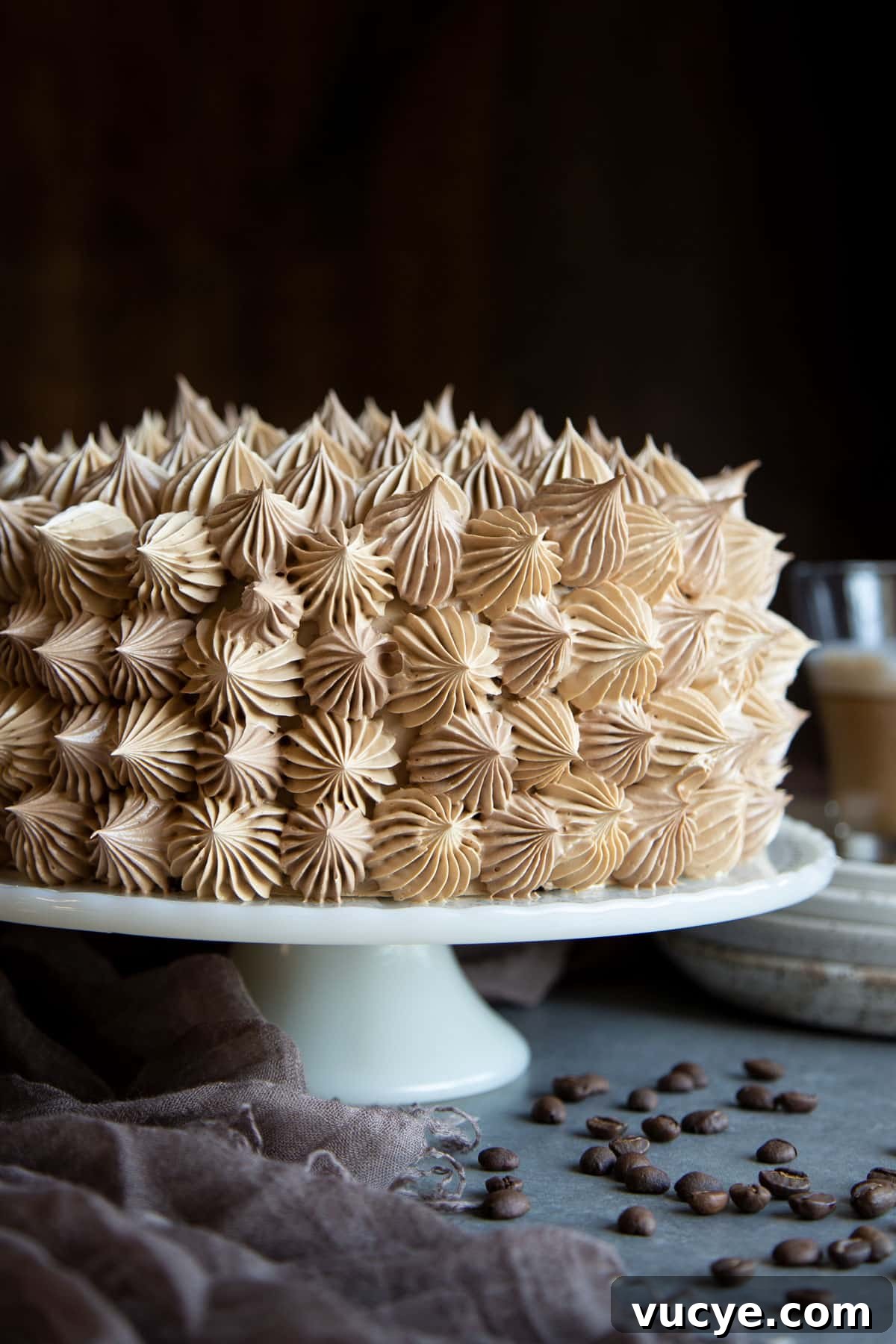
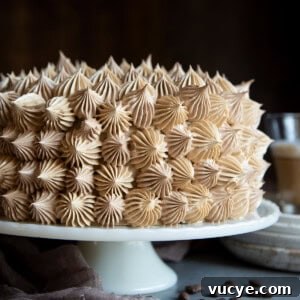
Calling all coffee lovers! This coffee buttercream is whipped to silky perfection, built on a stabilized meringue of heated egg whites and sugar. Instant espresso powder gives it a bold, true coffee flavor that elevates cakes, cupcakes, or a spoonful straight from the bowl.
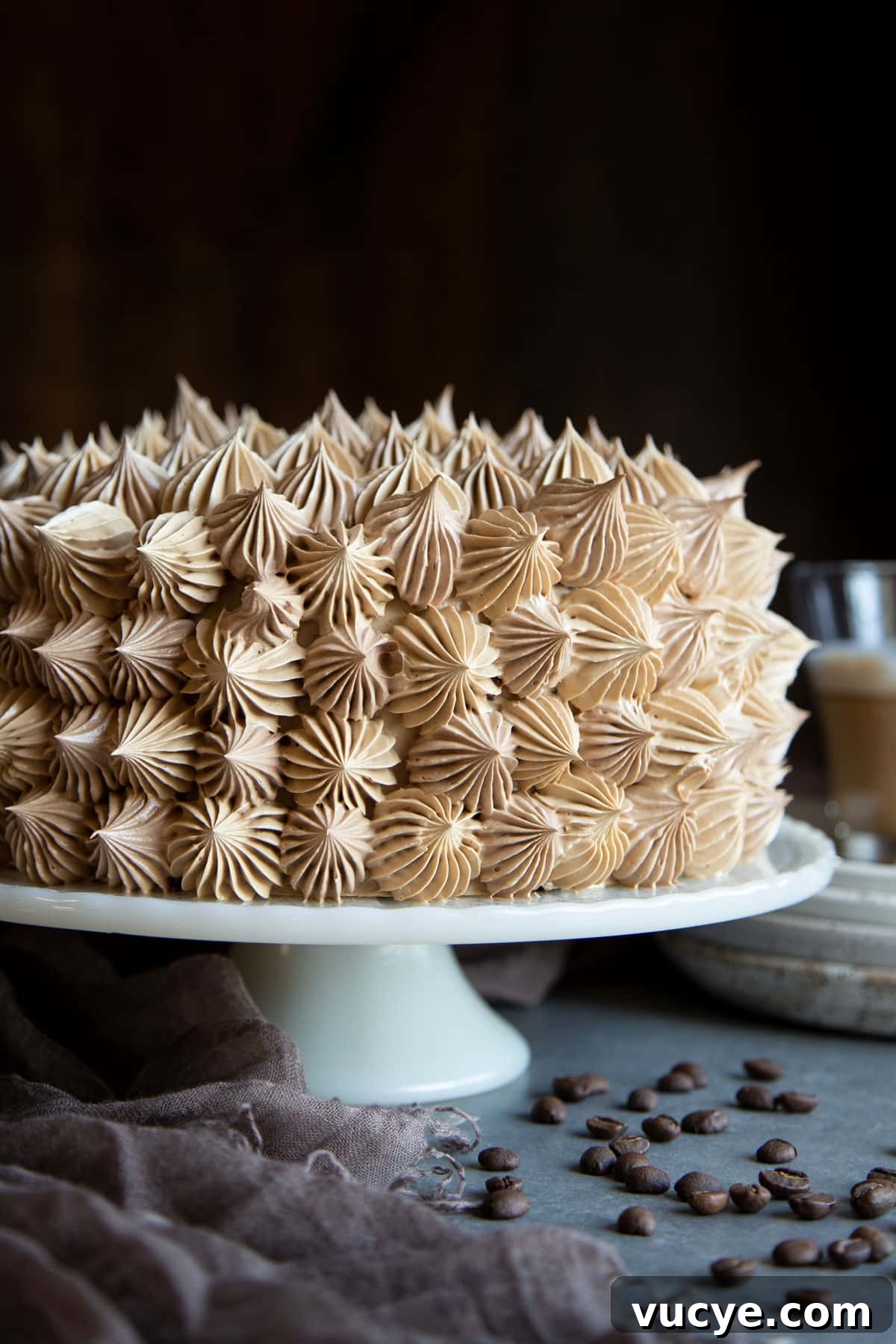
I prefer Swiss meringue buttercream because it tastes less sweet but stays very stable thanks to the meringue base. It takes a bit more technique than American buttercream, but the result is worth the effort. If you want a quicker option, you can adapt a not-too-sweet American buttercream by folding in instant espresso powder for an easy coffee-flavored frosting.
Table of Contents
- ✨ Recipe highlights
- Ingredients you’ll need
- Let’s make coffee buttercream frosting
- Potential issues you may run into
- Storing and make-ahead tips
- Pairing suggestions for coffee frosting
- Coffee buttercream frosting recipe
✨ Recipe highlights
- TASTE: bold coffee flavor balanced with sweetness.
- TEXTURE: smooth, silky, light and fluffy yet rich.
- EASE: more advanced than American buttercream but achievable with attention to the steps and a little patience.
- WHY YOU’LL LOVE IT: intense coffee flavor, balanced sweetness, and a perfectly velvety texture that holds up well on cakes and cupcakes.
Ingredients you’ll need
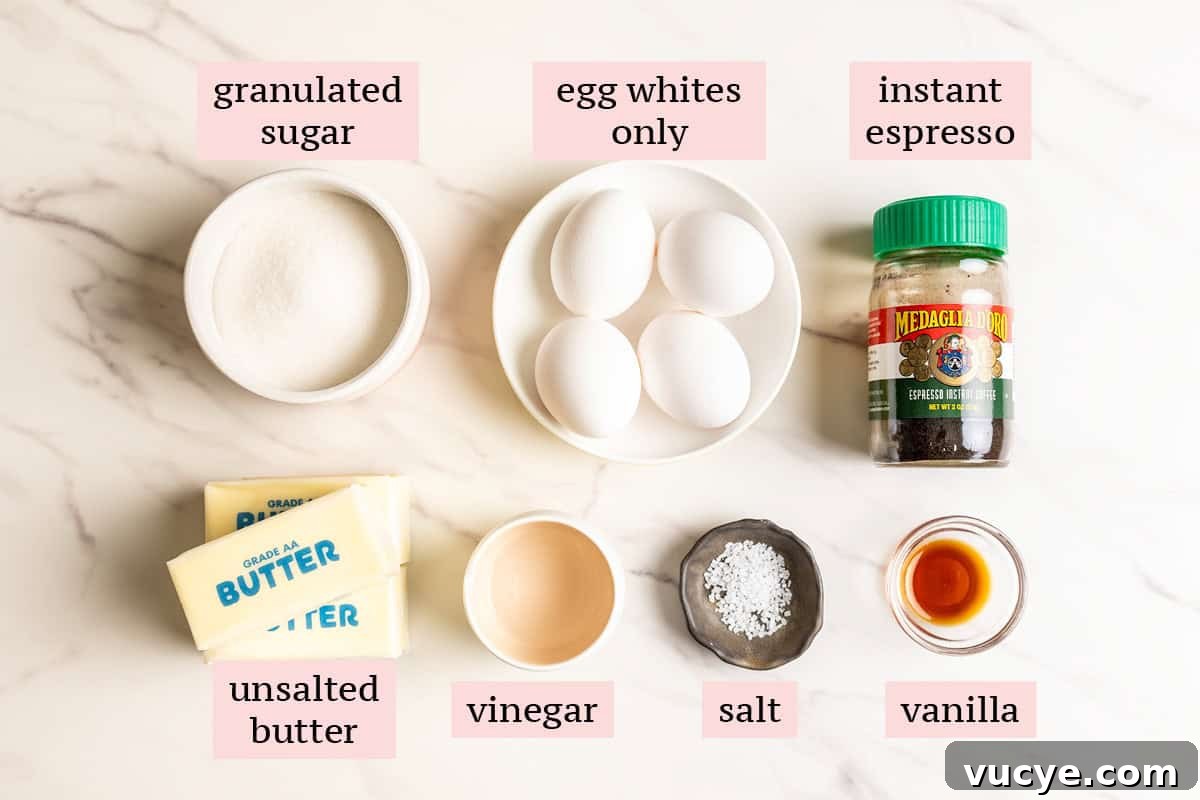
The photo above shows the main ingredients. The full ingredient list with precise quantities appears in the recipe card below, but here are a few notes on the key components:
- Egg whites – you’ll heat the whites with sugar, so starting temperature isn’t critical. Pasteurized carton egg whites work fine if you prefer them.
- Vinegar (or acid) – a small amount of distilled vinegar, lemon juice, or cream of tartar stabilizes the meringue. Without an acid the meringue is more likely to collapse.
- Instant espresso powder – use instant espresso or espresso powder for concentrated coffee flavor. Regular instant coffee is milder, so increase the amount if that’s what you have.
Let’s make coffee buttercream frosting
Below are the key steps and helpful tips to make this buttercream. You can skip to the recipe card at any time.
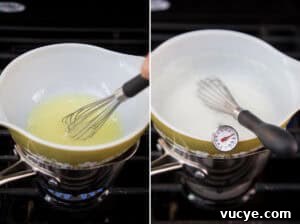
Heat the egg whites and sugar
Place egg whites and sugar in a heatproof bowl set over simmering water (bain-marie). Stir constantly until the sugar fully dissolves and the mixture reaches 160°F to ensure safety and proper dissolution.
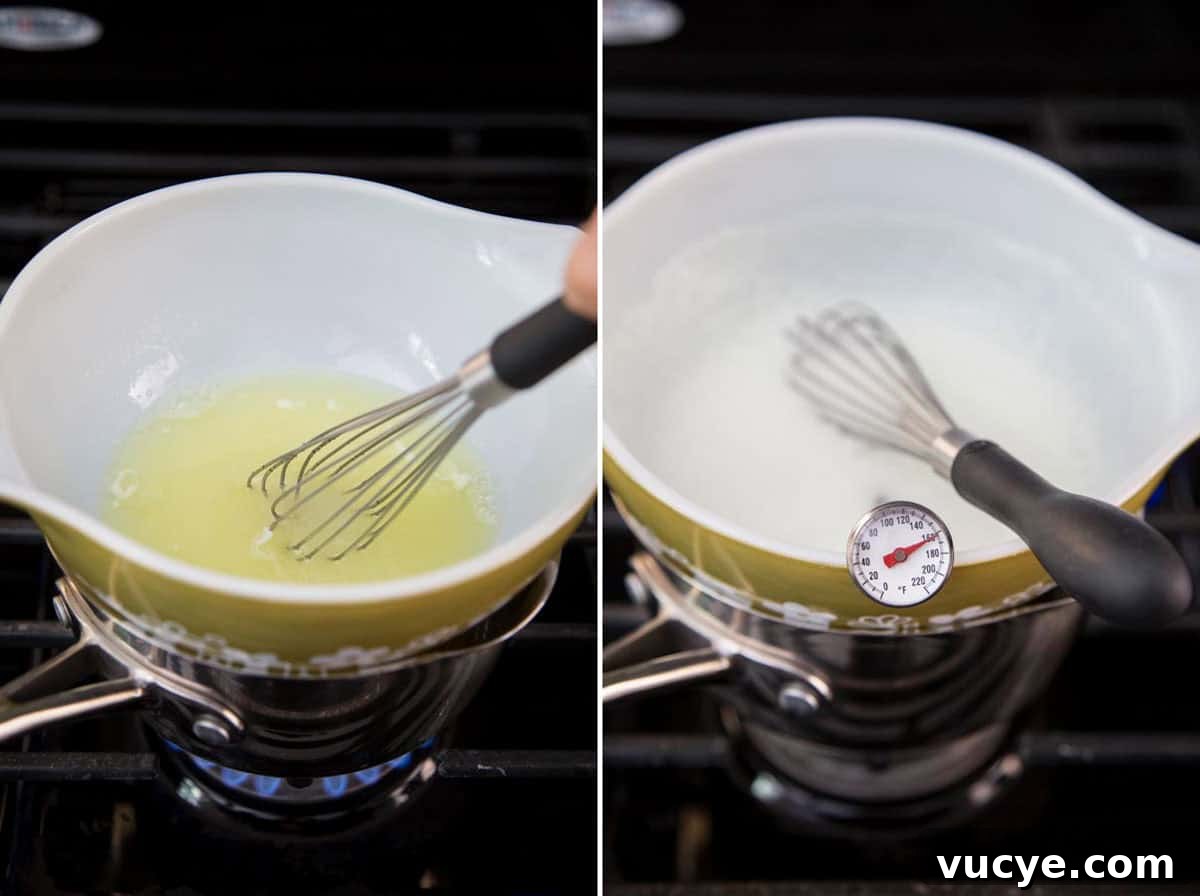
Tip: If you don’t have a thermometer, heat until the sugar feels dissolved when rubbed between your fingers—no gritty sensation.
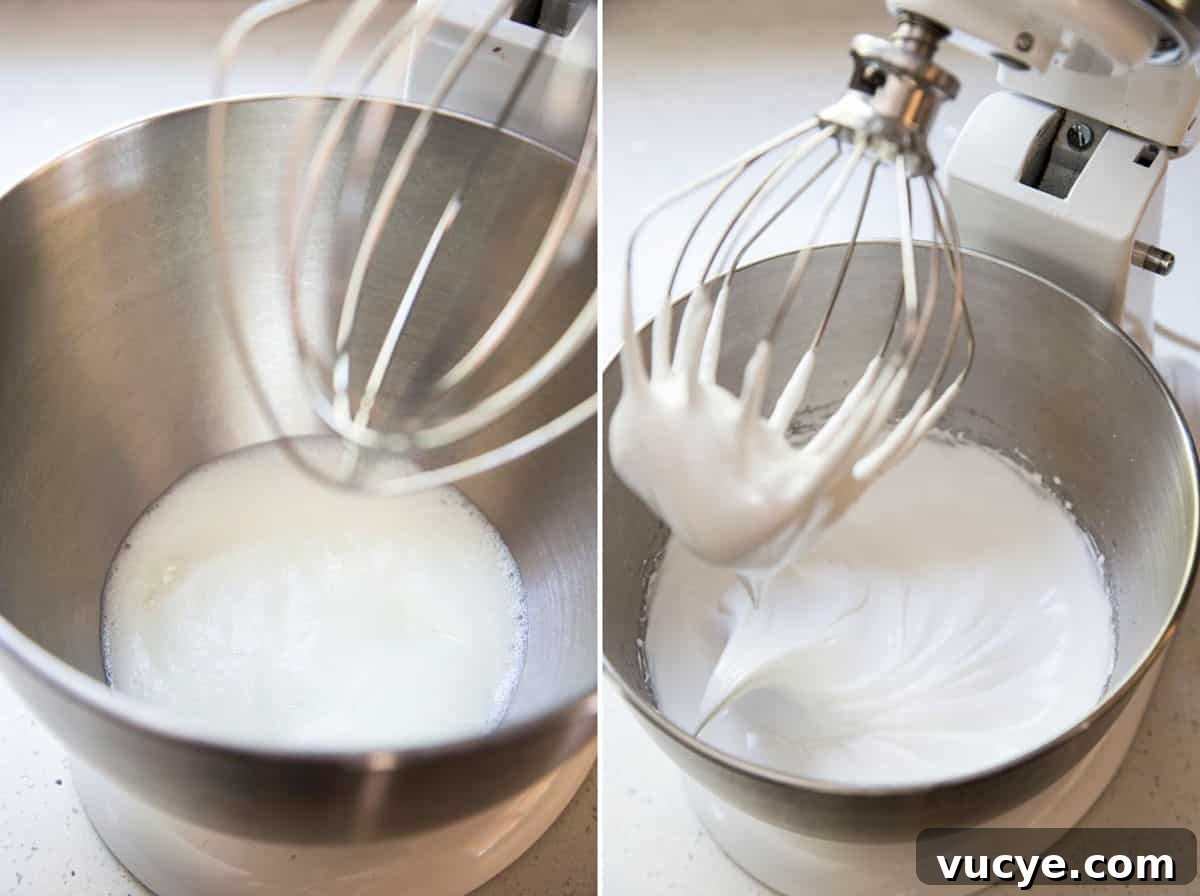
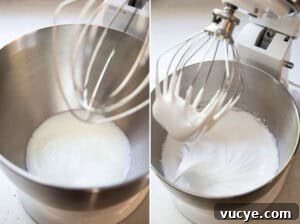
Make the meringue
Dry the bottom of the bowl and transfer the warm mixture to a stand mixer or a clean bowl. Whisk on medium speed, streaming in the vinegar slowly, until the meringue is glossy and holds stiff peaks.
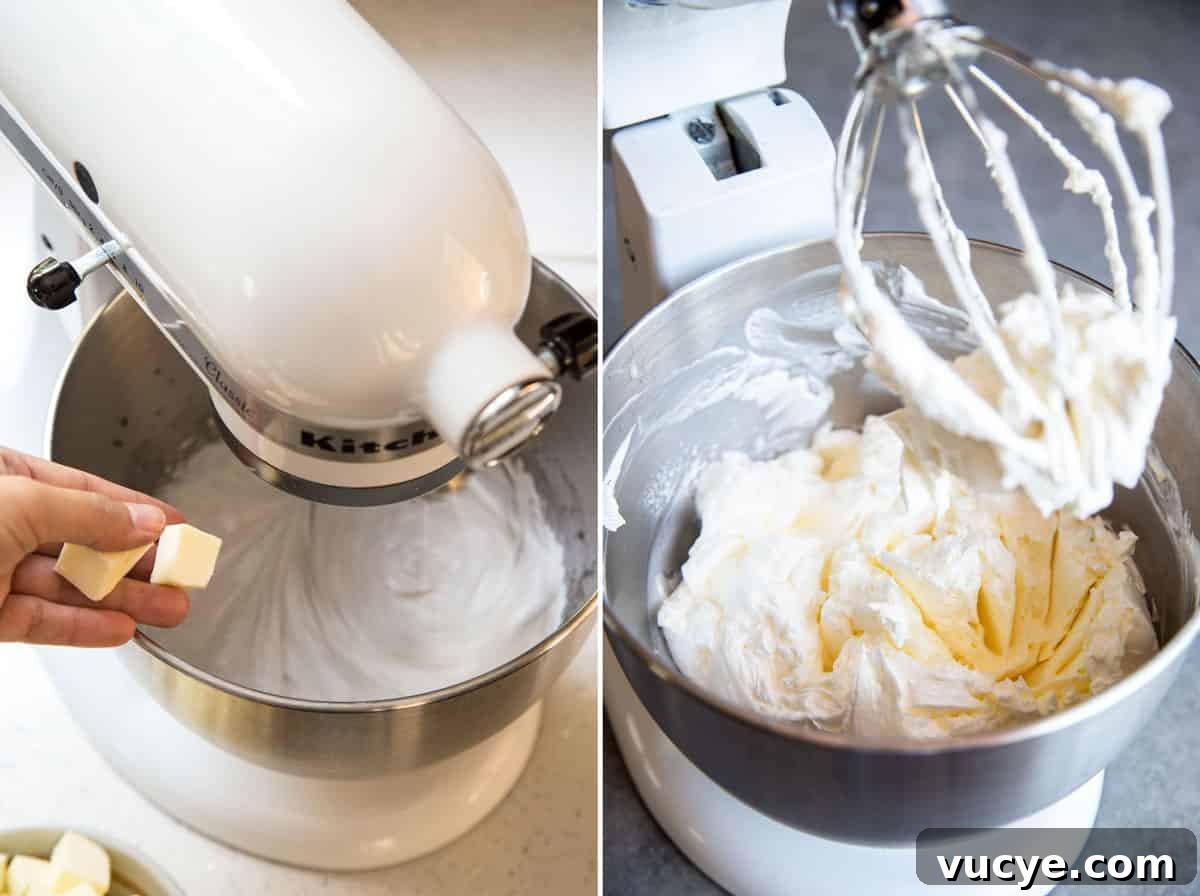
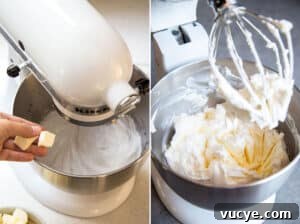
Slowly add your butter
Once the meringue has cooled (so it won’t melt the butter), add room-temperature butter one cube at a time on low speed, allowing each piece to incorporate fully before adding the next.
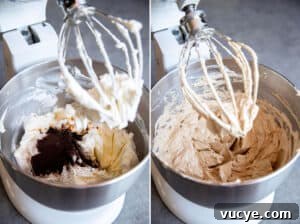
Blend in the coffee
Stir in instant espresso powder, a splash of vanilla extract to round the flavor, and a pinch of salt. Beat on medium-high until the buttercream is light, smooth, and fluffy.
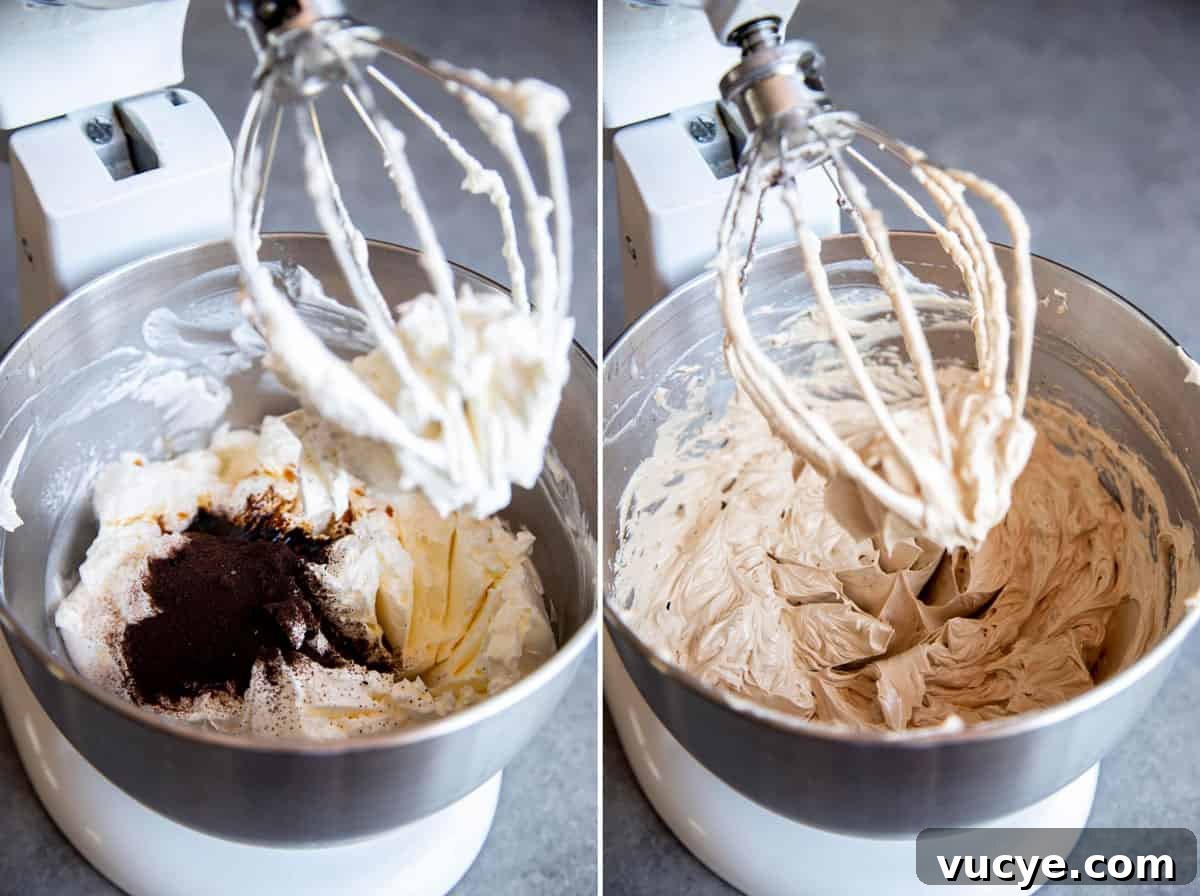
Tip: Adjust the espresso powder to taste for a milder or stronger coffee profile.
Potential issues you may run into
- Meringue won’t whip – even small traces of oil, butter, or egg yolk can prevent proper whipping. Ensure all bowls, beaters, and utensils are clean and dry.
- Buttercream appears curdled – separation can happen while adding butter. Keep beating; the mixture usually comes back together as it emulsifies.
- Gritty texture – that means some sugar didn’t dissolve. Gently warm over the double boiler again, cool, and re-whip. If graininess persists, you may need to restart.
- Runny or soft buttercream – butter that’s too soft or warm meringue can cause this. Chill the bowl 15–30 minutes and re-whip to firm it up.
- Tastes only like butter – under-whipping leaves the frosting dense and buttery. Whip longer to incorporate air for lightness.
Storing and make-ahead tips
Store at room temperature up to 24 hours. For longer storage, keep in an airtight container in the refrigerator for up to a week, or freeze for 2–3 months. Bring to room temperature and re-whip before using.
Thawing: Thaw overnight in the fridge or for a few hours at room temperature, then re-whip to restore texture.
Pairing suggestions for coffee frosting
- Use with a chocolate layer cake to make a mocha cake—double the recipe for a two-layer 8″ cake.
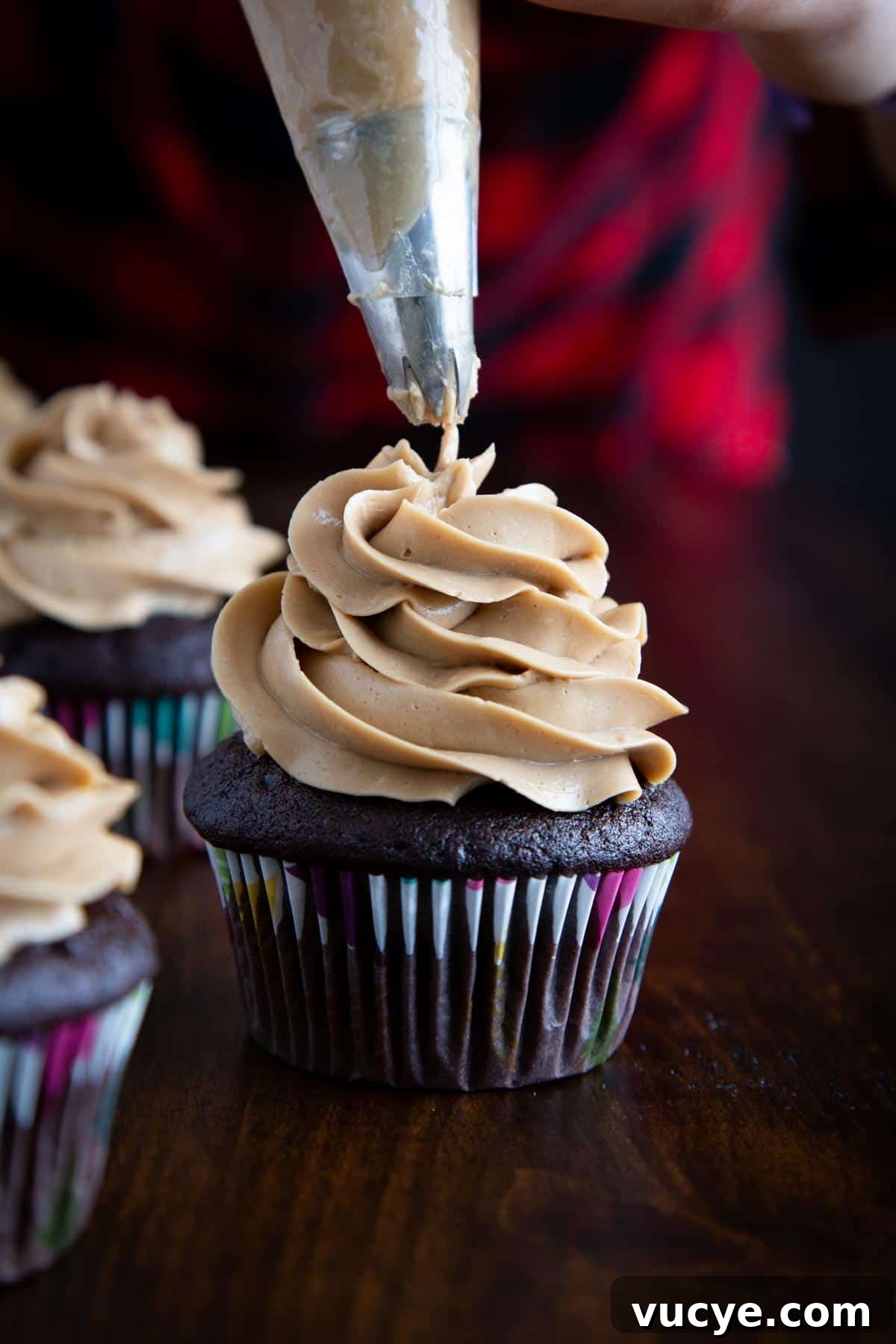
- Swap this for ganache on chocolate cupcakes to make mocha cupcakes.
- Top brownies for mocha brownies.
- Make mocha sandwich cookies with rich brownie-style cookies.
- Brighten vanilla cupcakes with bold coffee flavor.
Hungry for more?
Join the free newsletter for weekly recipes, inspiration, and occasional subscriber-only giveaways.
Coffee buttercream frosting recipe
Pin
Comment
Equipment
-
Stand mixer
-
Thermometer
-
Saucepan
Ingredients
- 4 oz egg white, 115 g (a smidge less than 4 large egg whites)
- ¾ cup granulated sugar, 135 g
- ¾ teaspoon distilled vinegar or lemon juice, 4 g
- 10 oz unsalted butter, room temperature, cubed, 283 g
- ½ teaspoon pure vanilla extract
- 2 tablespoon instant espresso powder, 10 g
- A pinch of kosher salt
Instructions
-
Add egg white and sugar to a heatproof glass bowl set over simmering (not boiling) water. Whisk constantly until the sugar dissolves and the mixture reaches 160°F.

-
Remove the bowl, dry the bottom, and transfer the warm mixture to your stand mixer. Beat on medium speed, slowly stream in the vinegar or lemon juice, and continue until the meringue is glossy and forms stiff peaks.
-
Reduce mixer speed to low and add the room-temperature cubed butter slowly, one piece at a time, allowing each piece to incorporate before adding the next.
-
When all the butter is incorporated, add vanilla extract, instant espresso powder, and a pinch of salt. Beat on medium-high until the buttercream is light, smooth, and fluffy.
Notes
- Yields about 3 cups of coffee Swiss meringue buttercream—enough for 15–18 cupcakes or a 6″ cake. For a two-layer 8″ cake, multiply the recipe by 1.5–2x.
- Keep all tools and bowls clean, dry, and grease-free so the meringue whips properly.
- To prevent grit, ensure the sugar fully dissolves while heating the egg whites.
- If the buttercream separates while adding butter, keep beating—the emulsion typically comes back together.
- Avoid runny frosting by using butter that is soft but not melted and waiting until the meringue has cooled before adding butter.
- Beat long enough to incorporate air; under-whipping yields a dense, buttery texture.
- Store at room temperature up to 24 hours, refrigerated up to a week in an airtight container, or frozen 2–3 months. Bring to room temperature and re-whip before using.
Nutrition
Nutrition information is an approximation.
 Like this recipe? Rate & comment below!
This post may contain affiliate links. For more details on affiliates, ads, and sponsored content, see the site’s full disclosure. Thank you for your support, which helps us keep sharing delicious recipes.