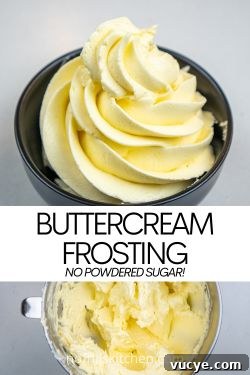
I don’t care for American buttercream made simply from butter and powdered sugar — it’s often too sweet and can have a slightly grainy texture. For that reason I prefer Swiss meringue buttercream, which contains no powdered sugar at all. It’s a little more technical and takes a bit longer, but it’s not difficult, and the result is glossy, stable, less-sweet, and pipes beautifully.
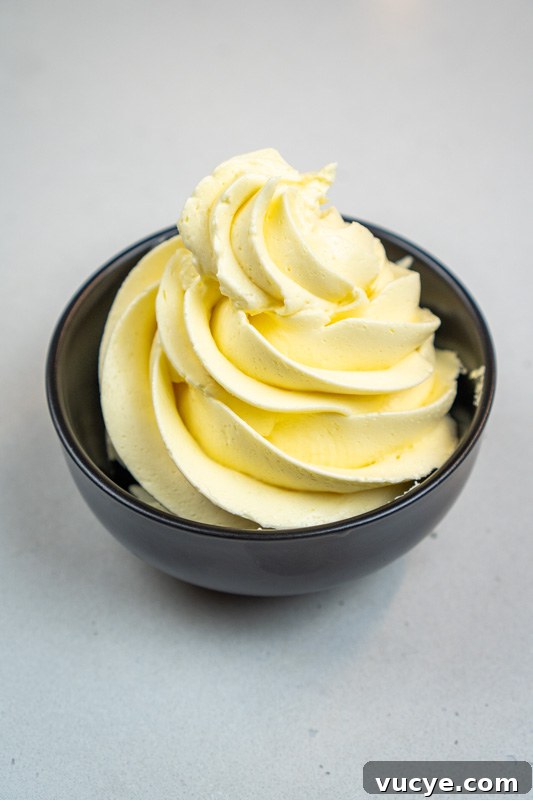
How to Make Buttercream Without Powdered Sugar
This Swiss meringue buttercream is easiest to make with a stand mixer, though a hand mixer and a large bowl will work with patience and frequent scraping. The key is temperature control: make sure your butter is fully at room temperature so it incorporates smoothly and you avoid a curdled texture.
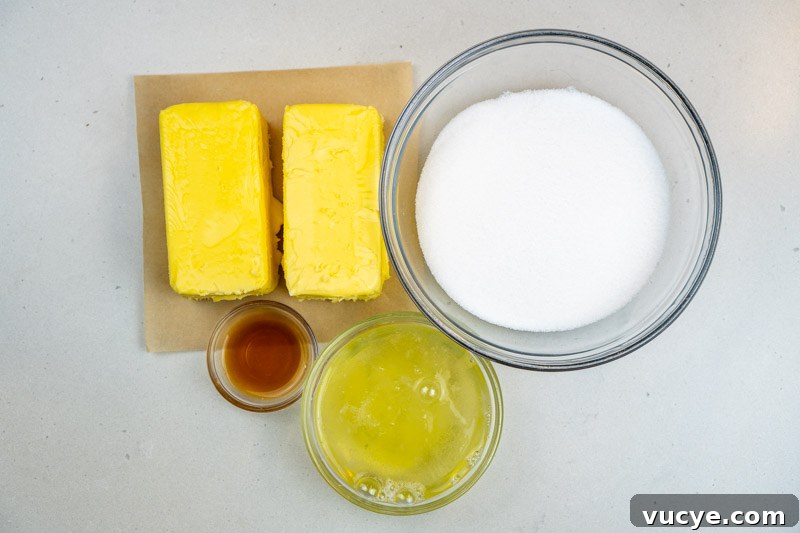
An instant-read thermometer is helpful to ensure the egg whites reach the correct temperature for pasteurisation and stability. If you don’t own one, you can use pasteurised egg whites from a carton instead.
To begin, add a little water to a saucepan and bring it to a gentle simmer over low heat. In a heatproof bowl (or the bowl of your stand mixer) whisk together egg whites, caster sugar (or granulated sugar), and a pinch of salt. Set the bowl over the simmering water making sure the bowl bottom does not touch the water. Whisk constantly until the mixture reaches about 70°C / 160°F on an instant-read thermometer — roughly 10 minutes. If you don’t have a thermometer, heat until you can no longer feel sugar granules between your fingers.
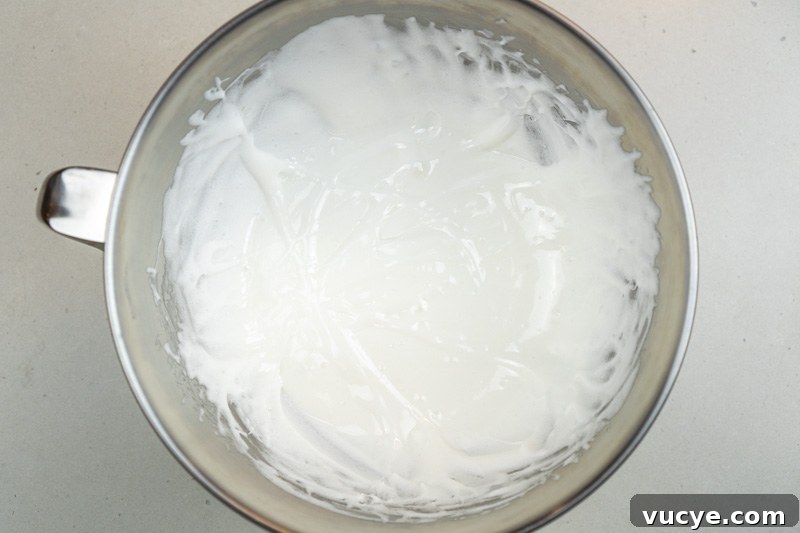
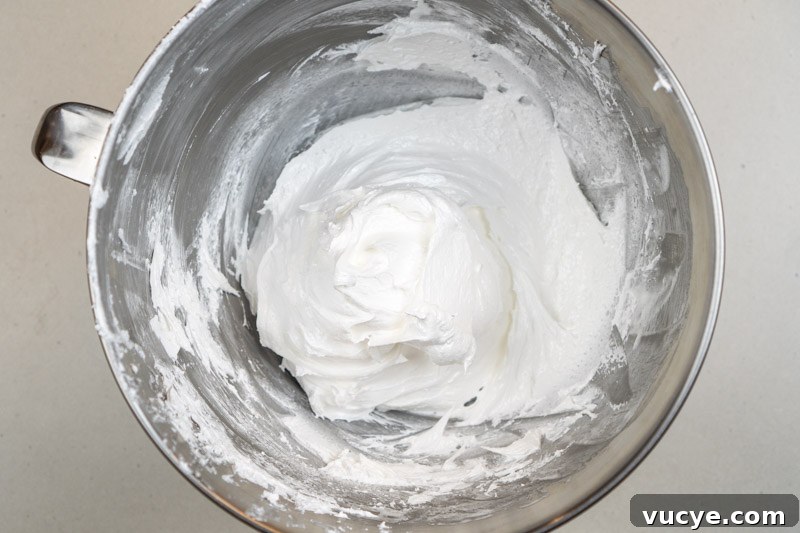
This warmed, sweetened egg-white mixture is the start of a Swiss meringue. Remove the bowl from the heat and, using a stand mixer fitted with a whisk (or a hand mixer), whip the egg whites on high until glossy and they form stiff peaks. It’s essential that the meringue cools completely to room temperature before you add butter — if any residual heat remains it will melt the butter and collapse the frosting.
With the mixer running on medium, add the room-temperature, unsalted butter a piece at a time, making sure each piece is fully incorporated before adding the next. Scrape down the bowl periodically to ensure an even texture. If you’re using a stand mixer, switch to the paddle attachment when most of the butter is incorporated. Add vanilla extract and mix on medium-low for a minute or two to remove excess air and smooth the buttercream.
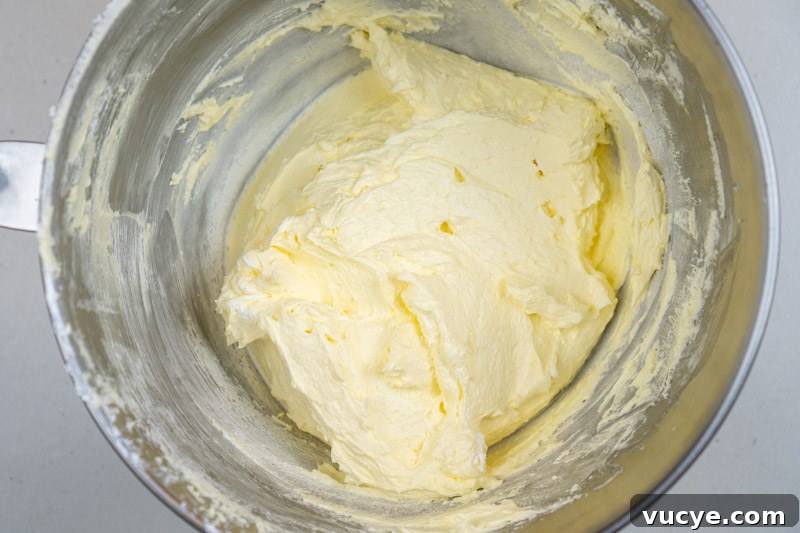
The finished frosting is ready to pipe, spread, or decorate with. It’s ideal for layer cakes, cupcakes, or detailed piping work thanks to its stability and smooth, glossy finish.
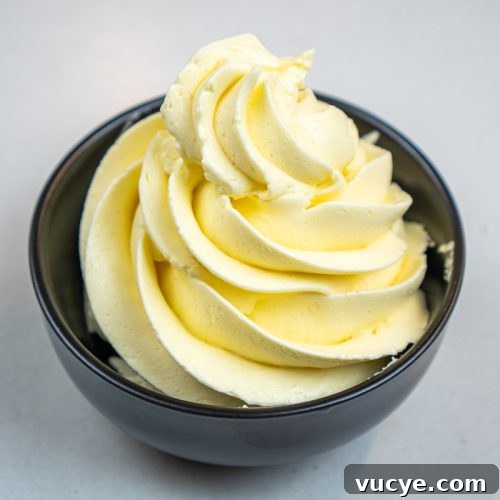
Buttercream Frosting Without Powdered Sugar
Equipment
- Instant-read thermometer (recommended)
Ingredients
- 100 g (3 ½ oz) egg whites (about 3 eggs)
- 250 g (1 ¼ cups) caster sugar (or granulated sugar)
- Pinch of salt
- 500 g (1 lb) unsalted butter, room temperature, cut into pieces
- 2 tsp vanilla extract
Instructions
- Add the egg whites, sugar and salt to a large heatproof bowl and whisk to combine.
- Bring a saucepan of water to a gentle simmer. Place the bowl over the pan (don’t let the bowl touch the water) and whisk constantly until the mixture reaches 70°C / 160°F — about 10 minutes. If you don’t have a thermometer, heat until sugar granules are fully dissolved when rubbed between your fingers.
- Remove from heat. Whip the warmed egg whites on high with a stand mixer or hand mixer until glossy, at stiff peaks, and fully cooled to room temperature.
- With the mixer on medium, add the butter one piece at a time, ensuring each piece is fully incorporated before adding more. Scrape the bowl as needed.
- Switch to the paddle attachment if using a stand mixer. Add vanilla and mix on medium-low until incorporated and slightly deflated for a smooth finish. The frosting is ready to use.
Notes
- Caster (superfine) sugar dissolves more easily, but granulated sugar will work — you may need to heat slightly longer.
- Heating the whites to 70°C / 160°F pasteurises them and stabilises the meringue. Use carton pasteurised egg whites if you prefer not to heat.
- The meringue must be completely cool before adding butter; any warmth will make the butter melt and cause separation. Wait until the bowl feels room temperature to the touch.
- For chocolate buttercream: reduce butter by 150 g, melt 150 g dark chocolate, and stir it in after the butter is fully incorporated.
- Swap vanilla for other extracts to change flavor. Use gel food coloring if coloring is desired to avoid thinning the frosting.
- This recipe yields enough to frost a standard 3-layer cake or about 24 cupcakes.
- Store in an airtight container in the refrigerator for up to one week (bring to room temperature before using). Freeze for up to three months.
Nutrition
Disclaimer: Nutritional information is automatically generated and provided as guidance only.
This Swiss meringue buttercream is slightly more involved than an American buttercream, but it’s less sweet, more buttery, stable, and does not require powdered sugar.
Have questions or want tips for variations? Leave a comment.