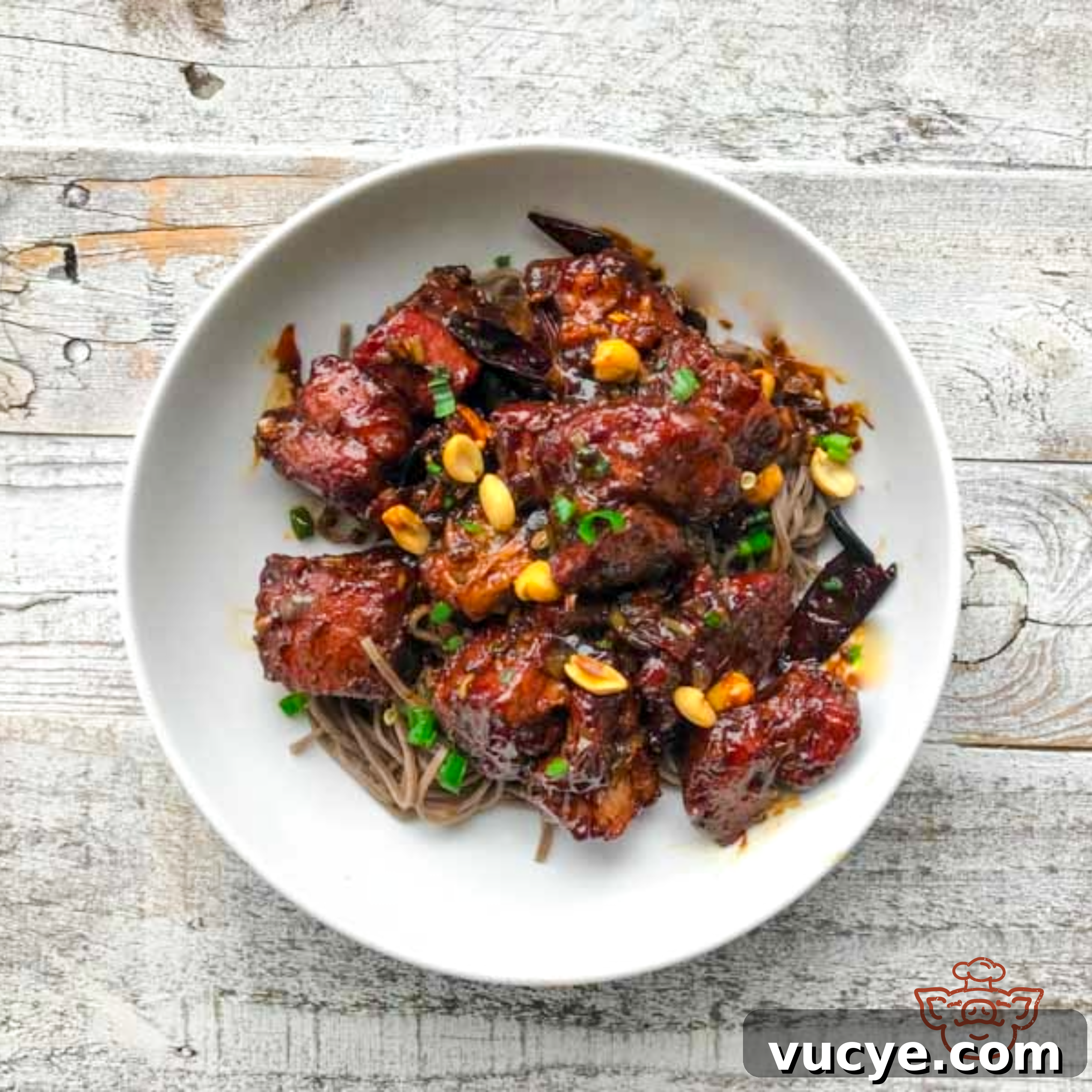
This week I combined two recent hits into one fusion recipe. I took the smoky, low-and-slow technique I use for pork belly burnt ends and married it with the bright, numbing heat of a Sichuan-style Kung Pao sauce. The result—Smoked Kung Pao Pork Belly Burnt Ends—is a wood-fired twist that brings wok flavors to the ceramic grill.
Rendered pork belly fat carries the Kung Pao glaze beautifully, giving each bite a silky mouthfeel and layered spice. Unlike traditional sweet burnt ends, this version is savory, tangy, and addictive. It’s straightforward to make on a Big Green Egg and delivers impressive results for any gathering. Pour a Riesling if you like, and enjoy this smoky, spicy fusion dish.
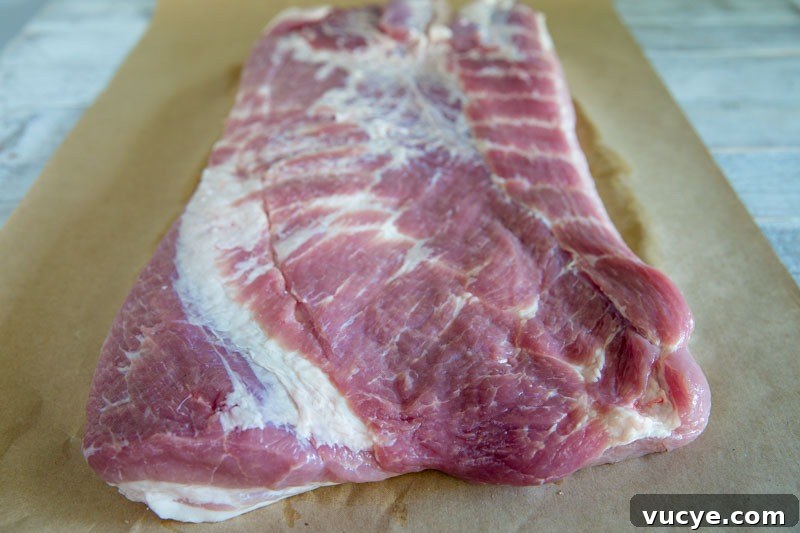
Step 1: Trimming and Cubing the Pork Belly
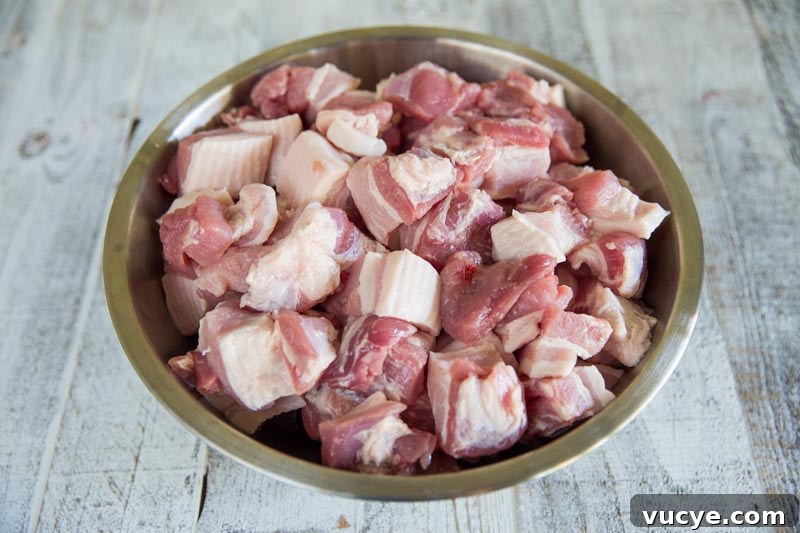
Begin with a clean, evenly trimmed slab of pork belly so the pieces render consistently. Remove excess hanging fat and any silver skin. Cube the belly into uniform 2-inch pieces; they’ll shrink slightly during the smoke, and starting at 2 inches leaves you with substantial, meaty bites.
After cubing, you’re ready to apply a binder and the dry seasoning, which helps build a consistent bark for the glaze to cling to.
Step 2: The Binder and Seasoning Application
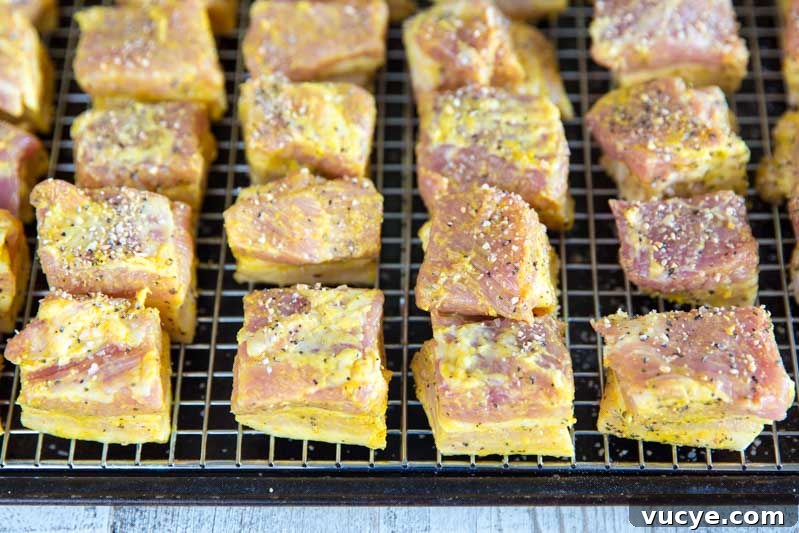
Coat the cubes lightly with yellow mustard as a tacky binder so the rub adheres without adding noticeable mustard flavor. Season all sides evenly with kosher salt, coarse black pepper, and garlic powder.
Place the seasoned cubes on a wire rack to make it easy to transfer them to the grill and to ensure even air circulation during the smoke.
Step 3: Big Green Egg Setup and Smoking
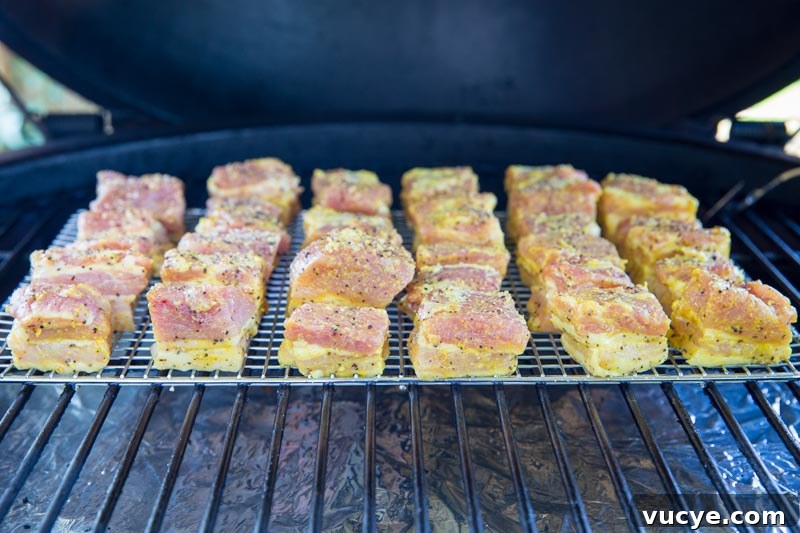
Set up the Big Green Egg for indirect cooking using a plate setter or ConvEGGtor and a few chunks of hickory for a classic smoke. Bring the grill to a steady 275°F, wait until the initial thick smoke clears, then place the rack of pork belly cubes on the grate.
Smoke until the bark turns dark and the fat begins to soften—about three hours. You want a deep mahogany exterior before moving on to glazing and braising.
Step 4: The Low-and-Slow Smoke and Moisture Management
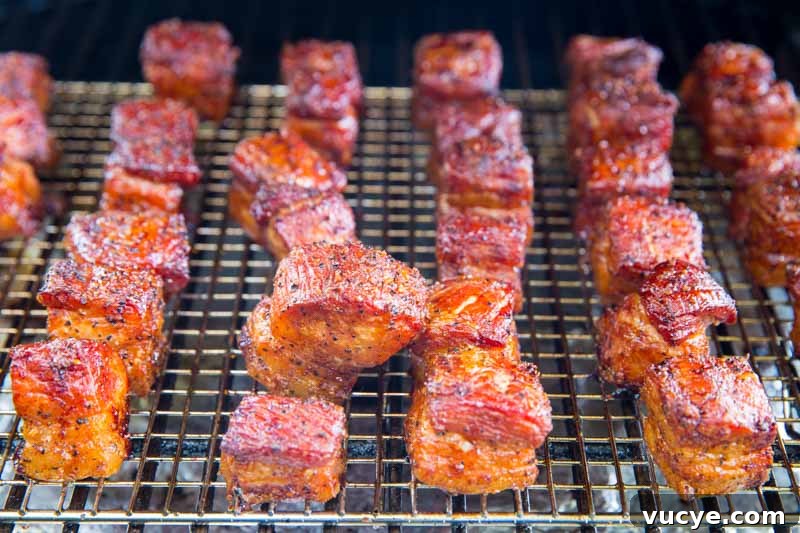
Maintain humidity in the Egg to keep the exterior from drying while the fat renders. Spritz the meat hourly with apple juice to retain moisture, build a tacky surface for the glaze, and aid caramelization.
Smoke until the internal temperature reaches about 190°F, checking several cubes with an instant-read thermometer because fat content varies. When the meat is at target, remove it from the smoker and prepare the sauce and aromatics.
Sourcing Your Ingredients: The Key to Authentic Flavor
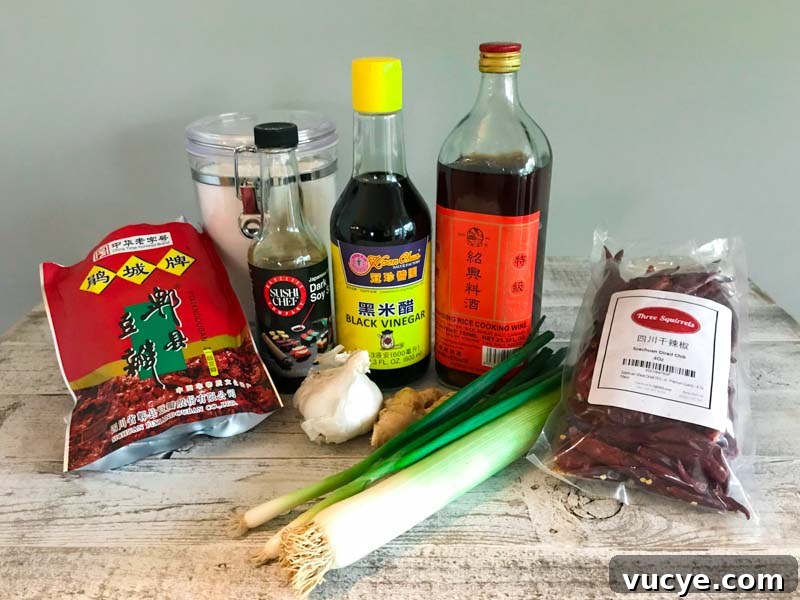
Use authentic Chinese pantry items when possible for the best flavor: Shaoxing wine, Sichuan peppercorns, Chinese black vinegar, and fermented chili-bean paste contribute essential numbing heat, acidity, and umami. If you can’t find something, reasonable substitutions work, but the traditional ingredients create a deeper, more authentic profile.
Also gather cornstarch, sugar, garlic, green onion, fresh ginger, peanut oil (high smoke point), and leeks for sweetness. With everything assembled you’ll be ready to make the Kung Pao glaze and finish the pork belly.
Step 5: The Mise en Place for the Kung Pao Sauce
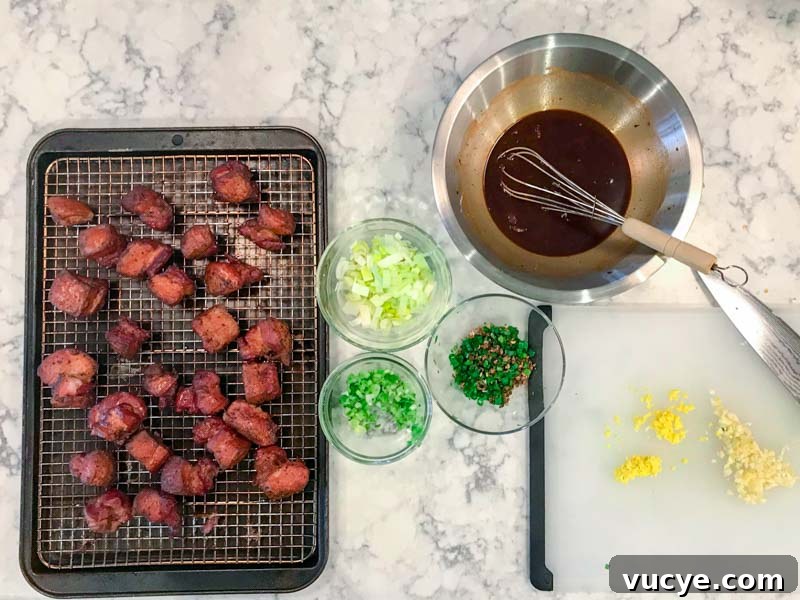
Measure and stage every component before combining them. In a small bowl mix Shaoxing wine, Chinese black vinegar, soy sauce, cornstarch, sambal oelek (or fermented chili-bean paste), and sugar into a smooth slurry that will thicken the sauce.
Crush toasted Sichuan peppercorns and separate the white and green parts of the scallions. Slice the leeks and mince garlic and ginger so everything is ready for a quick sauté.
Step 6: Sautéing the Aromatics
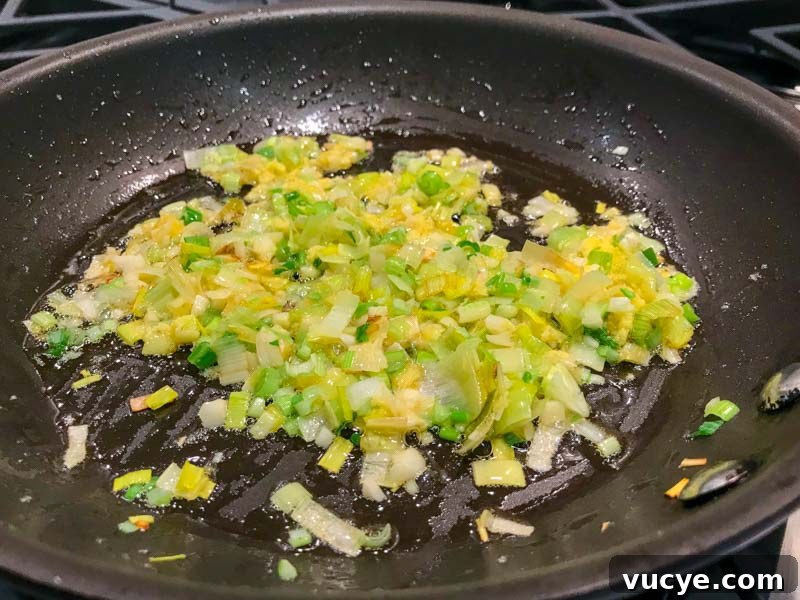
Heat peanut oil in a pan over medium-high heat and sauté the leeks, the white parts of the scallions, garlic, and ginger until fragrant and translucent, about 1–2 minutes. Peanut oil tolerates high heat and helps you develop toasted aromatics without burning.
These aromatic flavors form the base that will marry the smoky pork and the Kung Pao glaze.
Step 7: The Final Toss and Glaze
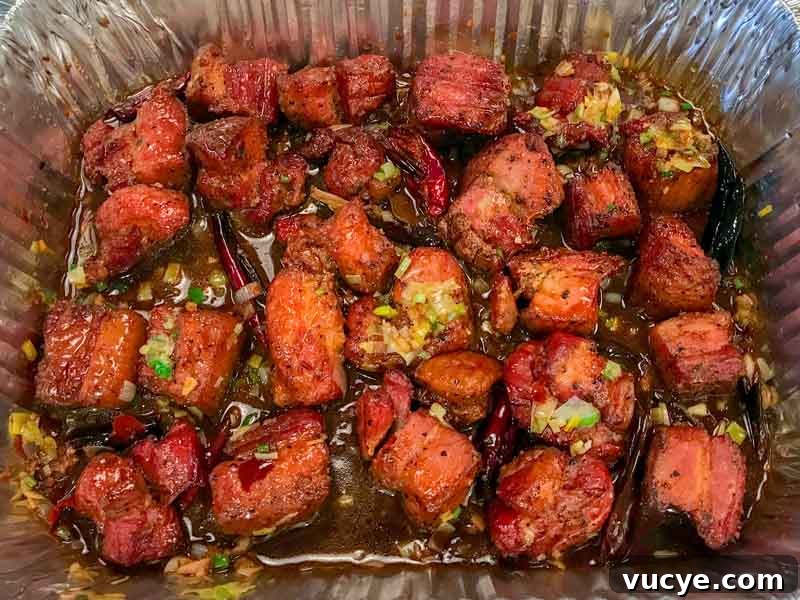
Place the smoked pork belly into an aluminum pan, add the sautéed aromatics, then pour the prepared Kung Pao sauce over everything. Toss to coat each cube thoroughly.
Return the pan to the Egg for 15–20 minutes so the cornstarch can set and the glaze begins to tighten and caramelize. You’ll know it’s ready when the sauce deepens to a translucent mahogany and the edges of the pork develop slight char.
Step 8: The Final Braise and Glaze
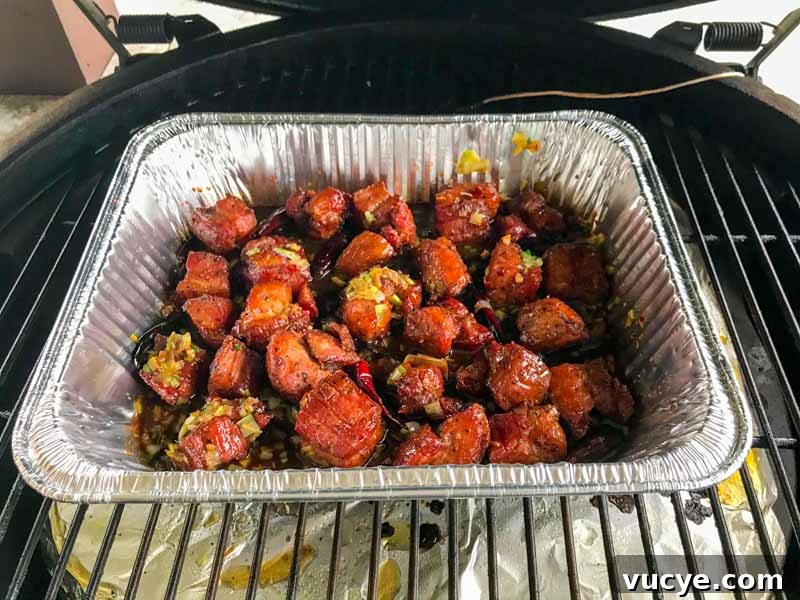
For a fork-tender finish, cover the pan tightly with foil and braise in the Egg for about 45 minutes. Trapping steam helps the rendered fat absorb the Kung Pao flavors and softens the pork to a melt-in-your-mouth texture.
Keep the dome closed so the sauce thickens evenly. When the pork probes like softened butter, remove the foil, toss one last time to coat in the glossy glaze, and finish with the crunchy elements.
Final Serving and Plating
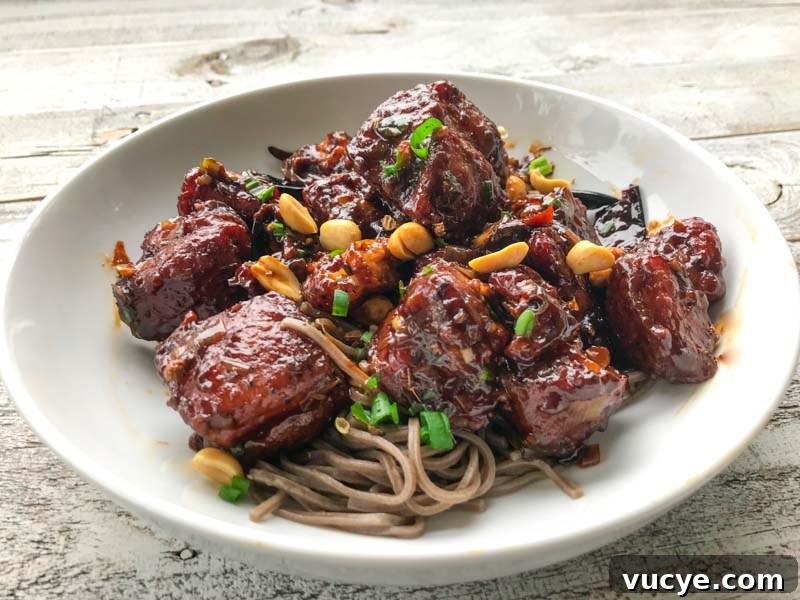
Serve the Smoked Kung Pao Pork Belly Burnt Ends over a neutral base to balance the richness—Korean buckwheat noodles or steamed jasmine rice work well. The noodles’ nuttiness or the rice’s clean profile soaks up the sauce and complements the tender pork.
Finish with crushed toasted Sichuan peppercorns, sliced green onion tops, and roasted unsalted peanuts for texture, a tingly finish, and fresh color. This dish rewards the time it takes and is fantastic to serve to guests.
Storage and Leftovers
Leftovers store well and make excellent lunches. Refrigerate pork and sauce in an airtight container for up to four days. Reheat gently in a skillet over low heat with a splash of water or Shaoxing wine to loosen the glaze and restore tenderness.
- The Kung Pao Bowl: Reheat and serve over steamed jasmine rice with charred bok choy.
- Asian-Style Tacos: Shred the pork and serve in warm tortillas with a quick cabbage slaw, lime, and cilantro.
- The Fusion Slider: Place a few glazed cubes on a toasted brioche bun with spicy mayo and pickled cucumbers.
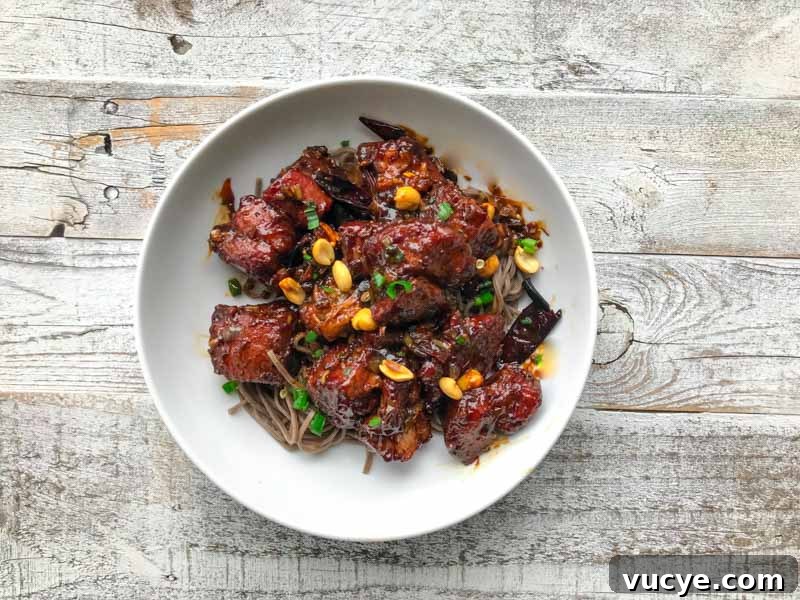
Smoked Kung Pao Pork Belly Burnt Ends: Big Green Egg Recipe
Ingredients
- 1 1/2 pounds pork belly, cubed
- Yellow mustard, for slather
- 2 Tbs kosher salt
- 2 Tbs coarse black pepper
- 1 Tbs garlic powder
- Sauce:
- 4 Tbs soy sauce
- 1 Tbs Chinese black vinegar (or distilled white vinegar)
- 1 Tbs cornstarch
- 1 Tbs sambal oelek (or fermented chili-bean paste)
- 1/3 cup peanut oil
- 2 small leeks, white and light green parts only, sliced (about 1/2 cup)
- 3 scallions, whites minced, greens sliced
- 2 cloves minced garlic
- 1 Tbs fresh ginger, minced
- 4 Tbs Shaoxing wine (or dry sherry)
- 2 tsp sugar
- Garnish:
- 1 Tbs Sichuan peppercorns, toasted and ground
- 1/2 cup roasted unsalted peanuts
- Reserved green parts from scallions
- 12 hot Chinese dry chilies, seeded
Instructions
- Cube the pork belly into 1″ pieces.
- Coat the cubes lightly with yellow mustard, then season with salt, pepper, and garlic powder.
- Set your smoker to 275°F using hickory for smoke.
- Place the pork belly on a wire rack in the smoker for about 3 hours or until internal temperature reaches 190°F.
- Shoot a light spritz of apple juice every hour to keep the meat moist and to build a tacky surface.
- Remove the pork belly when it reaches 190°F and set aside.
- Mix soy sauce, black vinegar, cornstarch, sambal oelek, Shaoxing wine, and sugar into a smooth slurry and set aside.
- Sauté leeks, the white parts of the scallions, garlic, and ginger in peanut oil until fragrant, about 1–2 minutes.
- Put the smoked pork belly in an aluminum pan, add the aromatics, and pour the sauce over the top.
- Cover and return to the smoker for 30–60 minutes, or until the sauce thickens.
- Toss with ground Sichuan peppercorns, scallion greens, and peanuts.
- Serve over rice or noodles.