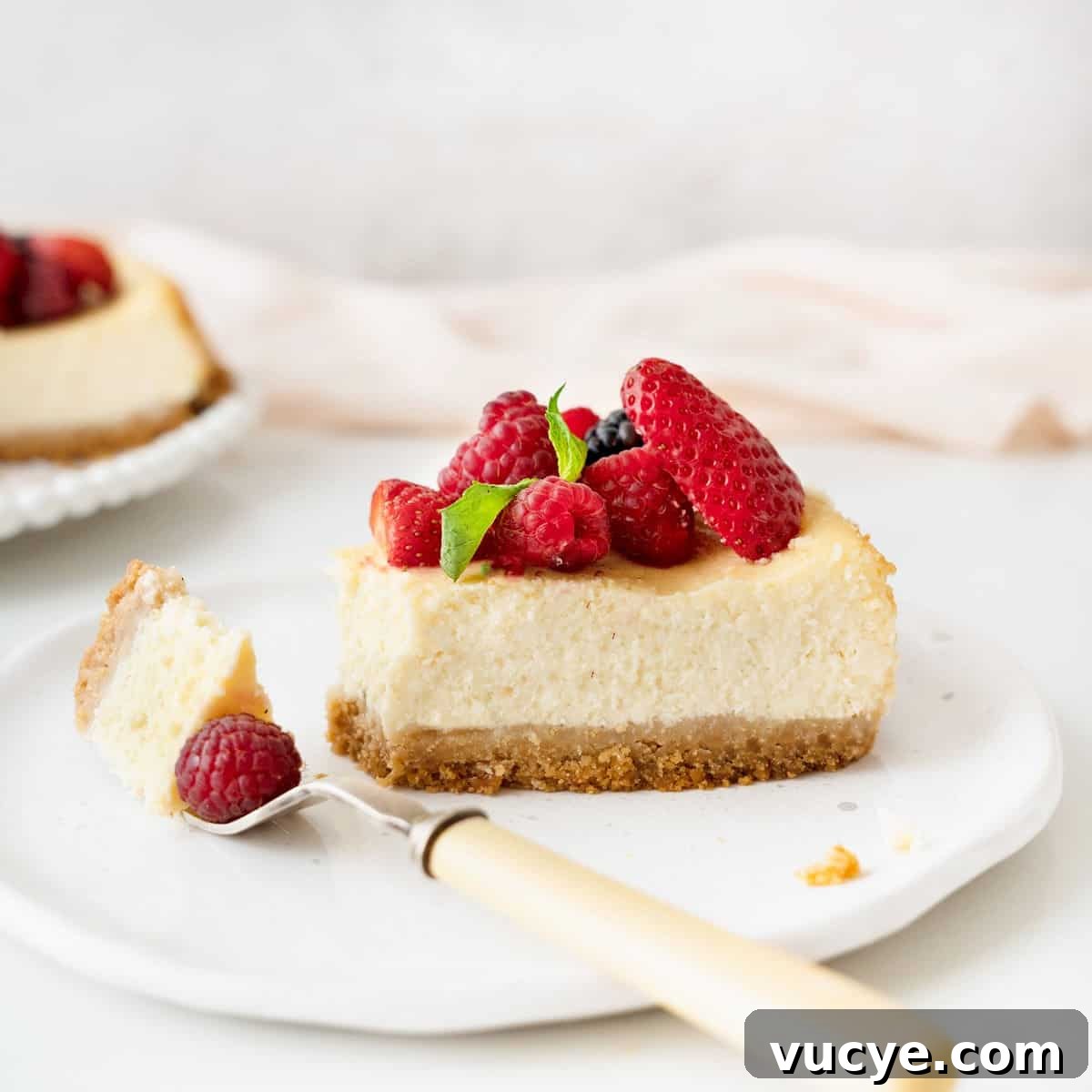
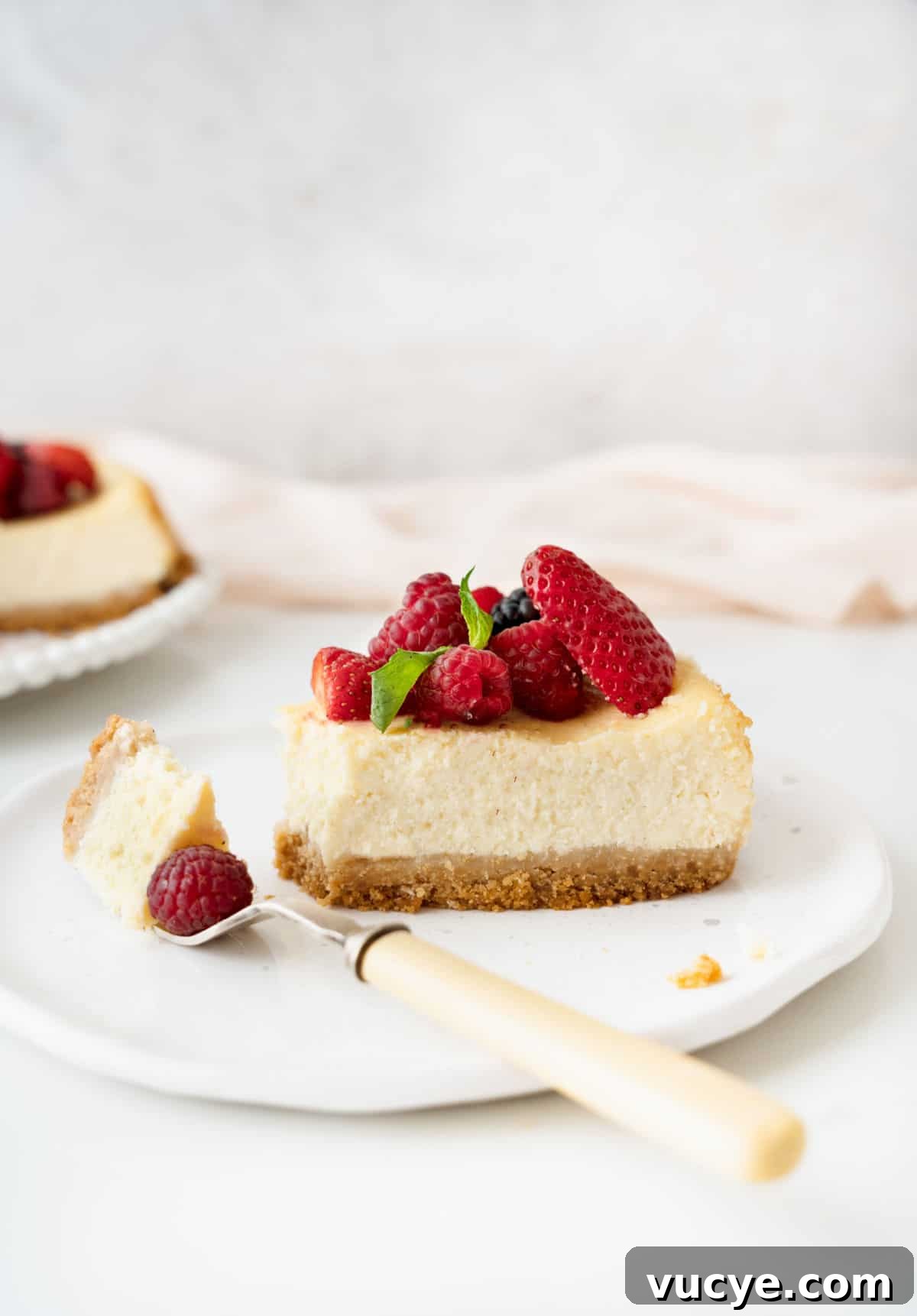
This ricotta cheesecake blends cream cheese and ricotta for a lighter, gently rustic dessert. The filling is creamy, mildly tangy and sweet, poured into a buttery graham cracker crust and baked until golden and just set. It stores well in the refrigerator and freezes beautifully, so you can prepare it ahead of time.
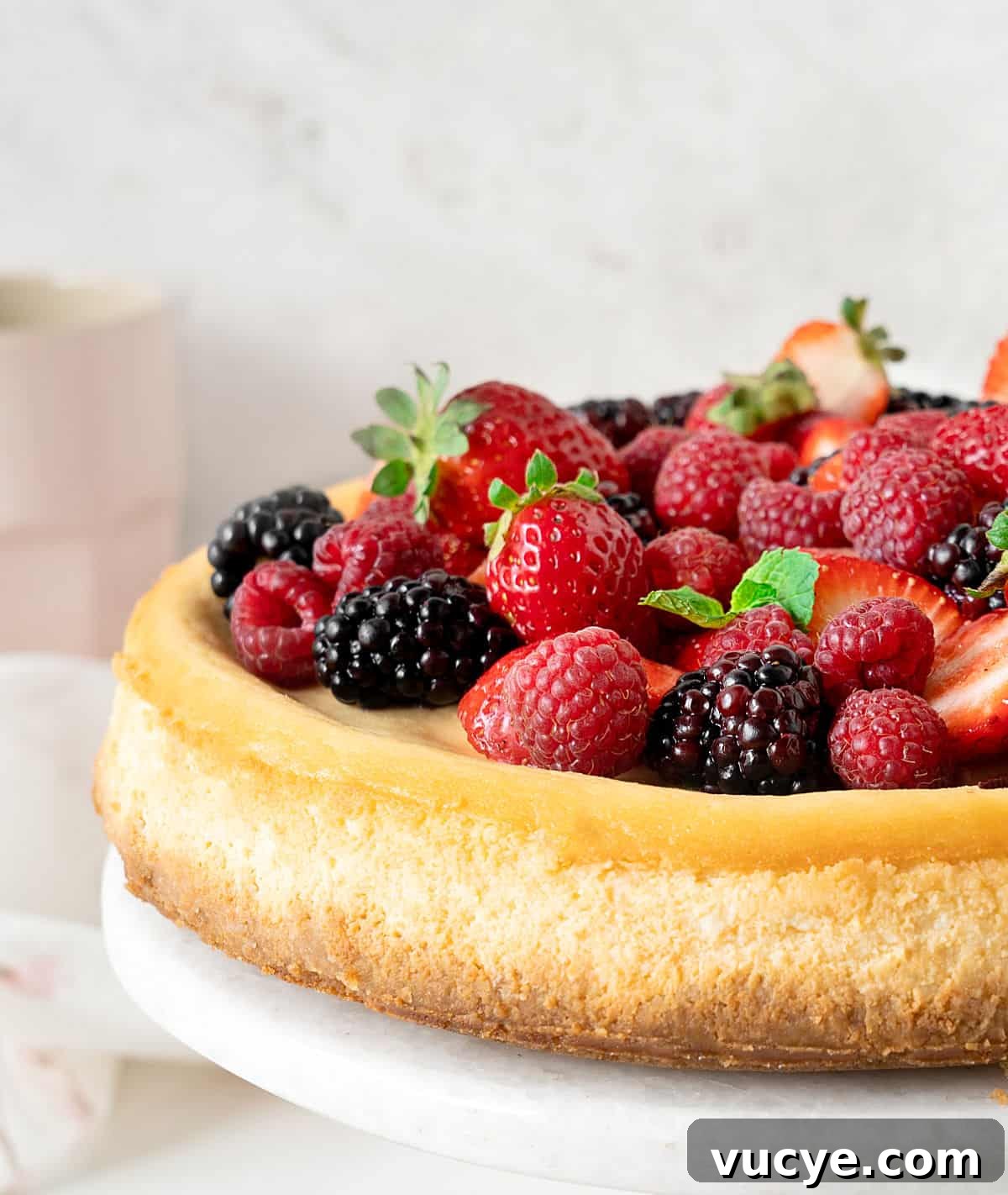
Unique dessert
Our crustless ricotta cheesecake is a popular recipe on this blog, and this version adds cream cheese for a slightly American twist on the Italian classic. The result is excellent: ricotta’s mild, slightly sweet taste and curdled texture give the cake a creamy but rustic character. It’s lighter than many traditional cheesecakes without losing its satisfying mouthfeel.
This cheesecake works well for special occasions such as Easter and Mother’s Day, or whenever you want a lighter, elegant dessert. If you enjoy the ricotta flavor, this is a lovely variation to try.
FAQ
Yes. The cheesecake keeps well in the refrigerator for several days and often benefits from resting a day before serving. It can also be frozen for longer storage; be sure to wrap it tightly to prevent drying.
Yes, but full-fat ricotta provides the best creaminess and texture. Reduced-fat ricotta can work in a pinch, though results may be slightly less rich. Try different brands to find one you like.
Ingredient Notes
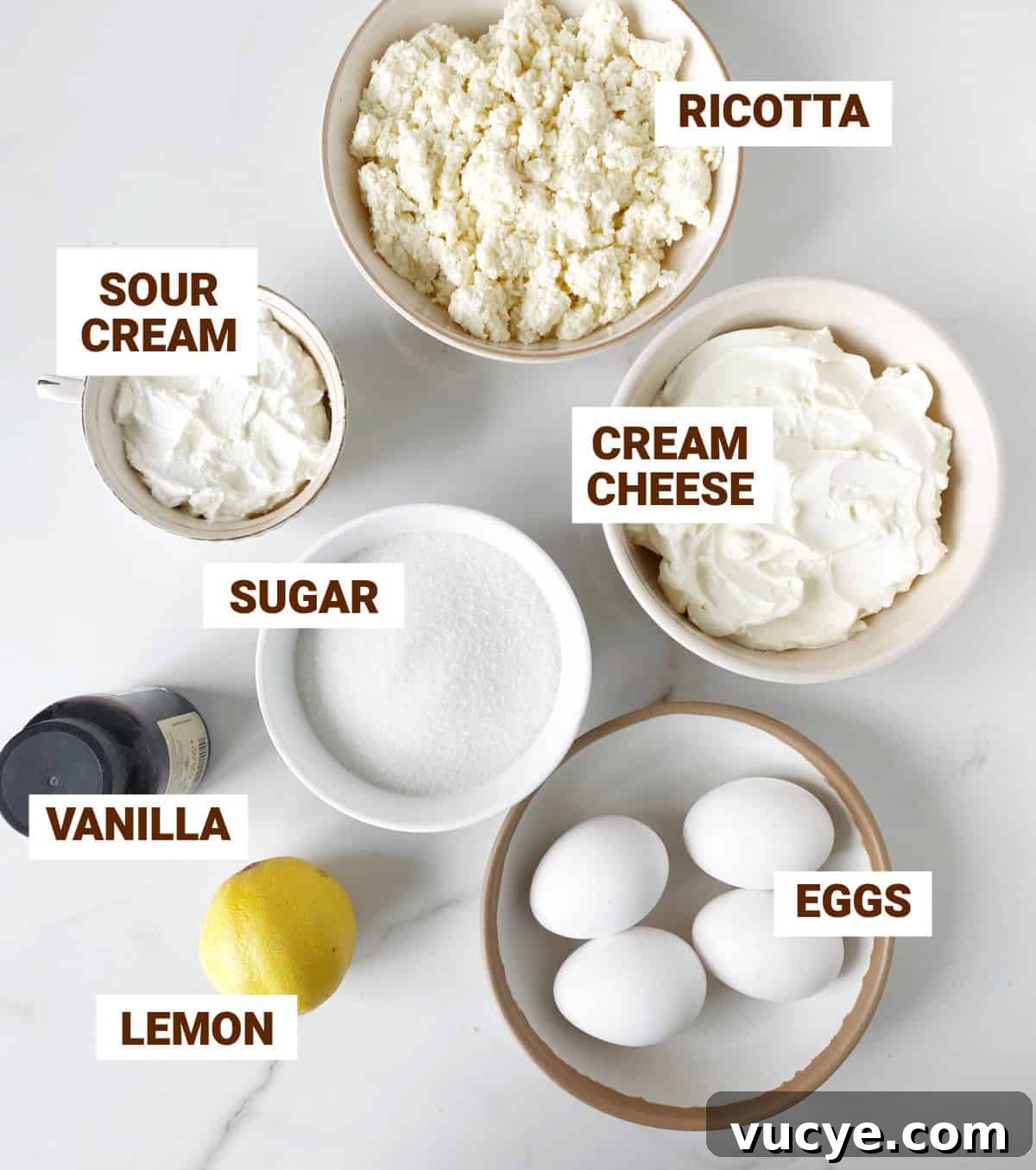
- Graham cracker crumbs: Use fine crumbs for a compact crust. A food processor yields the best texture. Store-bought or homemade graham crackers both work well.
- Ricotta cheese: Whole-milk ricotta gives the best flavor and texture because of its higher fat content.
- Cream cheese: Full-fat cream cheese is recommended for a smooth, creamy filling.
- Sour cream: Full-fat sour cream adds richness and helps the filling set with a pleasant texture.
- Lemon zest: Freshly grated zest brightens the filling—use fresh for best flavor.
Exact quantities are in the recipe card below. If you want brand suggestions or alternatives, check the Ingredients page on the blog.
Variations & substitutions
- Spiced: Substitute lemon zest with ground cardamom or cinnamon for a warm, aromatic twist.
- Mixed citrus: Combine lemon with lime or orange zest for a more complex citrus profile.
- Liquor: Add 1–2 tablespoons of orange liqueur (Grand Marnier or Cointreau) or Frangelico for extra depth.
- Almond: Replace lemon zest with ½ teaspoon pure almond extract and add a tablespoon of Amaretto for a nutty flavor.
- Cookie crust: Swap graham crackers for cinnamon graham, chocolate wafers, or vanilla wafers to change the base flavor.
If you prefer a pure ricotta option, see the crustless ricotta cheesecake recipe for a 100% ricotta version.
Steps to make ricotta cheesecake
The method is similar to other cheesecakes with attention to temperature and gentle mixing to avoid adding excess air.
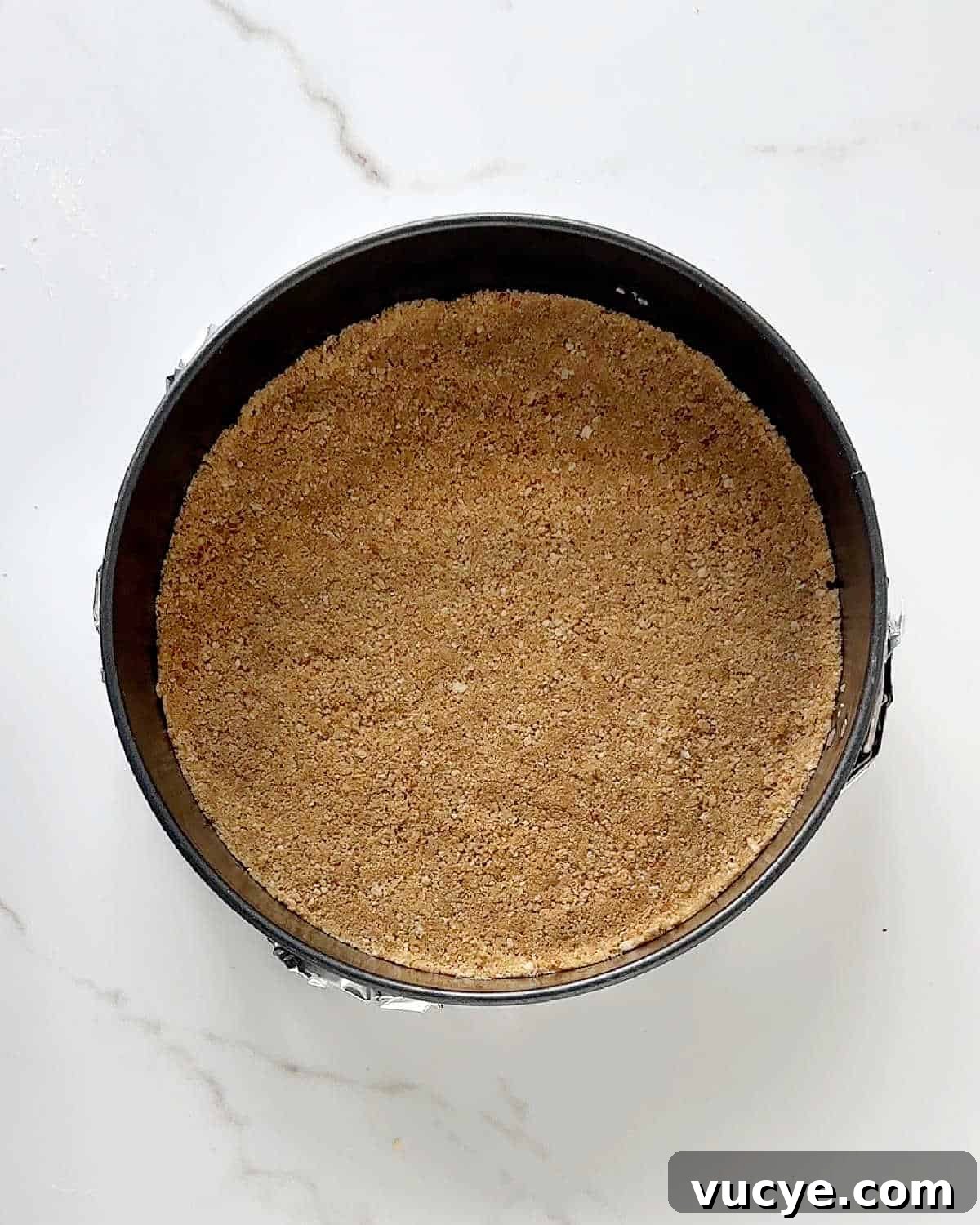
- Crust: Bake the graham cracker crust for about 10 minutes before adding the filling to give it structure.
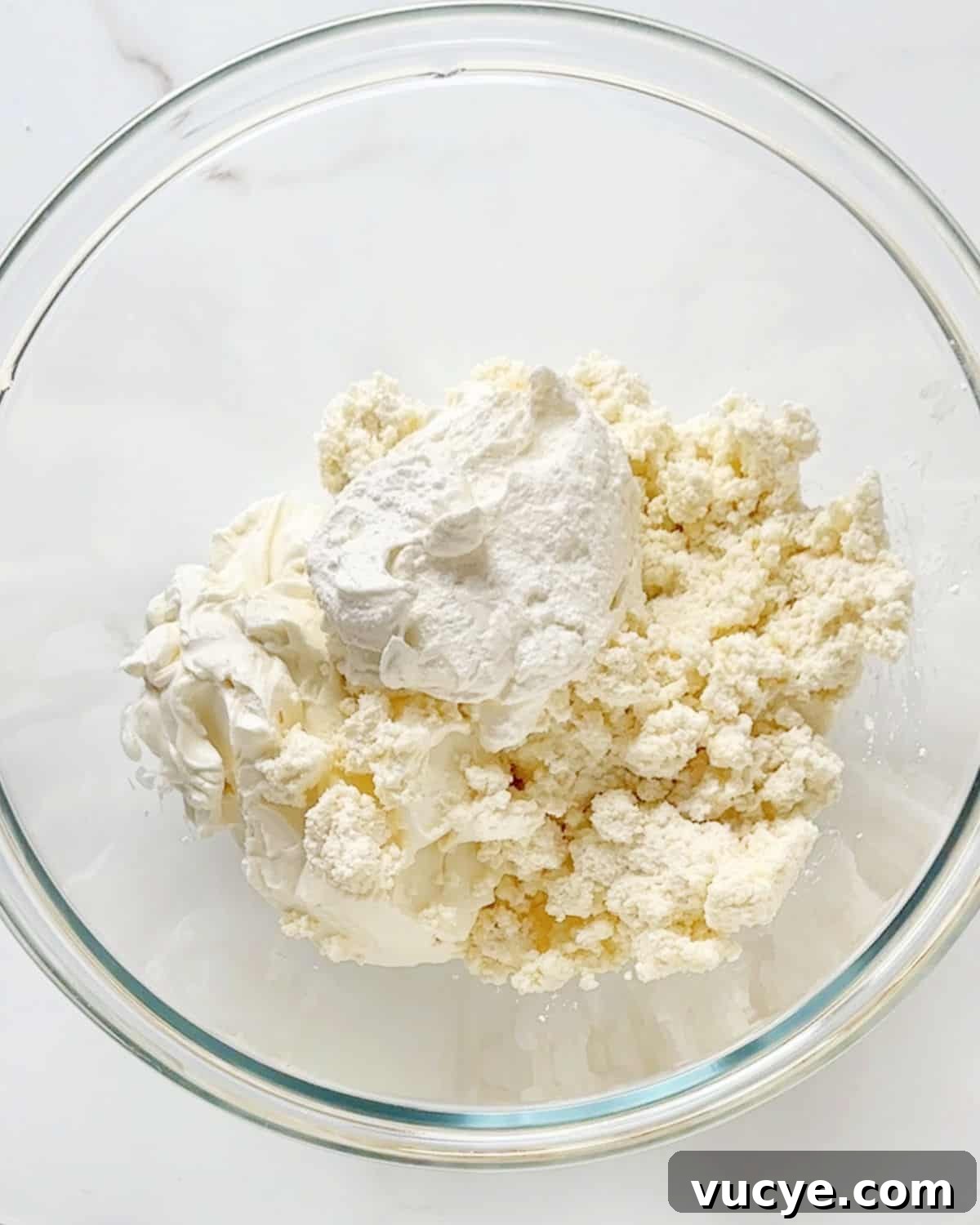
- Filling: Bring the cream cheese, ricotta and sour cream to room temperature so they combine easily. Mix gently—excessive beating will incorporate air and can affect texture.
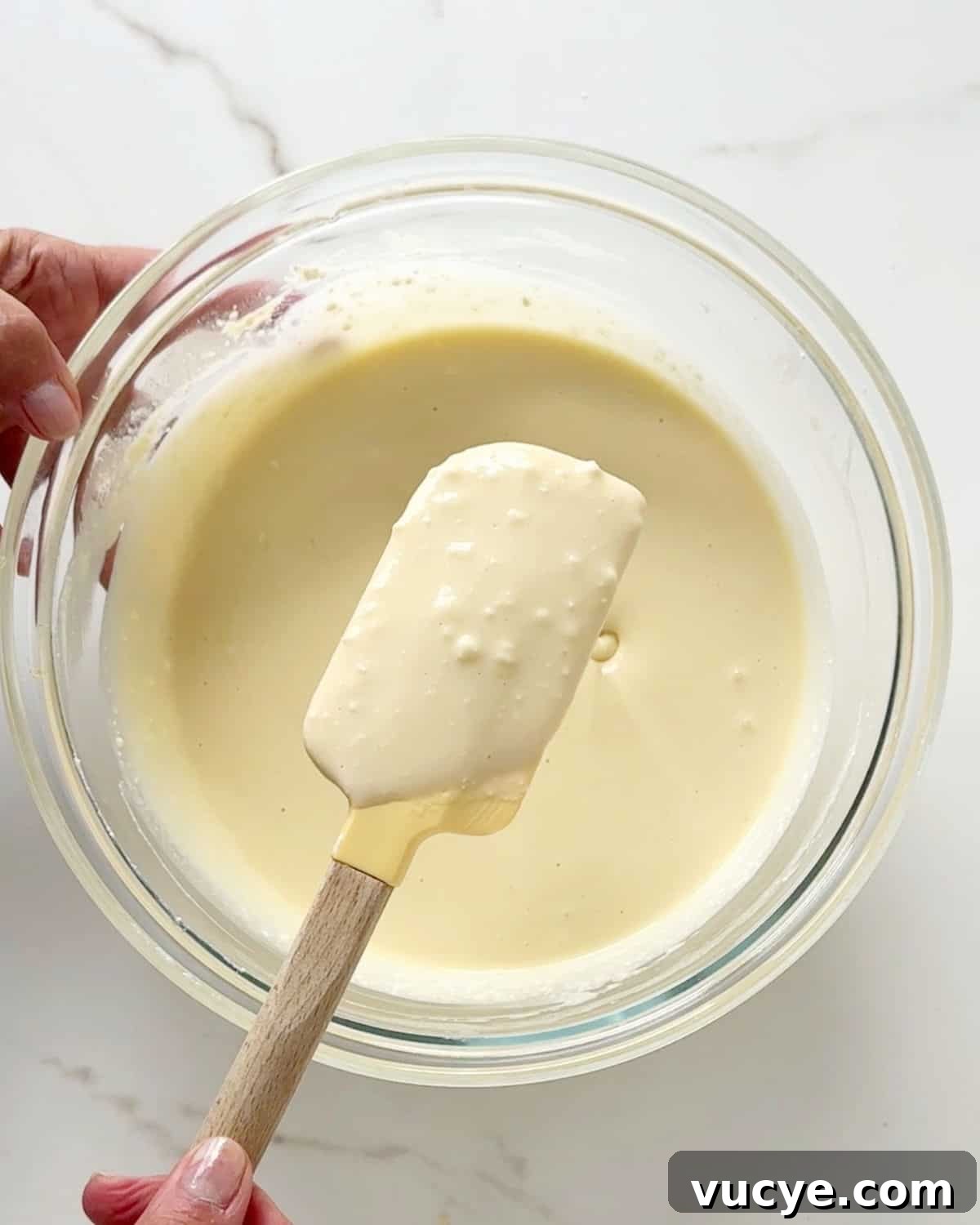
- Batter texture: The batter will be somewhat thin and may show small ricotta curds; this is normal and contributes to the cake’s rustic character.
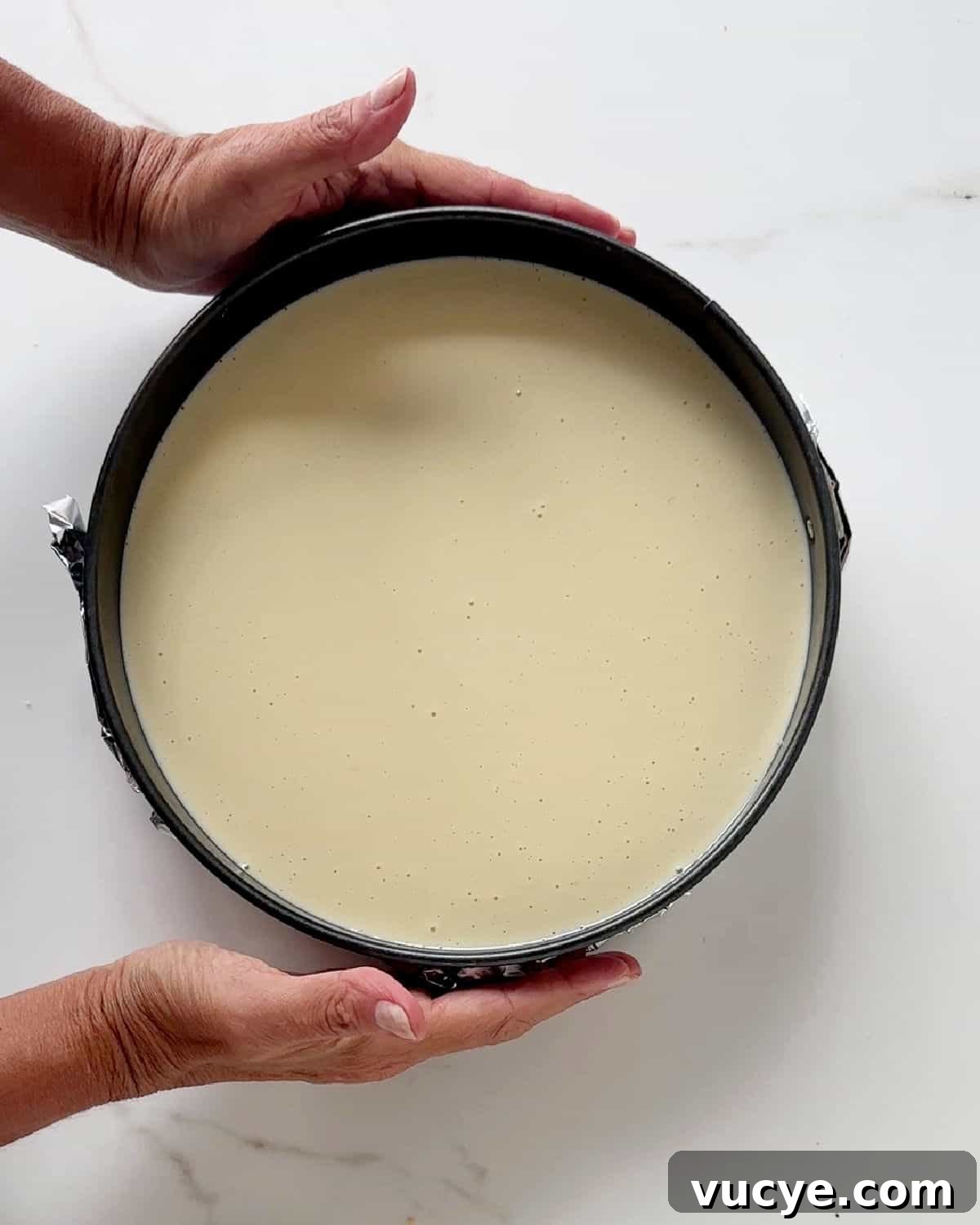
- Oven: Preheat the oven before pouring the batter into the prepared pan and follow the baking and cooling steps carefully to prevent cracks.
Vintage Kitchen Tip
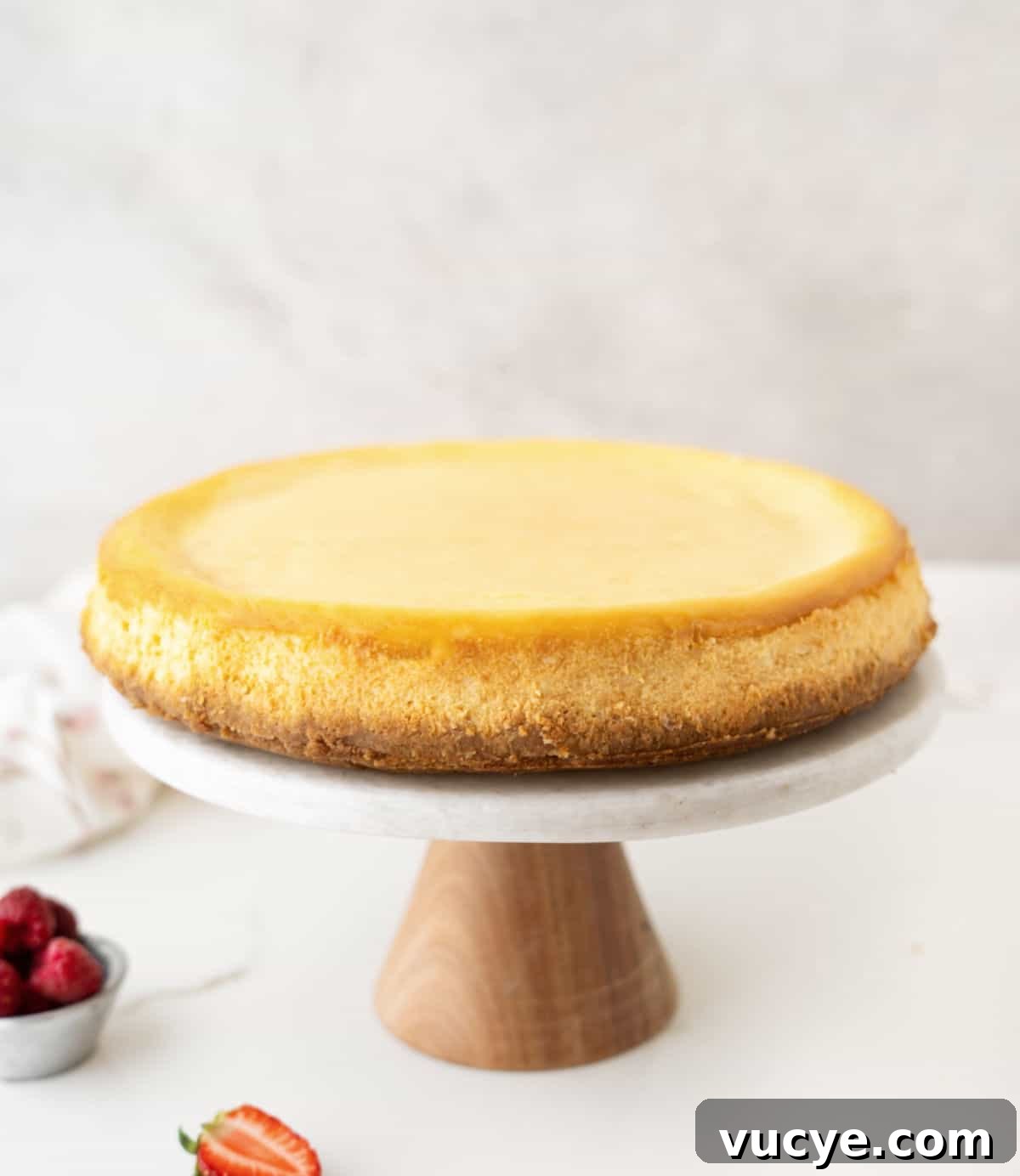
Maintain the correct oven temperature and allow the cheesecake to cool slowly before refrigerating. Rushing the cooling process increases the chance of cracks and a less creamy center.
Kitchen notes
- Organization: Read the recipe before starting and bring ingredients to the correct temperatures. Have your equipment and workspace ready to streamline the process.
- Baking time: Ovens and pans vary; use the suggested times as a guide and begin checking 10 minutes early. An oven thermometer helps ensure accurate temperature.
- Storage: Store covered in the refrigerator for several days. For freezing, wrap tightly in plastic wrap and add foil; freeze without fresh berries. Thaw in the refrigerator or at room temperature as time allows.
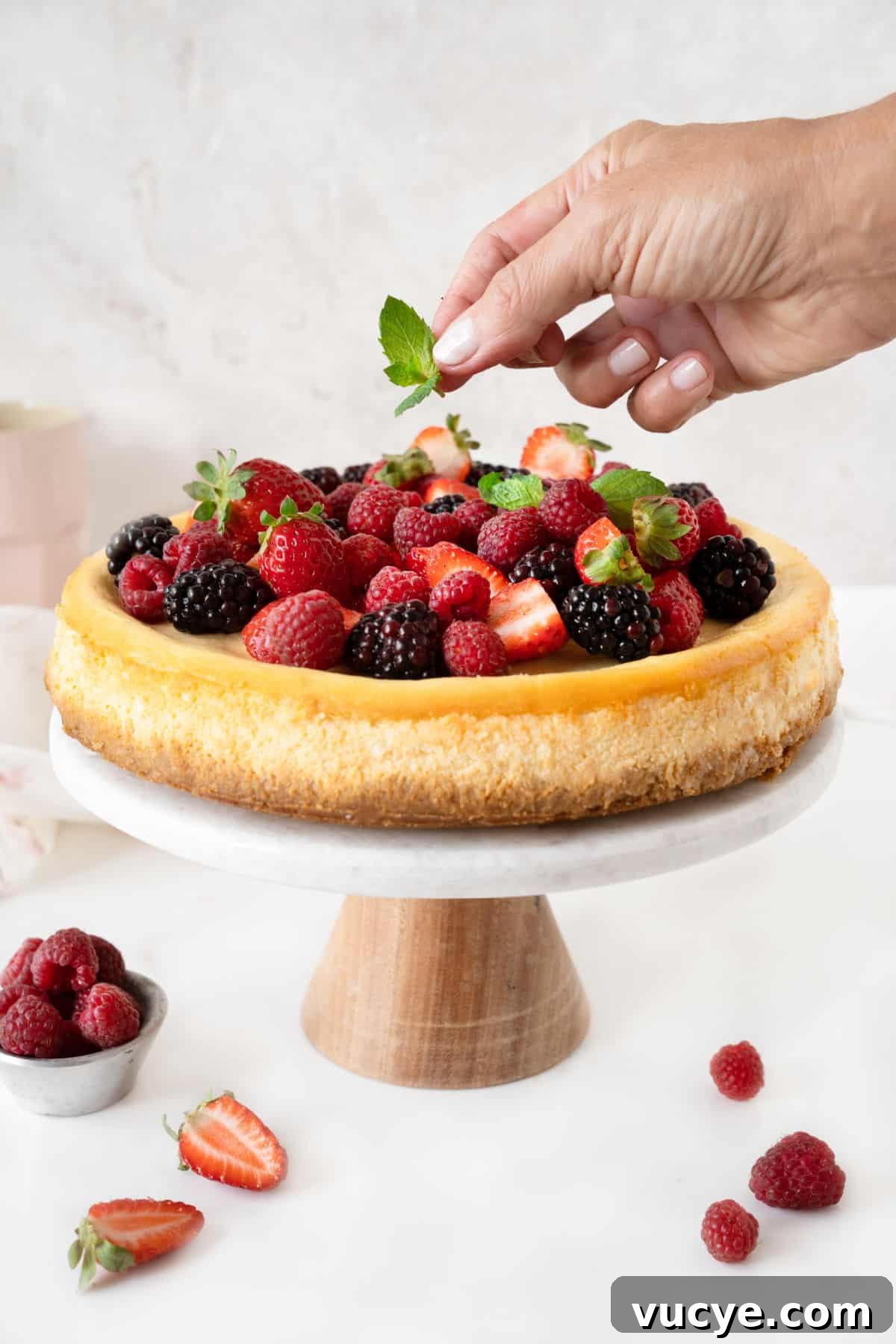
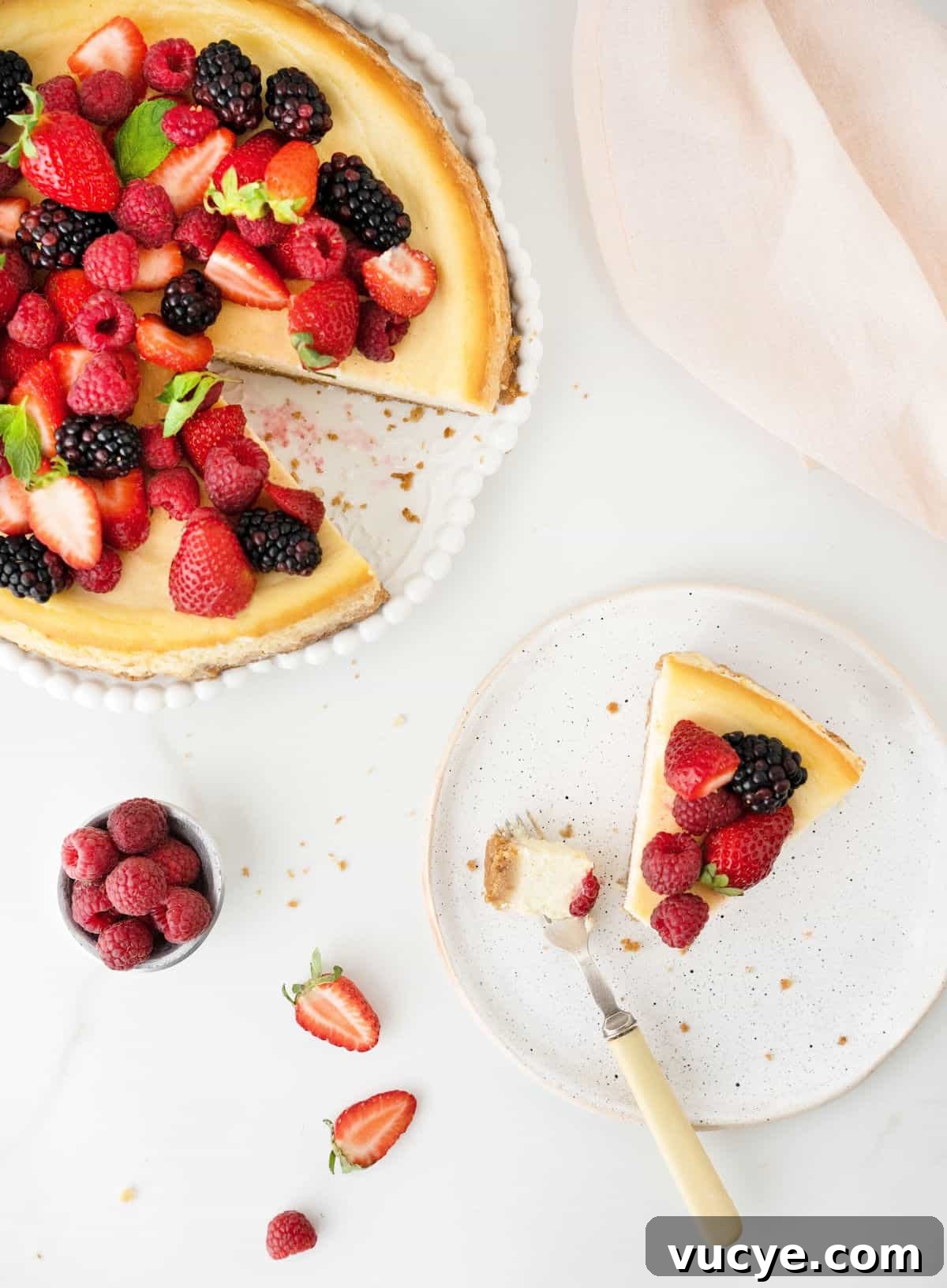
- Toppings: Fresh berries complement the ricotta’s brightness. Other options include fruit sauces or dulce de leche; avoid very strong chocolate sauces that can mask the ricotta flavor.
Troubleshooting common issues
Watery texture: Drain ricotta if it contains excess liquid and bake until the center is almost set. Insufficient baking or wet ricotta can cause a loose filling.
Crumbly texture: Overbaking can dry the cheesecake. Check early and remove when the center still has a slight wobble.
Overbrowning: If the top or edges brown too quickly, tent loosely with foil and continue baking until the filling is set.
Cracking: Cracks result from overbaking, rapid cooling, or excessive oven heat. Cool the cake slowly and avoid high temperatures.
Related recipes you might like:
- Crustless Ricotta Cheesecake
- Ricotta Pie Recipe (Authentic Italian)
- Ricotta Cake with Berries
- Ricotta Cake
If you tried this recipe and enjoyed it, please leave a comment and a rating below. If you had problems, share the details so we can troubleshoot together. You can also subscribe to the newsletter for baking tips and follow the blog on Pinterest.
As an Amazon Associate, the author may earn from qualifying purchases. See the site’s disclosure policy for details.
Ricotta Cheesecake
Ingredients
For the crumb crust:
- 1 ½ cups graham cracker crumbs, see Notes for alternatives
- 6 tablespoons unsalted butter, melted
For the ricotta filling:
- 1 ½ cups cream cheese, at room temperature
- 1 ½ cups ricotta cheese, at room temperature (drained if it has excess liquid)
- ⅔ cup sour cream, at room temperature
- ¾ cup sugar
- 4 eggs, at room temperature
- 1 teaspoon vanilla
- 2 teaspoons lemon zest
Instructions
For the crumb crust:
-
Preheat the oven to 325°F (170°C).
-
Prepare a 9-inch springform pan. Lining the bottom with foil is optional and can make removing the cheesecake easier.
-
Combine 1 ½ cups graham cracker crumbs with 6 tablespoons melted unsalted butter until evenly moistened and the mixture resembles wet sand. Press firmly into the bottom of the pan.
-
Bake the crust for 10 minutes, then remove and set on a rack while you make the filling. Do not turn off the oven.
For the ricotta filling:
-
Reduce the oven temperature to 275°F (140°C).
-
In a large bowl, combine 1 ½ cups cream cheese, 1 ½ cups ricotta (drained if necessary), and ⅔ cup sour cream until smooth. Use a whisk or a handheld mixer at low speed; avoid incorporating air.
-
Gradually add ¾ cup sugar and mix just until combined.
-
Add 4 eggs two at a time, mixing gently with a whisk and scraping the bowl as needed. Avoid vigorous beating to keep the filling creamy.
-
Stir in 1 teaspoon vanilla and 2 teaspoons lemon zest. Small ricotta curds in the batter are normal.
-
Pour the filling into the prebaked crust (the crust may still be warm).
Notes
Lining the pan (optional): Lining the springform base with foil can make removing the cheesecake easier. Leave excess foil around the edges, close the ring, press the foil against the pan’s sides, and follow the recipe. After chilling, lift the cake on the foil to transfer it to a serving plate.
Storage: This cheesecake keeps well refrigerated for days and freezes with good results. Wrap tightly in plastic and foil when freezing and do not freeze with fresh berries.
Toppings: Fresh berries are a classic pairing. Fruit sauces or caramel can also work; avoid very strong chocolate sauces that mask the ricotta flavor.
Watery texture: Drain ricotta that has excess liquid and bake until the center is almost set but not liquid.
Crumbly texture: Avoid overbaking; start checking early.
Overbrowning: Tent with foil if the top browns too quickly and continue baking until done.
Cracking: Slow cooling and gentle baking help prevent cracks caused by rapid temperature changes or overbaking.