Father’s Day was the low point
Last year’s Father’s Day felt like the lowest point. We visited Dad in his hospital room carrying pasta salad and carrot cake from the celebration he couldn’t attend. We chose not to bring the girls—partly because the sight of their grandfather in a hospital gown and attached to machines would have been frightening, and partly because his white blood cell count made contact risky. Even the drawing the girls had made wasn’t handed to him; we scanned it and sent it to his device instead. He was very glad to have it.
Four months and four days
We told ourselves it was the chemo making him fragile, or maybe shingles or an opportunistic infection. We clung to the fact that the Hodgkin’s lymphoma was improving. Against all odds we believed it completely. Our eyes took in what was happening, but our hearts and minds refused to accept the full truth. When someone you love needs you, you give everything you have. All we had then was a fierce, blinding hope, and we gave it freely.
He lived four months and four days after that.
Trying to act the same as always
Hope is meant to bring comfort, to soften sharp thoughts and steady your steps. Instead, in those days hope made me anxious: driving into a dark covered parking lot, riding the metallic elevator up to the oncology ward. Hope meant there was something to lose—and if you lost it, you lost something essential. I worked hard to make that Father’s Day look like any other, neither more urgent nor more distant. I probably wasn’t convincing, but keeping my attention on the present allowed me to avoid questions I wasn’t ready to face then—the ones I face now.
How it will, and how it won’t
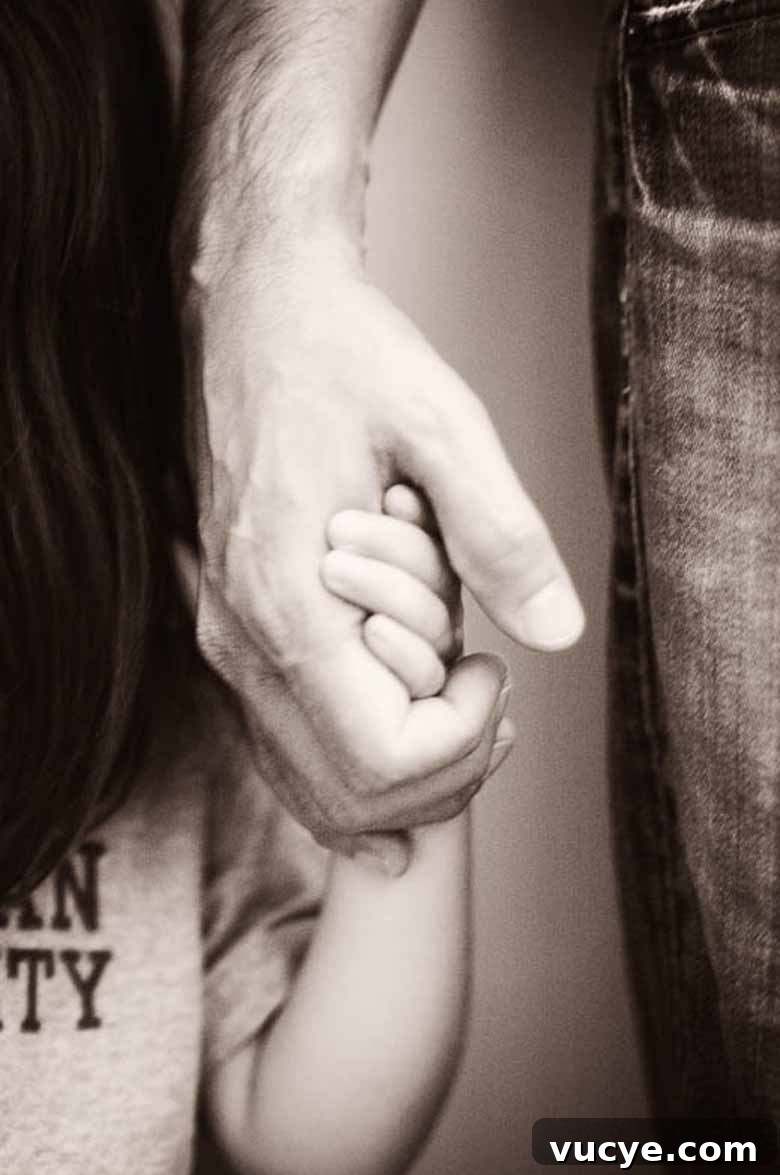
This year I wonder how loudly to say “Happy Father’s Day”—to shout it like an offering to the sun or to hold it quietly inside during a calm moment. I think of six-year-old me, already worrying nightly about the future and whether my parents might die. I wasted a lot of energy being anxious then, but I wasn’t entirely wrong. Dad was often the person who made everything feel okay, and now I find myself trying to offer that same comfort to my own child. Some things will be okay, and some won’t—and the balance between them is the thing we carry forward.
Don’t feel guilty about being happy
Parts of grief have matched my expectations: ordinary objects appearing oddly distorted, laughing at those strange perceptions, and avoiding mascara because a funeral procession, a grandfather picking up a child, or a sunrise could bring sudden tears. Other parts have surprised me. I still seek Dad’s opinion in decisions and feel let down when I can’t know what he would have said, even though he wouldn’t want me to be hard on myself. There are whole days I forget to be sad and then feel guilty for that joy. He told us before he died, “Don’t feel guilty about being happy.” I thought I didn’t need to hear it—turns out I did.
Just in case I ever need the extra
I’m grateful for the other fathers in my life. Cope stayed home this morning so I could sleep in on the first day of summer break and then went to work so I could feed our children—small acts that mean everything and, in some private way, feel like extra love now that Dad is gone. Grandpa, Dad’s father, must find this Father’s Day even harder; he would shelter me from his pain if he could. My father-in-law, George, is the kind of dad you gain as an adult: wise, patient, and generous with the kind of knowledge that comes from a long life lived fully. And among our friends are many conscientious fathers who give of themselves daily, offering more to their children and to us than they may realize.
To each of you—wherever you are—Happy Father’s Day, from right here, exactly where I am.