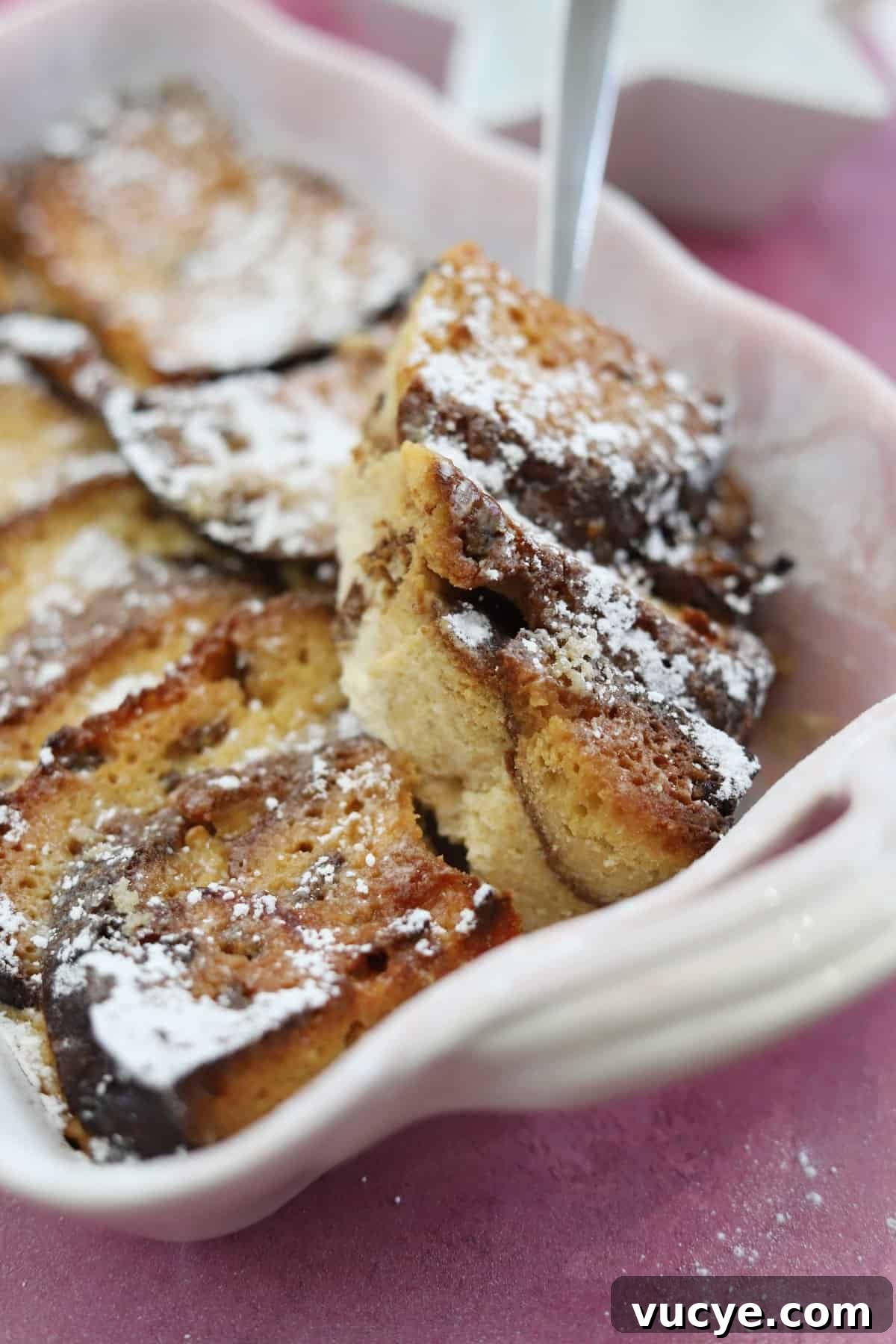
This Panettone Bread and Butter Pudding is a festive, indulgent dessert and an excellent way to use up leftover panettone. Thick slices of gluten-free panettone are brushed with butter, soaked in an amaretto-scented custard, then baked until golden and tender—perfect served warm with custard or ice cream.
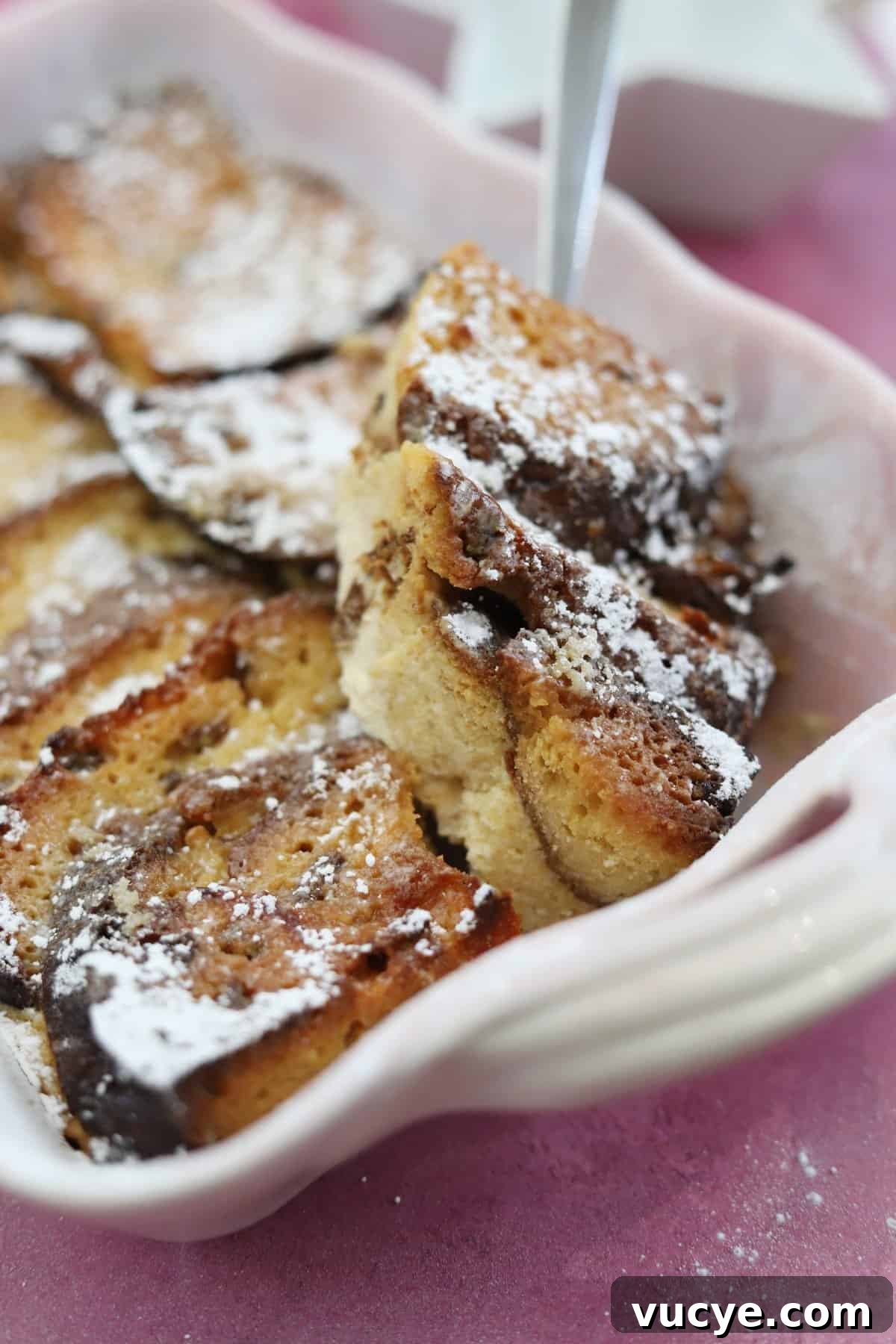
This Gluten Free Panettone Bread and Butter Pudding is an ideal coeliac-friendly treat for the festive season, especially around Twixmas when you may have extra panettone to use.
It works best with slightly stale panettone, which soaks up the custard beautifully—making this recipe a great way to reduce food waste. If your panettone is fresh, simply slice and leave it out overnight or warm it gently in the oven to dry it out a little.
Unlike traditional bread pudding where bread is soaked and pressed into a cake-like texture, a bread-and-butter pudding keeps the bread slices distinct, resulting in a richer, layered dessert. Swapping in panettone brings built-in dried fruit and festive spice, giving this version an extra-special flavour. If you prefer a different twist, try substituting amaretto with Baileys or omitting the alcohol.
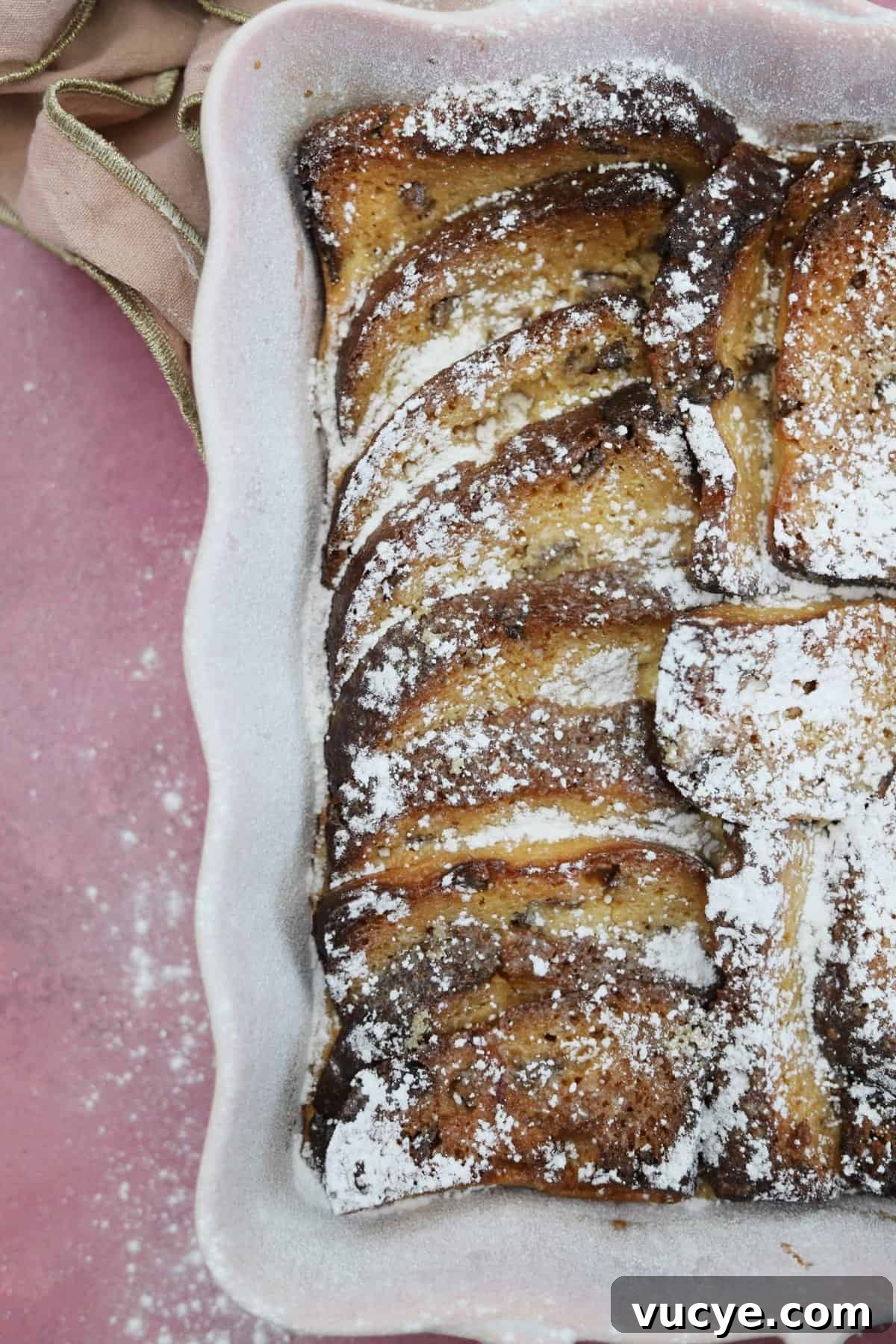
Ingredients
Full measurements and method are in the recipe card below. For shopping, you will need:
- Gluten free panettone (about 450g): best if slightly stale; if fresh, leave slices out overnight or warm gently to dry.
- Unsalted butter (approx 75g): for greasing the dish and spreading on the slices.
- Large eggs (4): used to make the custard.
- Double cream and milk (250ml each): combined 50:50 for a rich custard.
- Amaretto (100ml): adds marzipan notes; swap for Baileys or omit if preferred.
- Light brown sugar (50g): sweetens the custard and gives a crunchy top; you can use demerara or granulated sugar if you prefer.
- Vanilla extract (1 tsp): check that your brand is gluten free.
- Icing sugar: for dusting before serving.
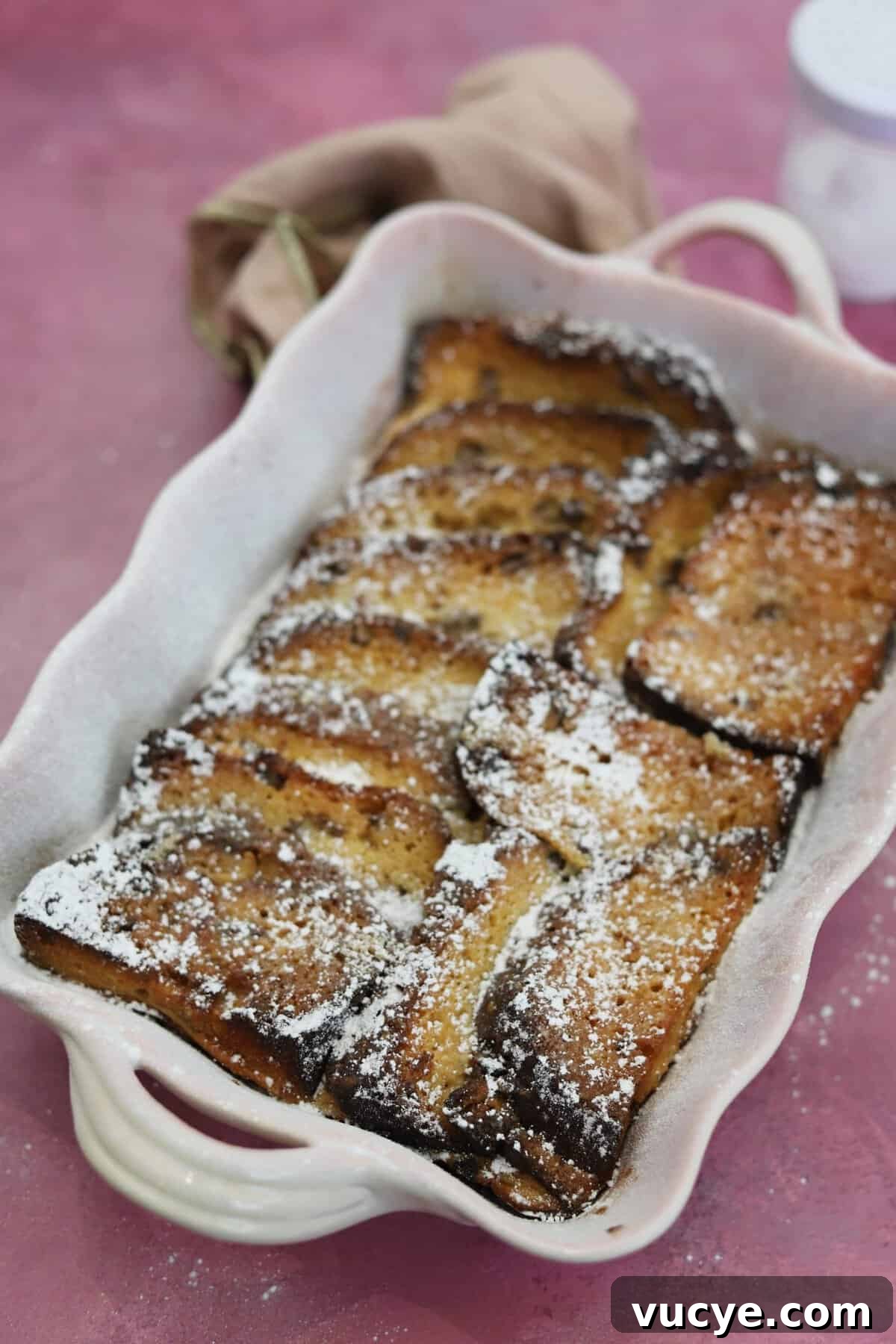
How to make panettone bread and butter pudding
Below is a simple overview of the method with step-by-step photos; the printable recipe card below includes exact quantities and timings.
1. Slice the panettone: Cut the panettone in half lengthways, then slice into approximately 1cm-thick slices. Lay them in a single layer on a tray and leave overnight to stale, or place in a warm (not hot) oven at about 50–60°C for 30 minutes.
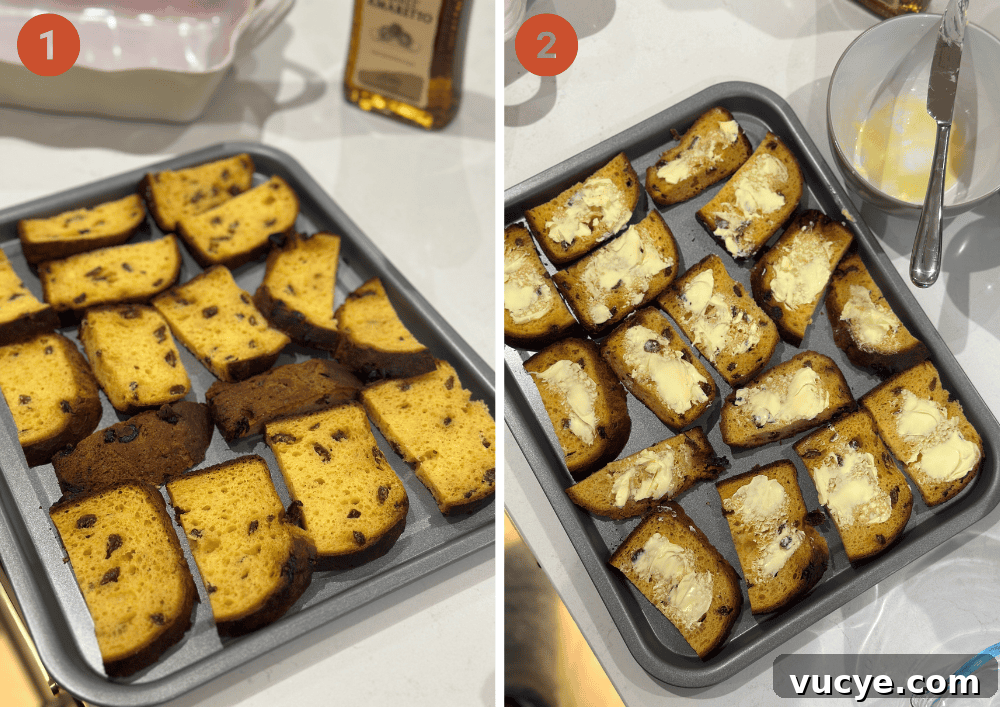
2. Prepare the dish: Generously grease a rectangular ovenproof dish with butter. Butter one side of each panettone slice and arrange them slightly overlapping in the dish.
3. Make the custard: Whisk together the eggs, double cream, milk, amaretto, vanilla extract and half the light brown sugar until combined.
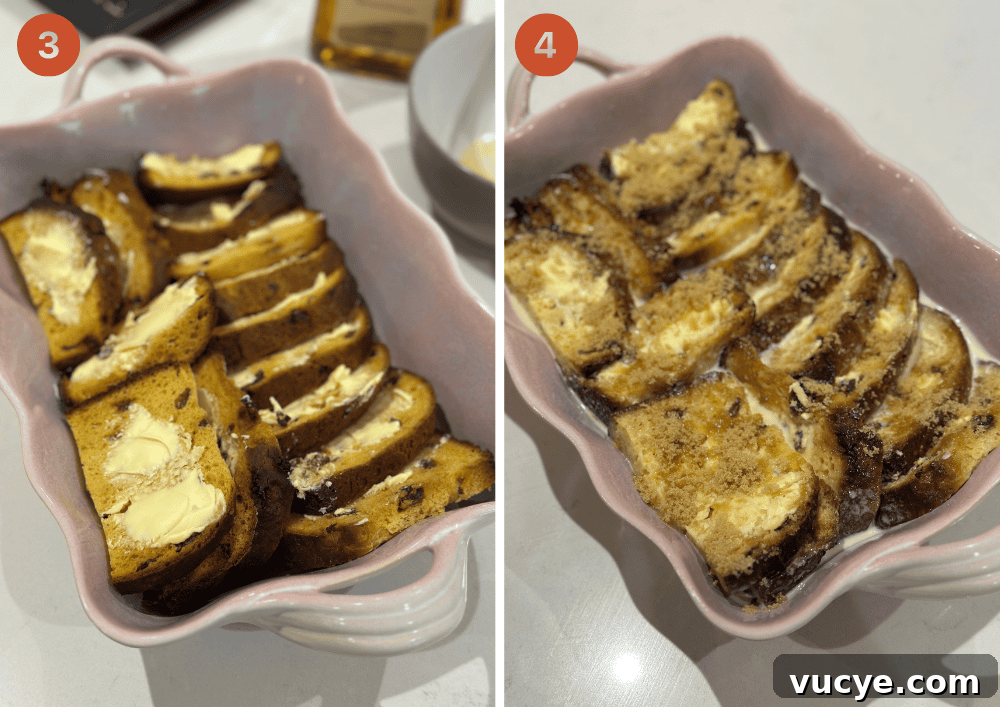
4. Soak and rest: Pour the custard evenly over the panettone, pressing the slices down so they absorb the liquid. Leave to stand for around 20 minutes while you preheat the oven to 180°C (fan 160°C / Gas Mark 4).
5. Bake: Sprinkle the remaining sugar over the top and bake for about 35 minutes, until the pudding is puffed and golden.
6. Rest and serve: Remove from the oven and let the pudding rest for 30 minutes. Serve warm, dusted with icing sugar and accompanied by custard or ice cream.
Storing and Freezing
This pudding is best enjoyed fresh and warm. Leftovers can be stored in the fridge for 2–3 days; reheat covered in foil in the oven until warm. You can freeze portions, but texture may change on thawing—reheat in the oven to revive the pudding before serving.
Frequently Asked Questions
Below are answers to common questions about this recipe. If you need more details, please comment on the original post or test the method to suit your preferences.
Yes — several supermarkets and specialty brands now sell gluten-free panettone. Availability varies by retailer and season; check labels to confirm gluten-free certification.
To make it dairy free, use dairy-free milk and cream alternatives and ensure your gluten-free panettone contains no dairy. The texture and richness will change slightly but it will still work.
If you make this pudding and enjoy it, consider leaving a review, sharing a photo, or tagging the recipe author on social media to show your support.
Panettone Bread and Butter Pudding
Pin Recipe
Rate Recipe
Print Recipe
Ingredients
- 450 g gluten free panettone
- 75 g unsalted butter, (approx, for greasing and spreading)
- 4 large eggs
- 250 ml double cream
- 250 ml milk
- 100 ml amaretto
- 50 g light brown sugar
- 1 tsp vanilla extract
- icing sugar, for sprinkling
Instructions
-
Cut the panettone in half lengthways and slice into 1cm-thick pieces. Lay in a single layer and leave to stale overnight or warm in a low oven (approx 50°C) for 30 minutes.
-
Grease a rectangular ovenproof dish with a generous amount of butter.
-
Butter one side of each slice and arrange them slightly overlapping in the dish.
-
Whisk together the eggs, double cream, milk, amaretto, vanilla and half the sugar.
-
Pour the mixture over the panettone, pressing gently so the slices absorb it. Leave to stand for about 20 minutes while you preheat the oven to 180°C (fan 160°C / Gas Mark 4).
-
Sprinkle the remaining sugar on top and bake for 35 minutes until golden and set.
-
Allow to rest for 30 minutes, dust with icing sugar and serve warm with custard or ice cream.
Notes
- Use scales where possible: weighing ingredients is more accurate than cups and especially helpful for reliable results in gluten-free baking.
- Step-by-step photos: Refer to the images above to check how the pudding should look at each stage.
- Storing and freezing: See the section above for guidance; leftovers keep 2–3 days in the fridge and can be frozen, though texture may change.
- Enjoying this recipe? Reviews and photos from readers are always appreciated.
Nutrition
Like this recipe? Rate and comment below!
More Gluten Free Dessert Recipes
If you enjoy this recipe, try other gluten-free desserts from the same author for more seasonal inspiration.
- Gluten Free Jam Roly Poly
- Gluten Free Tiramisu
- Gluten Free Chocolate Tart
- Gluten Free Sticky Toffee Pudding
- Lemon Cheesecake
- Gluten Free Profiteroles
More Gluten Free Christmas Desserts





Get my cookbook!
For more gluten-free meal ideas, the author’s cookbook contains 100+ recipes covering breakfasts, lunches, dinners, desserts and sides.