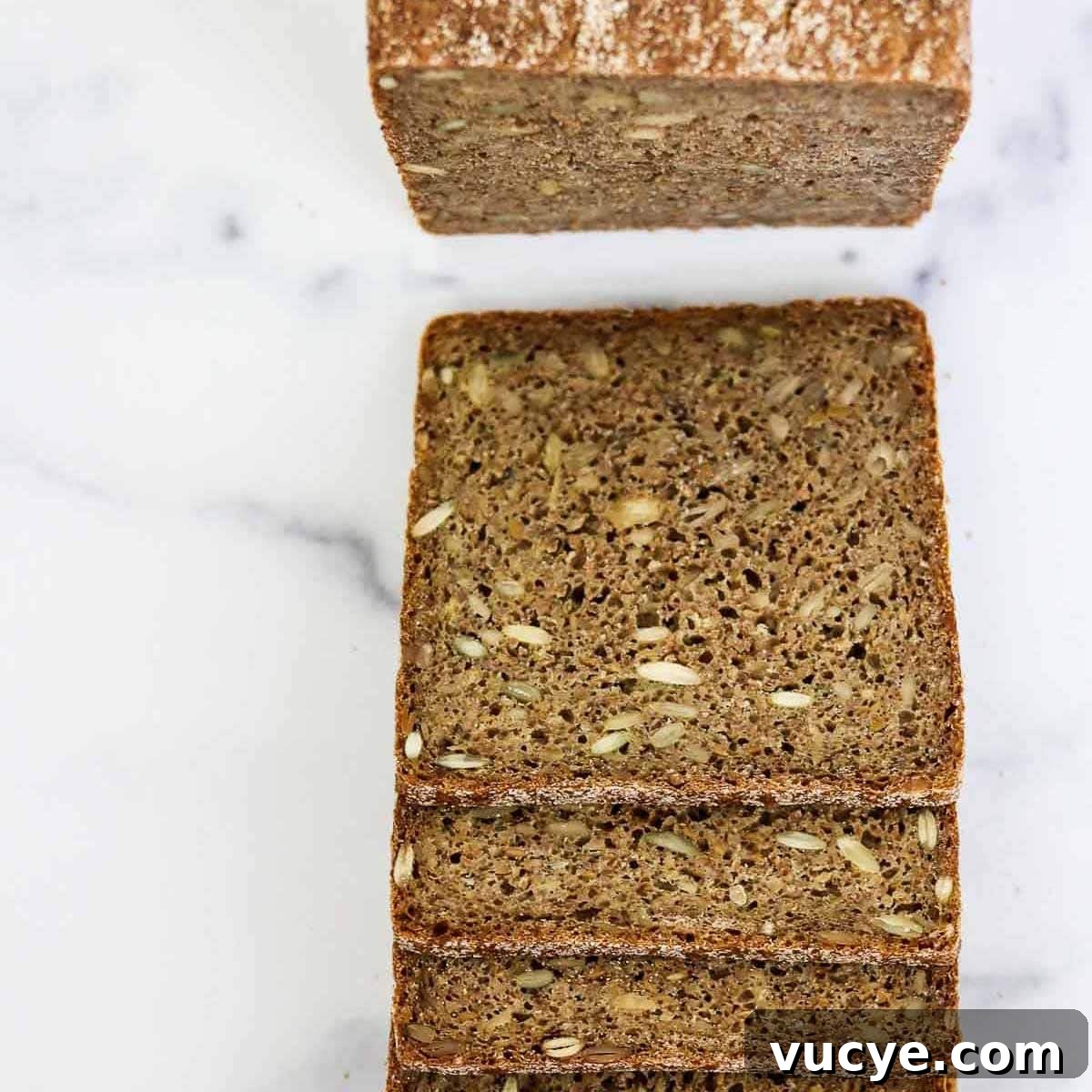
Danish Rye Bread (Rugbrød) is a dense, nutritious loaf made from rye flour, whole grains and an assortment of seeds. A cornerstone of Nordic cooking, its deep, slightly tangy flavor and firm texture make it ideal for smørrebrød (Danish open-faced sandwiches) and everyday Scandinavian meals.
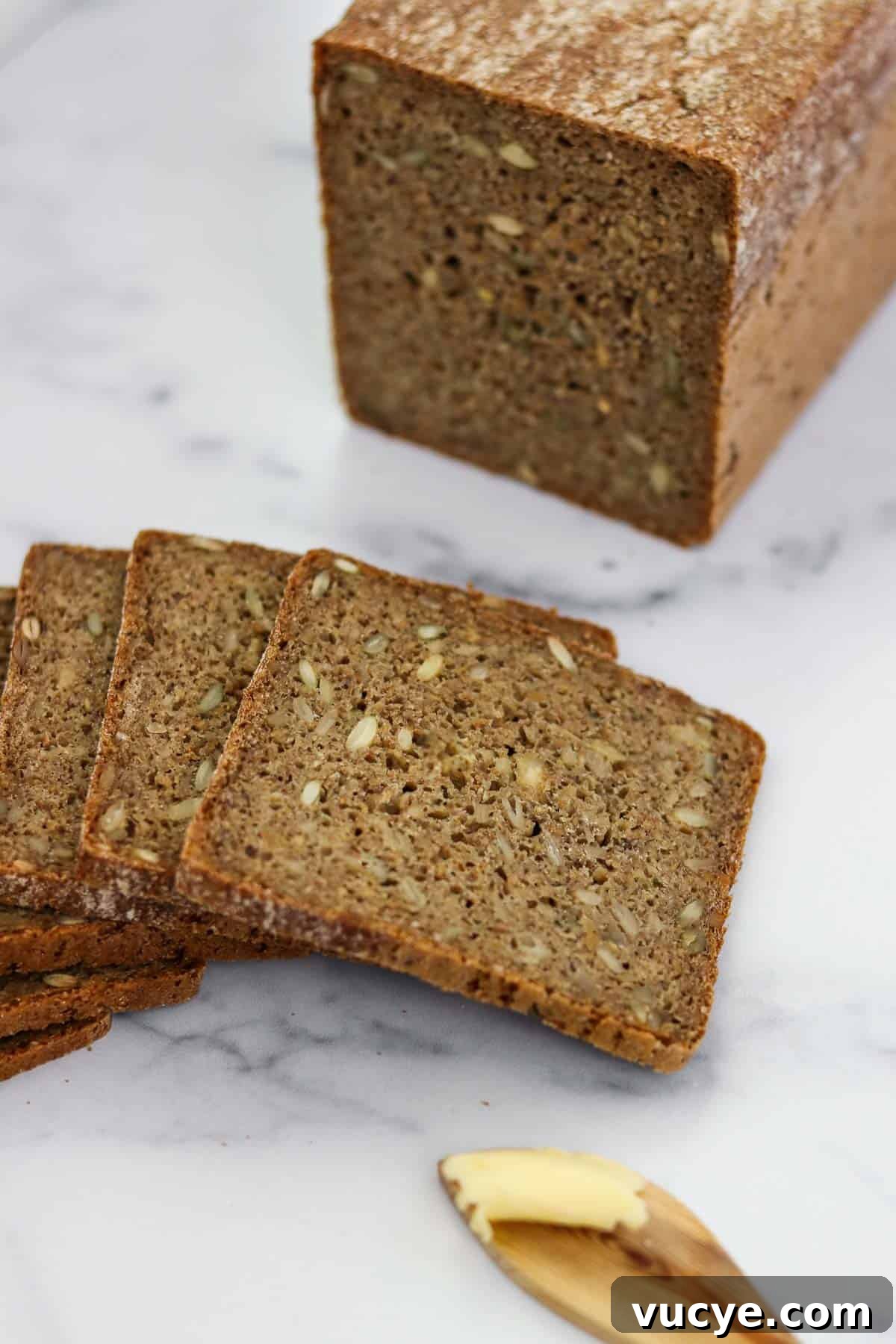
Authentic rugbrød can be hard to find outside Scandinavia. Many U.S. grocery loaves lean toward deli rye or pumpernickel and lack the texture and flavor of a traditional Danish loaf. The good news is you can easily bake an authentic-feeling rugbrød at home with simple ingredients and a little patience.
If you maintain a sourdough starter, there’s also a delicious sourdough version of rugbrød that highlights that tangy fermentation — another excellent option to explore.
[feast_advanced_jump_to]
Ingredients
For the Soaker:
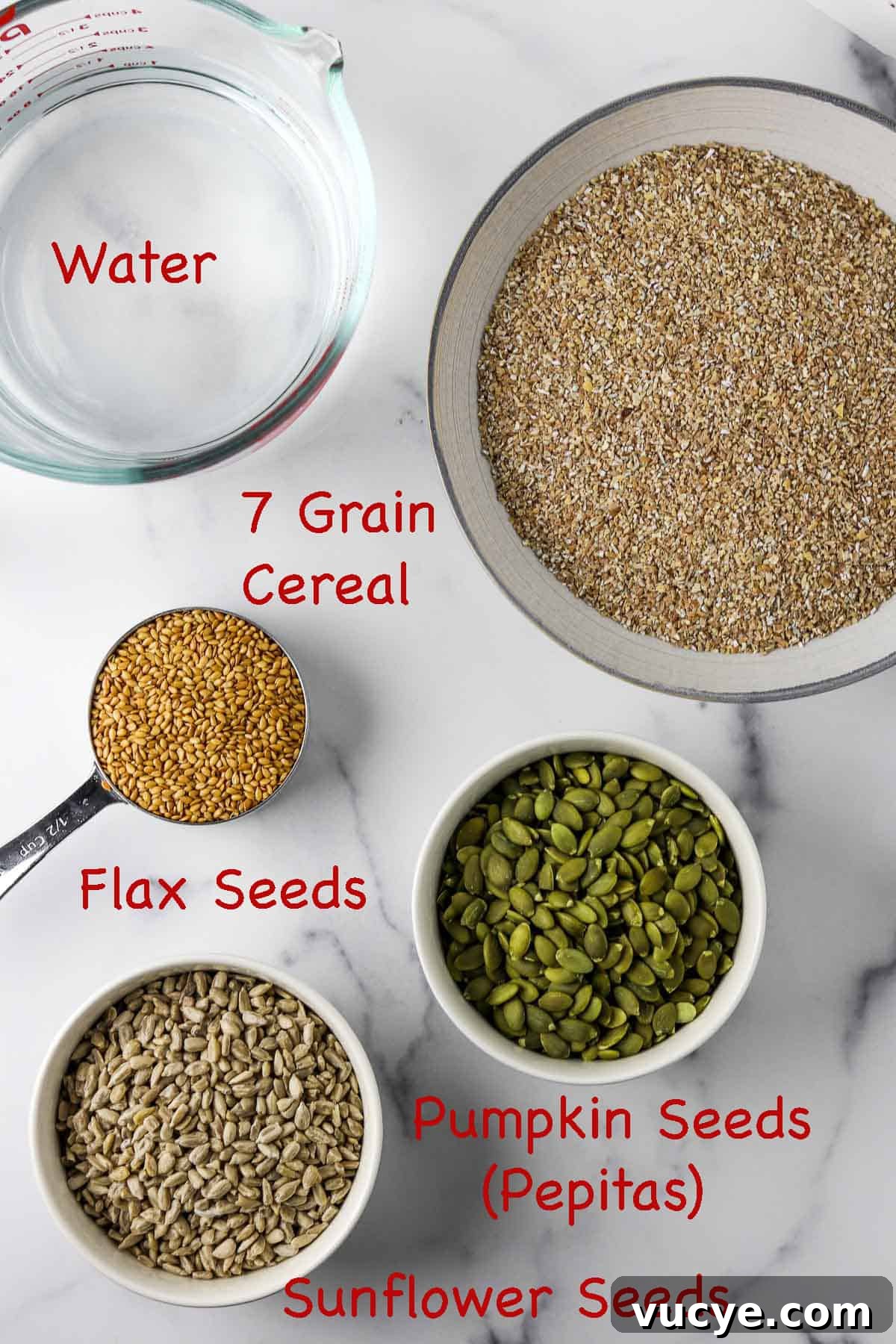
- 7-grain hot cereal mix or rye chops — gives the loaf a substantial, whole-grain character. If rye chops are unavailable, a 7-grain mix made of coarsely chopped grains (wheat, rye, triticale, oats, barley, etc.) works well.
- Sunflower seeds, pumpkin seeds (pepitas) and flax seeds — for texture, flavor and nutrition.
For the Dough:
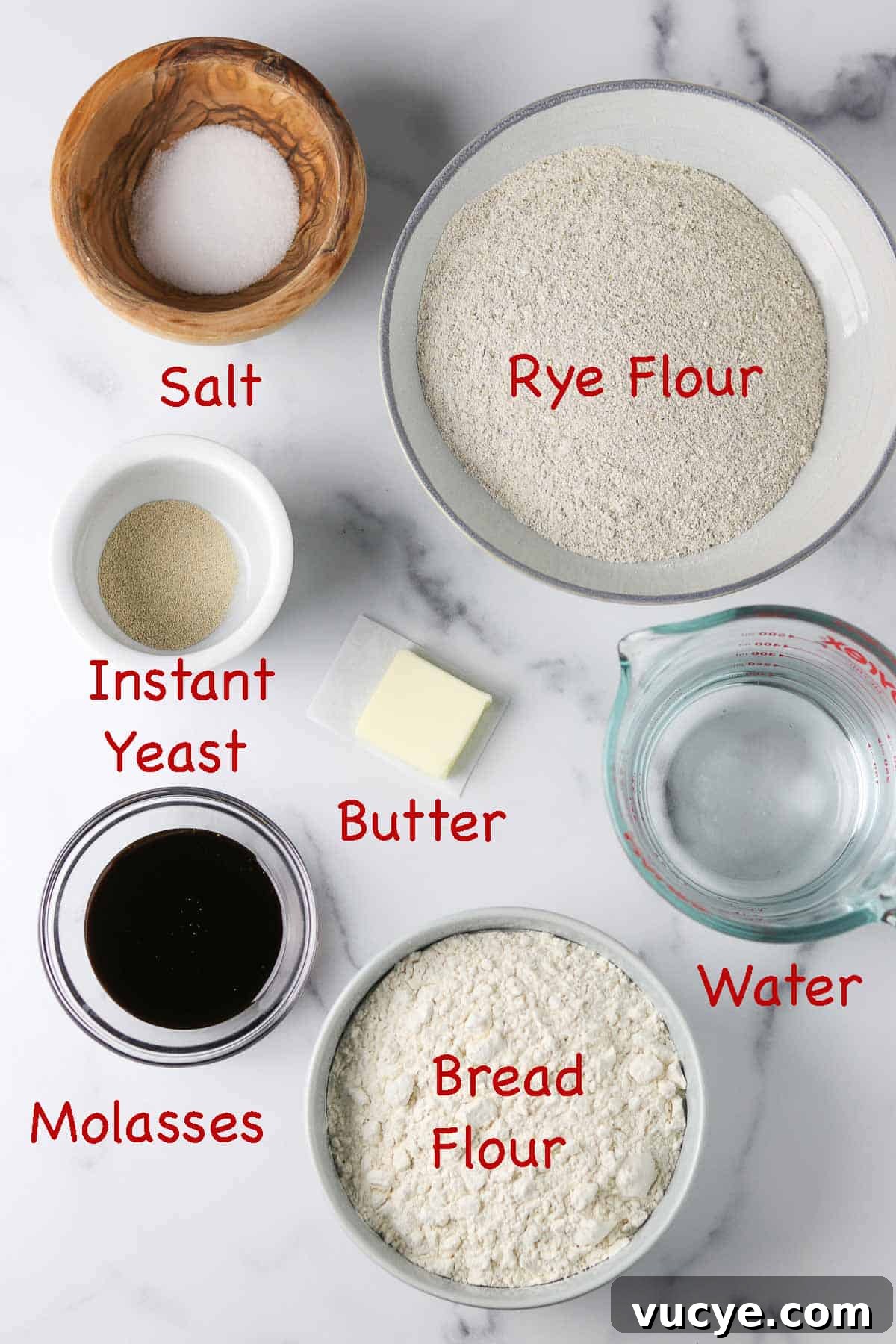
- Dark rye flour and bread flour — the rye provides flavor while bread flour supplies gluten for structure.
- Instant yeast — a reliable leavener that can be mixed directly with dry ingredients.
- Molasses — adds a touch of sweetness and deepens the crust color.
- Cold water
- Salt
- Butter — for greasing the pan.
The Equipment
- a sturdy stand mixer (or a strong wooden spoon and arm power)
- a 13 x 4 inch Pullman pan with lid (a pair of 9 x 5 loaf pans can substitute)
How To Make Danish Rye Bread (Rugbrød)
The Night Before:
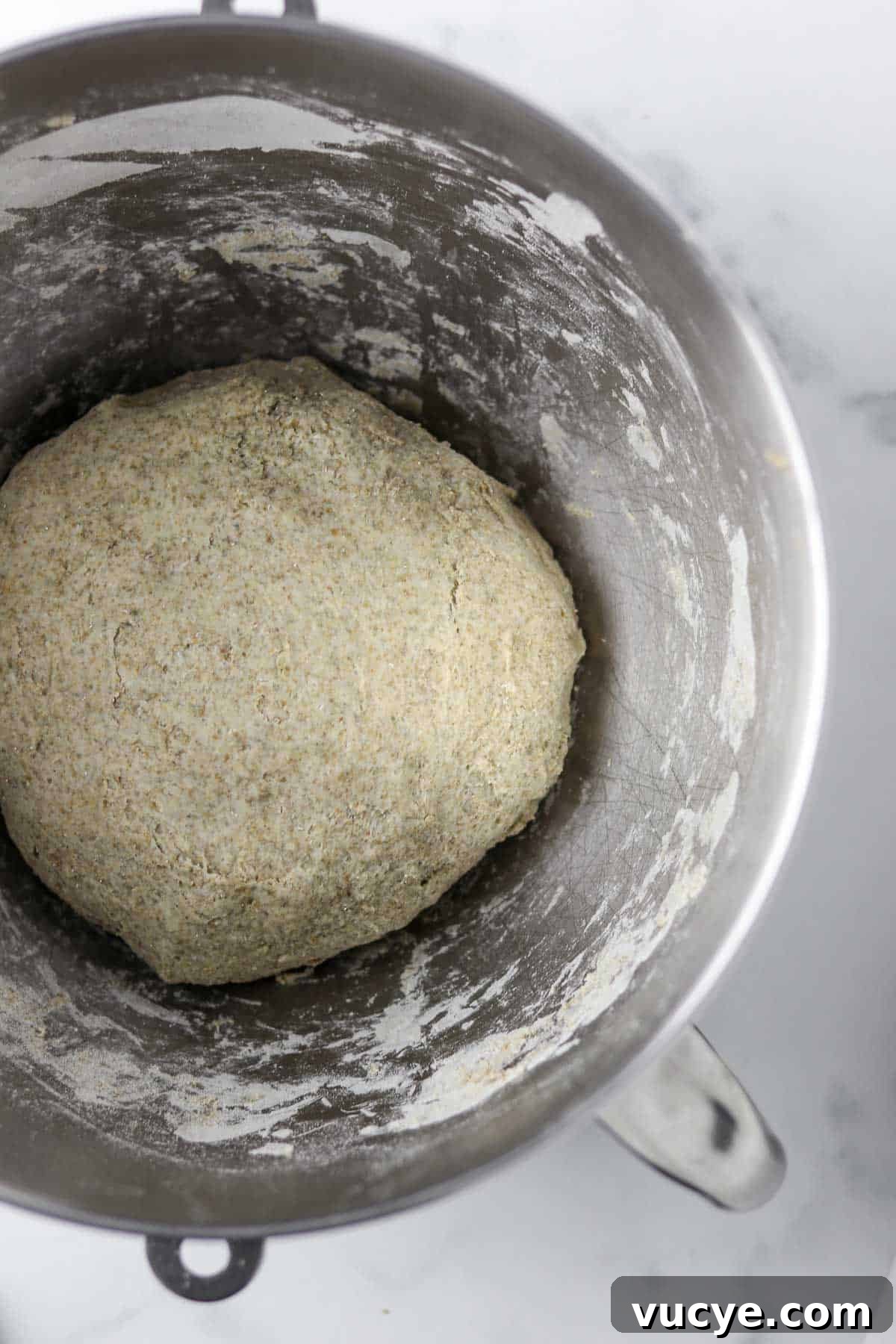
- About 8–12 hours before baking, mix the rye flour, bread flour, instant yeast and cold water in a large bowl. Hold back molasses and salt for now. Stir until combined (the mixture will be very thick and clay-like) and knead briefly until cohesive. Cover and leave at room temperature overnight.
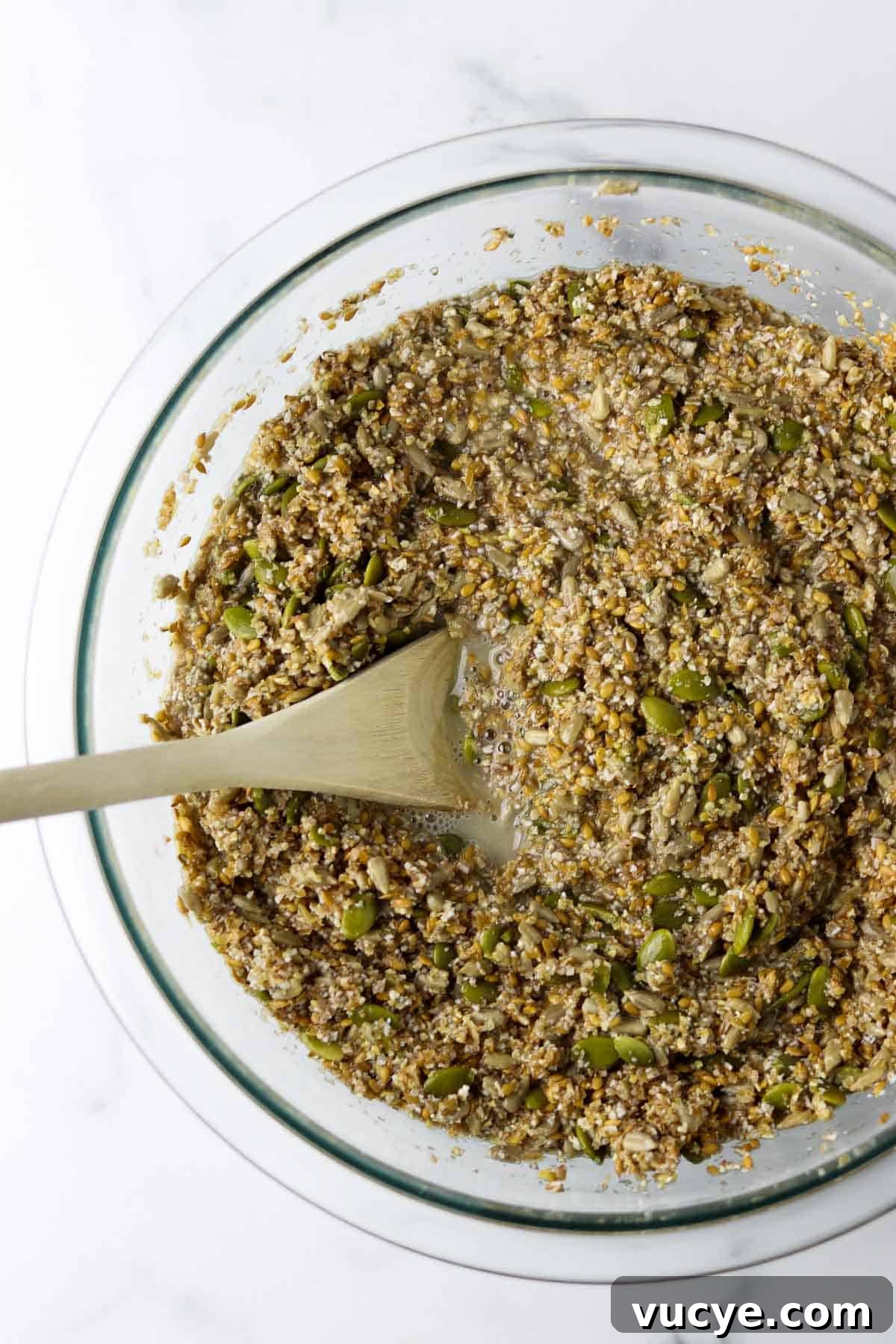
- At the same time, prepare the soaker: combine the 7-grain mix (or rye chops) with the seeds and cold water in a bowl. Cover and leave at room temperature overnight so the grains and seeds absorb the liquid.
The Morning of Baking:
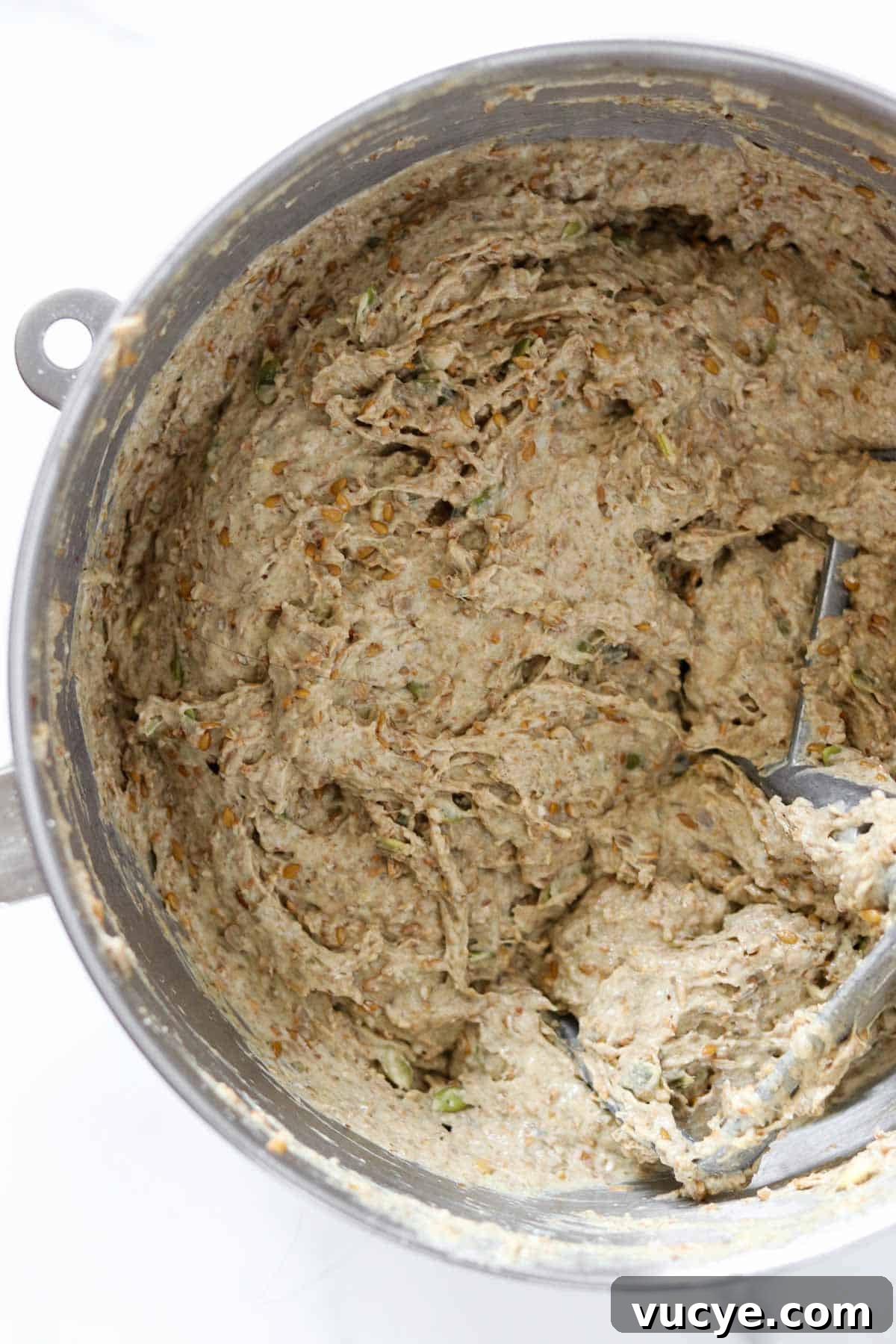
- Grease the Pullman pan and lid with butter and dust with rye flour. In a stand mixer bowl, combine the overnight dough, molasses, salt and the entire soaker (do not drain it). Use the paddle attachment and mix on low 2–3 minutes, scraping the sides. Increase to medium speed and mix another 2–3 minutes. The dough will be sticky.
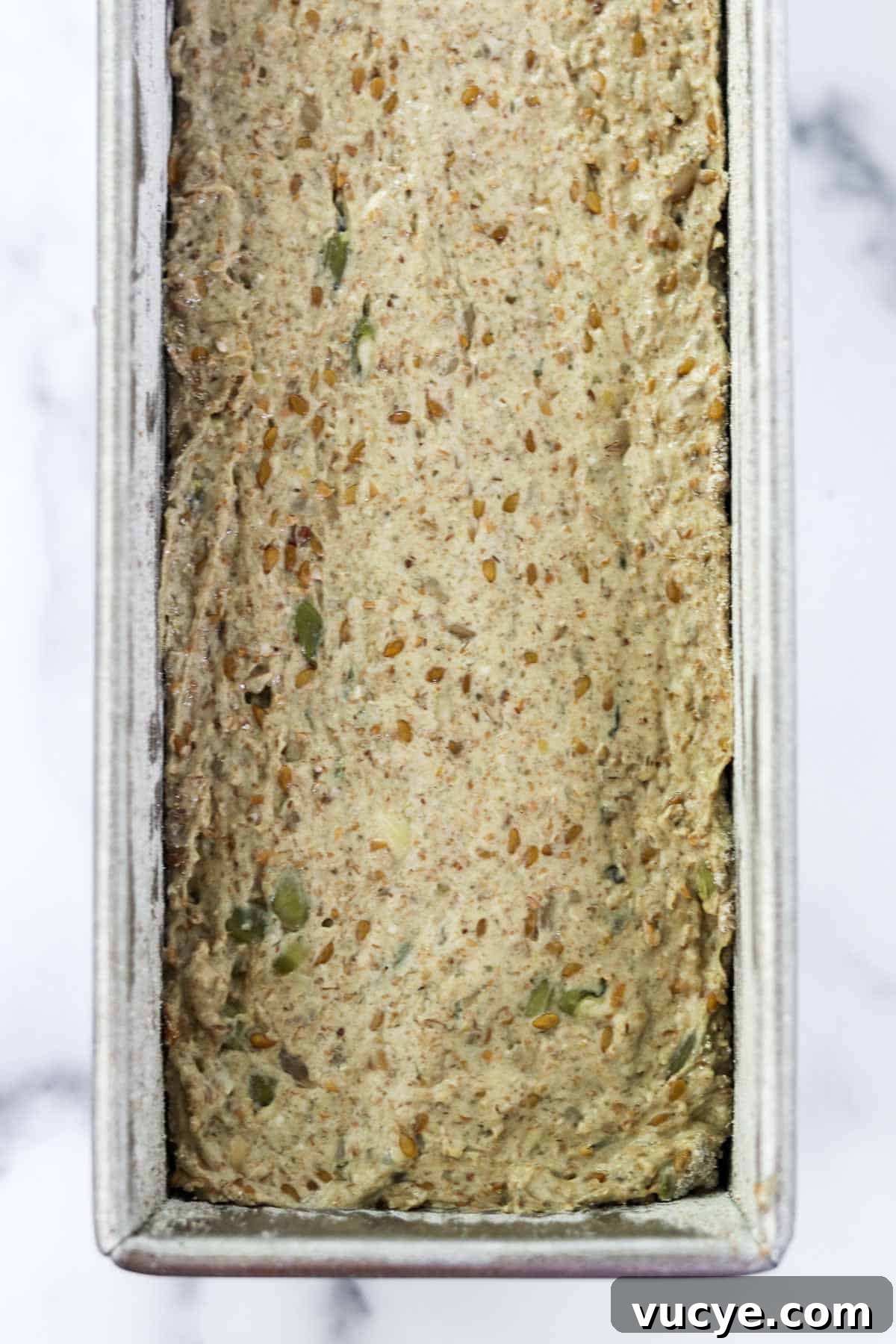
- Scrape the dough into the prepared pan and smooth the surface with damp fingers or a moistened spatula.
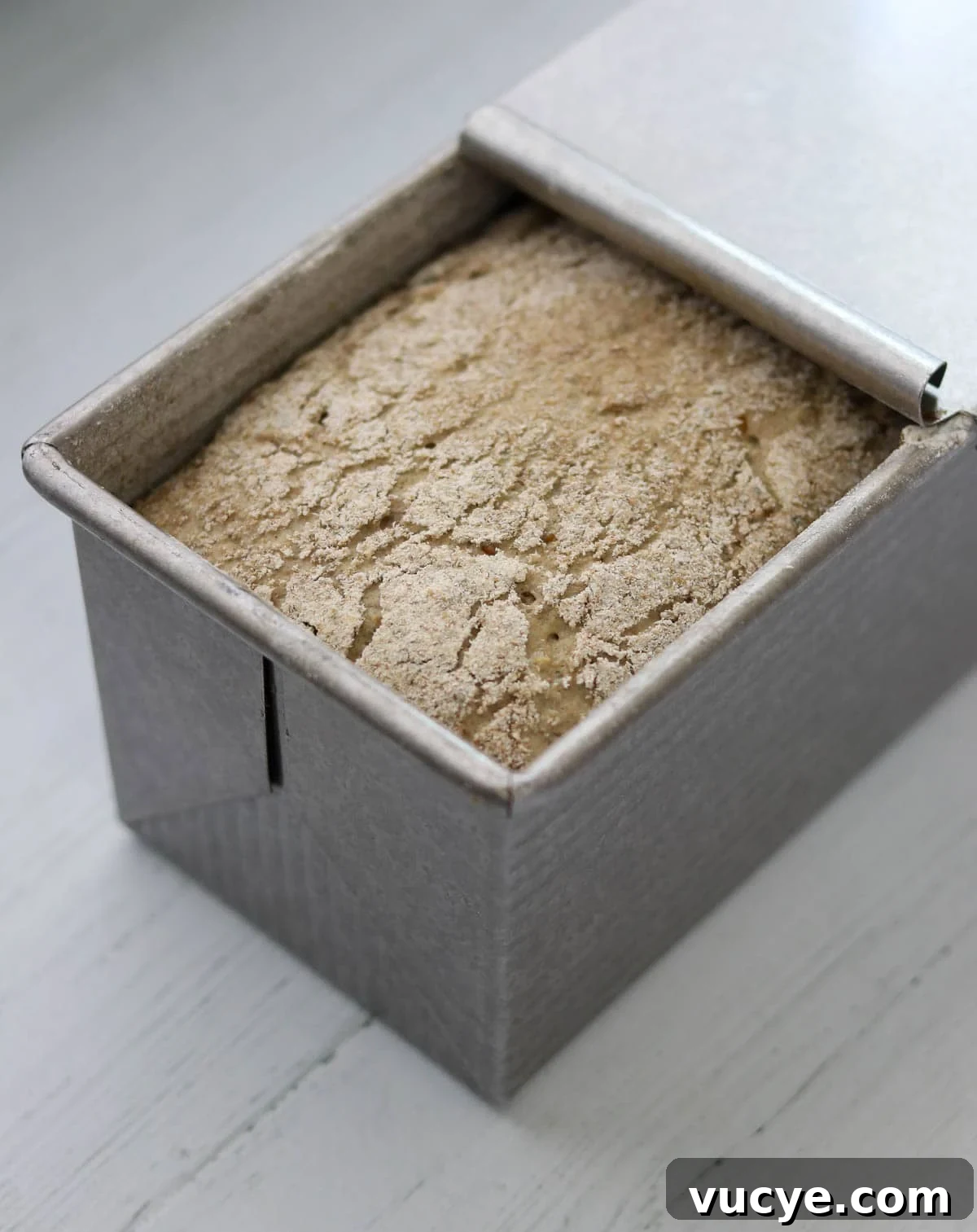
- Lightly dust the top with rye flour and place the Pullman lid on. Let the dough rise at room temperature 1½–3 hours, or until it is about ½ inch from the top of the pan. Rising time depends on kitchen temperature.
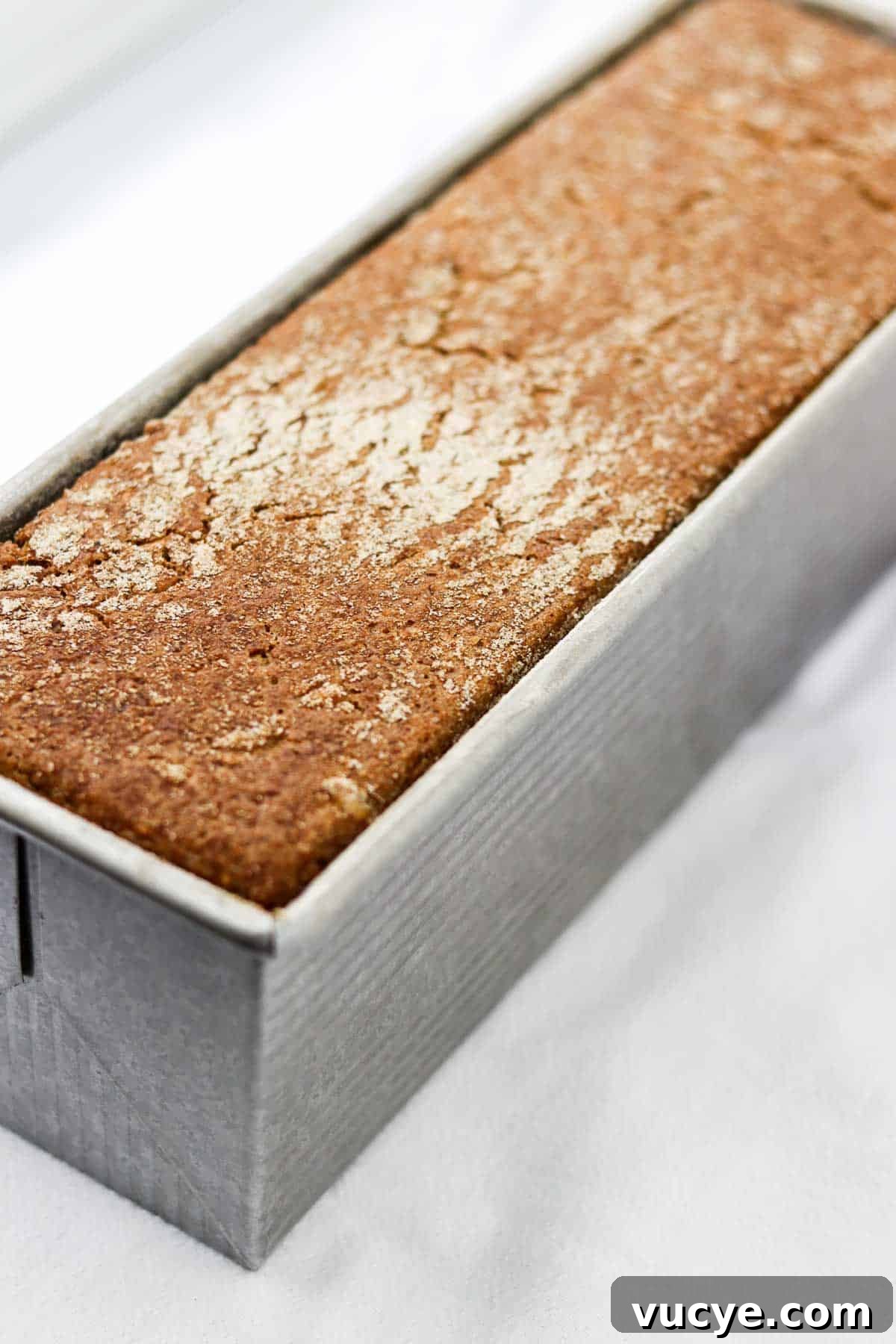
- Preheat the oven to 500°F. Bake the covered loaf 15 minutes, then lower to 400°F and bake, still covered, 15 more minutes. Remove the lid, reduce to 325°F and bake uncovered for about 45 minutes more, until the internal temperature reaches roughly 205–210°F.
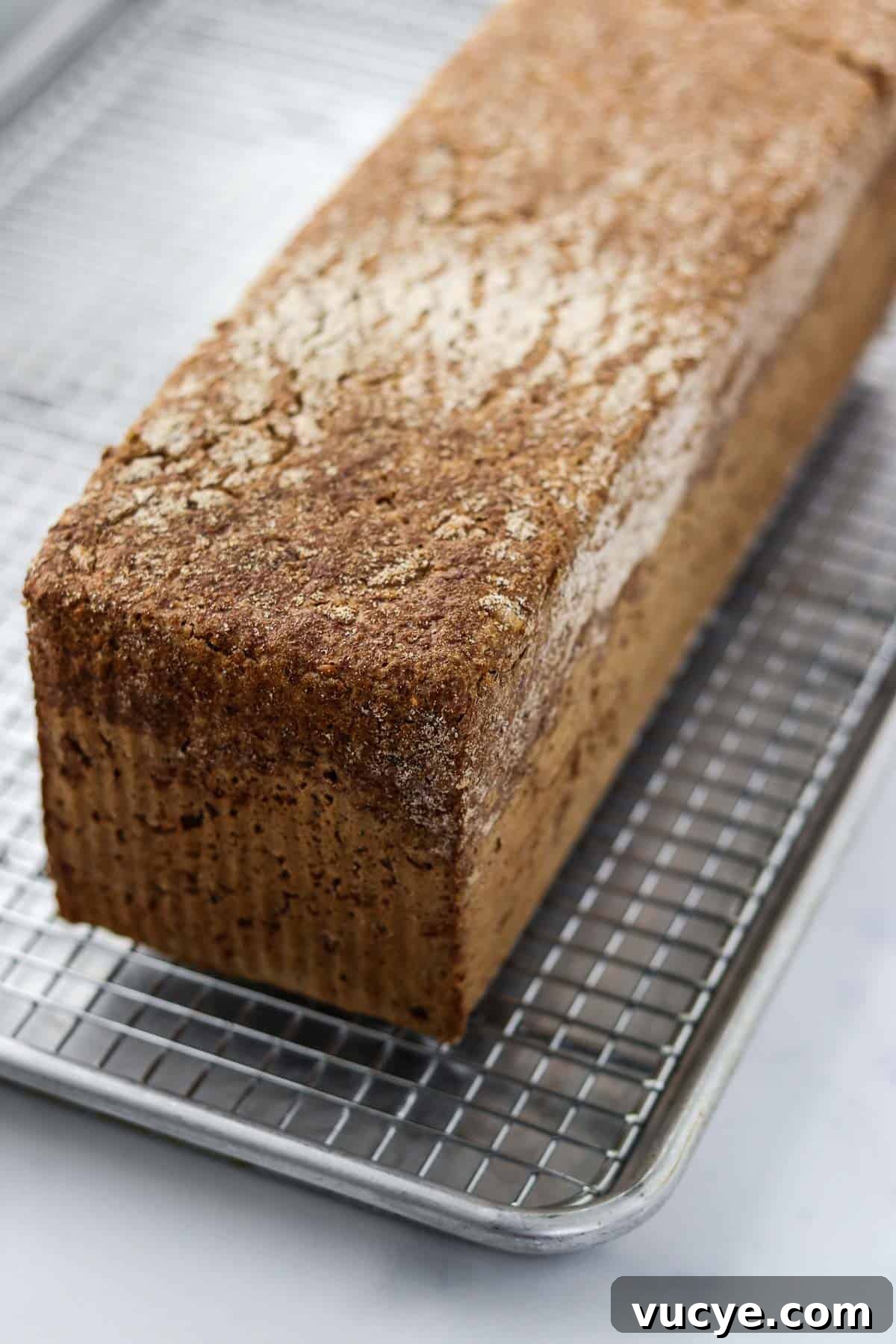
- Remove the pan from the oven and immediately turn the loaf out onto a metal cooling rack set inside a rimmed baking sheet. Return the loaf to the oven for 10 minutes to firm the crust, then let cool completely before slicing — at least 3 hours, preferably overnight.
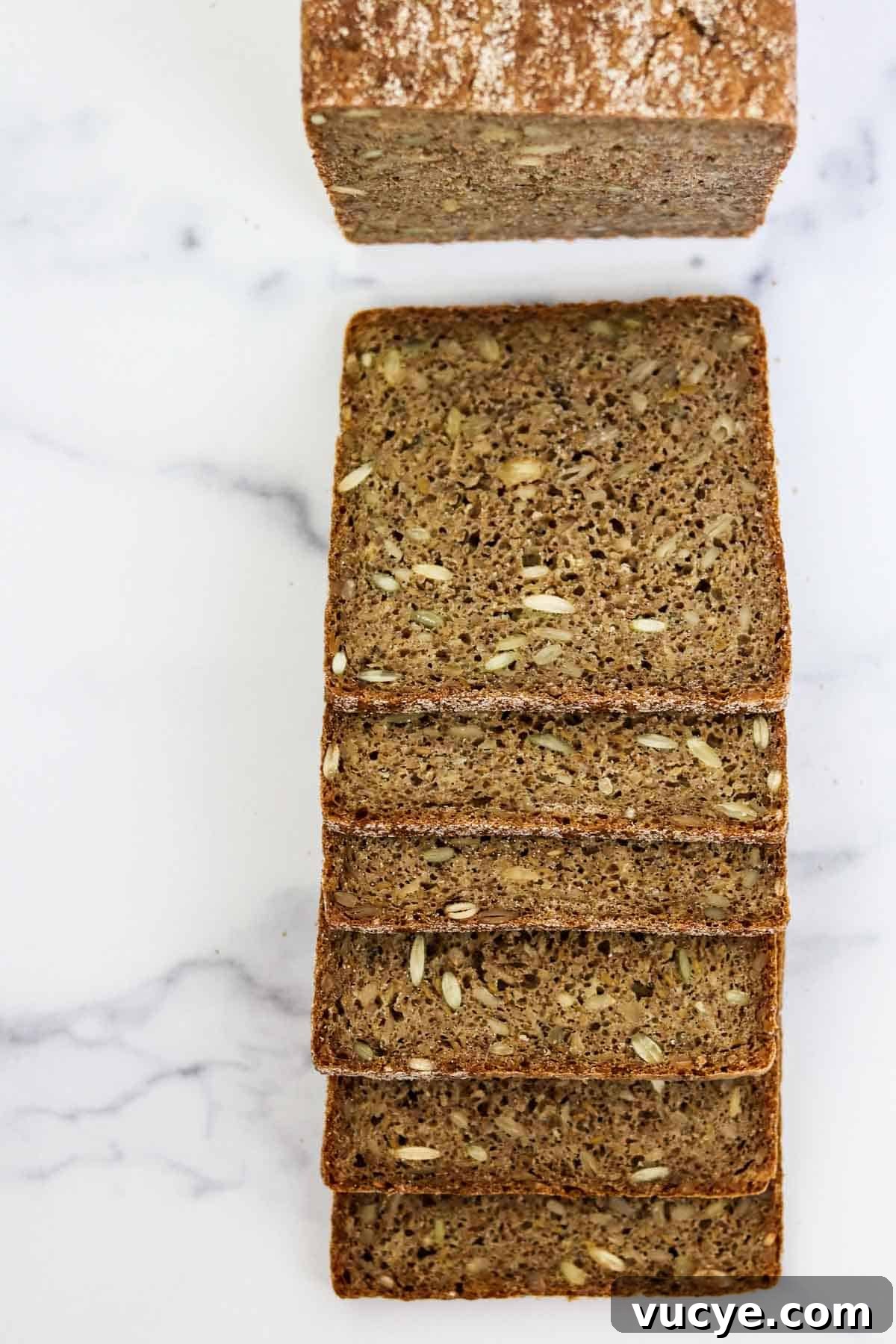
- For best texture and flavor, wait 12–24 hours before slicing. Wrapped loosely in foil once cooled, the bread keeps at room temperature for about 3–5 days and freezes well for longer storage.
Expert Tip
- Wait a day before serving. Rye bread’s flavor and crumb improve after resting 12–24 hours. Once fully cooled, wrap the loaf loosely in foil and slice the next day for the best results.
Recipe FAQs
Rugbrød means “rye bread” in Danish. It’s a dense, hearty loaf made with rye flour and chopped whole grains, often studded with seeds. It is frequently baked in a Pullman pan to produce a tall, square-sided loaf ideal for open-faced sandwiches.
Store loosely wrapped in foil at room temperature for about 3–5 days. For longer storage, freeze tightly wrapped slices or whole loaves.
Yes. Wrap slices or a whole loaf tightly in plastic wrap, then foil or a freezer bag. It keeps well for a couple of months.
Yes — many bakers divide the dough between two 9 x 5 loaf pans. Use a heavy baking sheet as a cover during the initial covered bake and keep the same baking temperatures and times as a guide.
Mix half the dough and soaker first, then mix the second half and combine everything in the loaf pan before rising. You can also mix by hand with a sturdy spoon.
Rugbrød is typically straightforward in flavor, relying on rye, whole grains and seeds rather than additional darkening or flavoring agents. Unlike some commercial loaves that use cocoa, espresso or caramel coloring, traditional rugbrød is modestly seasoned so it serves as a neutral base for toppings.
How and What to serve with Rugbrød
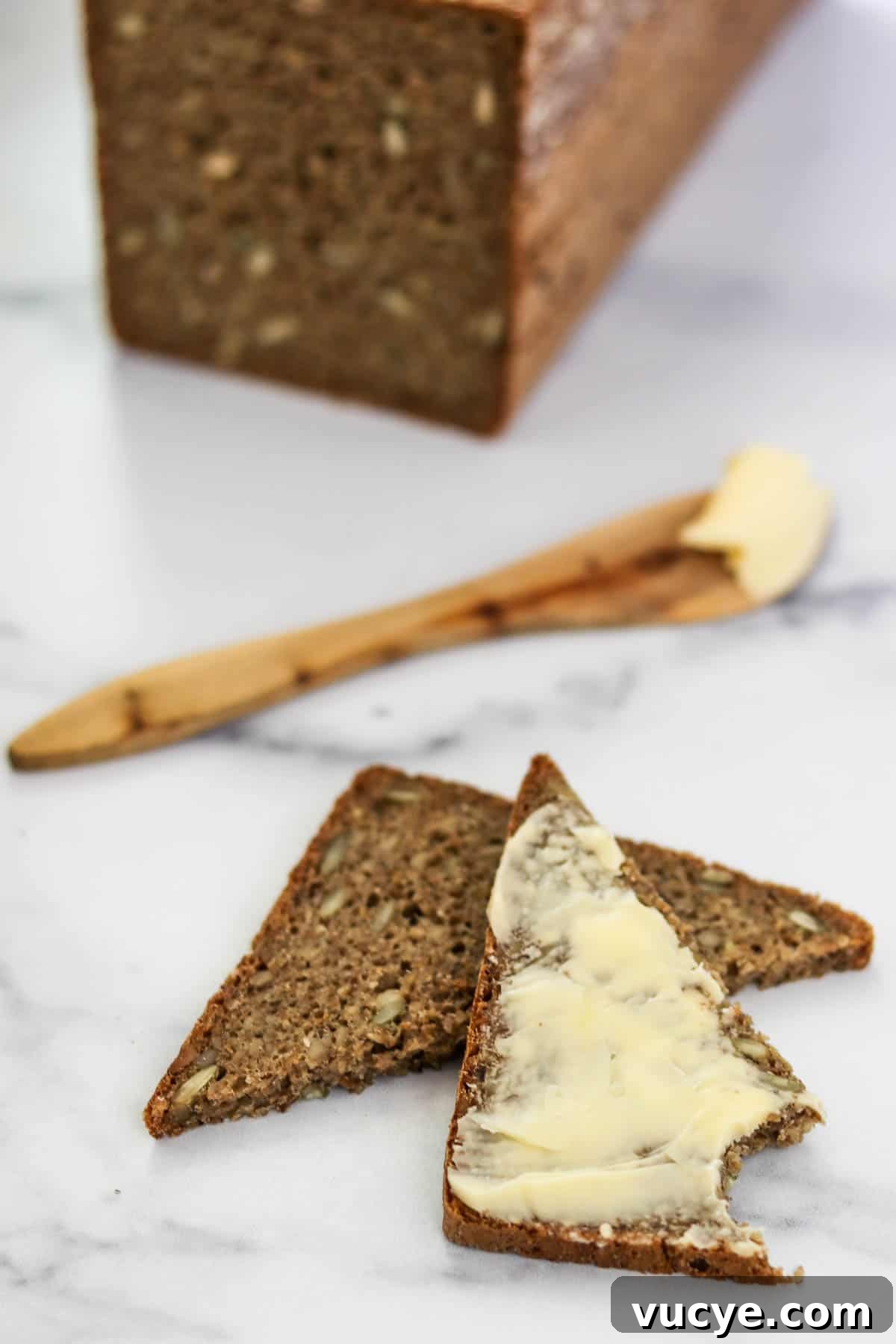
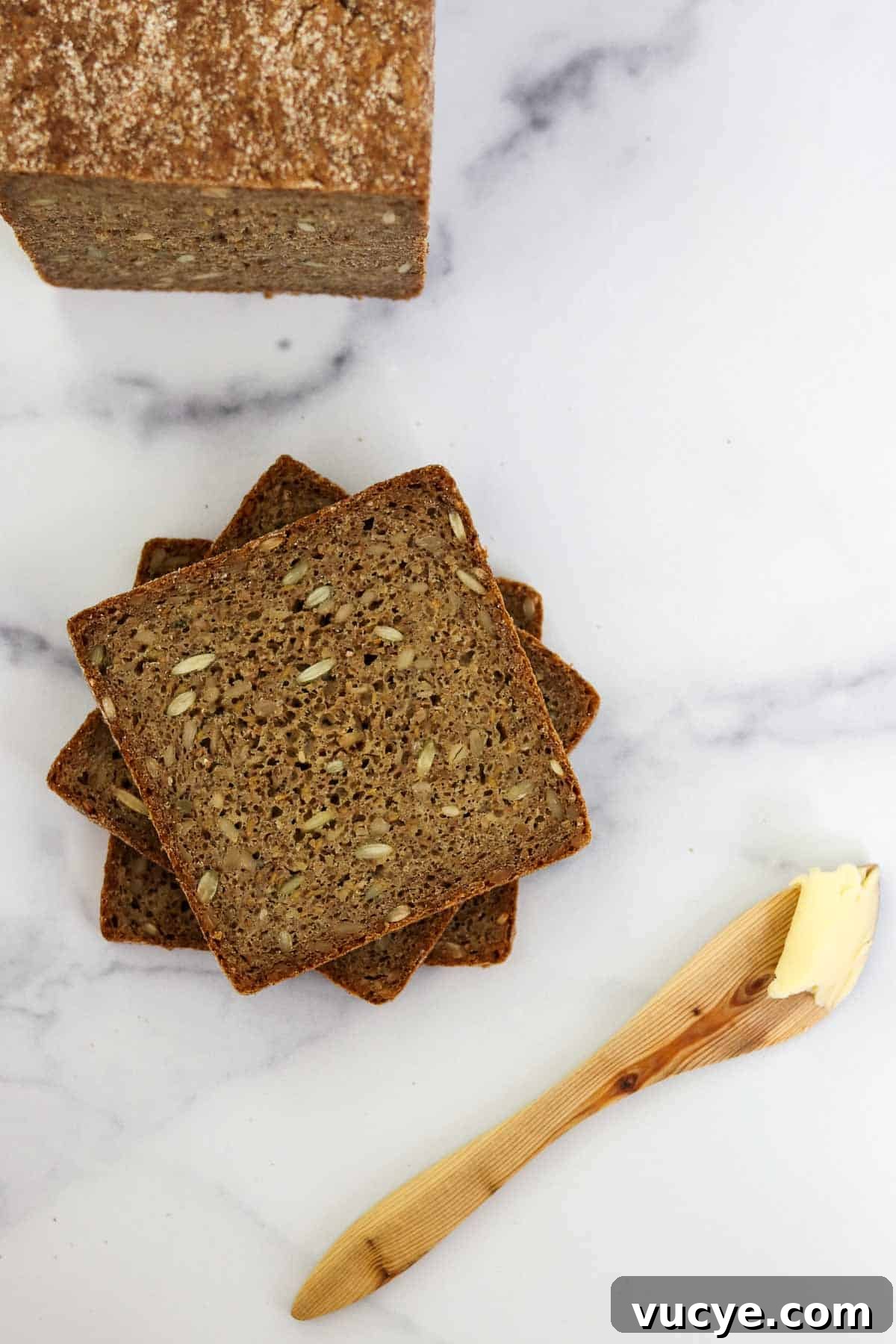
Rugbrød is usually sliced thin (just under 1/4 inch) and generously buttered with salted butter — a practice Danes call tandsmør, or “tooth butter,” meaning you can see your teeth marks when you bite into it. It’s excellent simply buttered, or as the foundation for smørrebrød topped with fish, cold cuts, cheeses and pickled garnishes.
Related Recipes
Want more Scandinavian bread ideas? Try recipes for kavring, Swedish crispbread (knäckebröd), Norwegian whole grain bread (grovbrød) or Swedish limpa.
If you tried this Danish Rye Bread (Rugbrød) recipe or any other from this site, please leave a star rating and share how it went in the comments — feedback is always appreciated!
Recipe
Easy Overnight Danish Rye Bread (Rugbrød)
Ingredients
For the Soaker:
- 2 ½ cups 7-grain hot cereal mix or rye chops
- 1 cup raw sunflower seeds
- 1 cup raw pumpkin seeds (pepitas)
- ½ cup flax seeds
- 2 ⅔ cups cold water
For the Dough:
- 2 cups dark rye flour
- 2 cups bread flour
- 1 teaspoon instant dried yeast
- 1 ½ cups cold water
- 4 teaspoons salt
- ¼ cup molasses
- butter for greasing the pan
Special Equipment Needed:
- stand mixer (or heavy-duty mixing tools)
- Pullman pan with lid (13 x 4 inches) or two 9 x 5 loaf pans
Instructions
-
For the soaker: combine the grains, seeds and cold water in a bowl, cover and let sit at room temperature 8–12 hours.
-
For the dough: mix the flours, instant yeast and cold water in a separate bowl until combined, knead briefly until cohesive, cover and let rest at room temperature 8–12 hours.
-
Grease and flour a Pullman pan. Combine the soaker, dough mixture, molasses and salt in the mixer bowl. Use the paddle on low 2–3 minutes, then medium 2–3 minutes until sticky and well combined. Scrape into the pan and smooth the top; dust lightly with rye flour, cover with the lid and let rise 1½–3 hours until about ½ inch from the top.
-
Preheat oven to 500°F. Bake covered 15 minutes, lower to 400°F and bake covered 15 more minutes. Remove the lid, reduce to 325°F and bake uncovered about 45 minutes more (internal temp 205–210°F). Turn the loaf onto a cooling rack set in a rimmed sheet and return to the oven 10 minutes. Cool completely before slicing, at least 3 hours and preferably overnight.
Notes
If your Pullman pan has a maximum temperature recommendation lower than 500°F, you can begin at 450°F for a few extra minutes and then follow the lower-temperature bake to reach the proper internal temperature. Use an instant-read thermometer to confirm doneness (205–210°F).
This recipe is adapted from classic Nordic methods and yields a reliable, flavorful loaf suitable for a wide range of toppings.