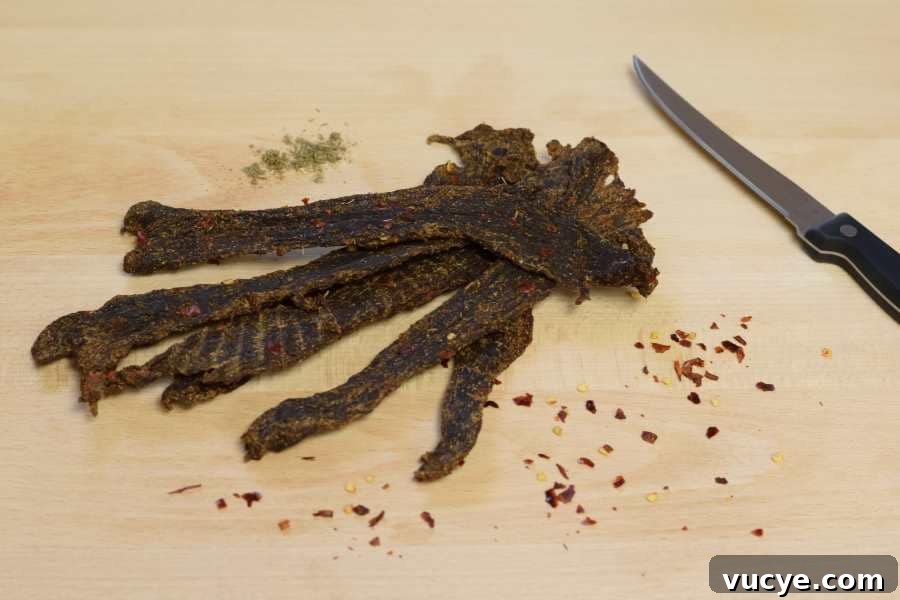
The inspiration for this jerky came from a love of classic breakfast sausage flavors. Using the last of my venison from last season, I created a jerky that captures sage, thyme and a touch of heat for a bold, savory snack. The result is a flavorful, slightly spicy jerky with a familiar breakfast-sausage profile.
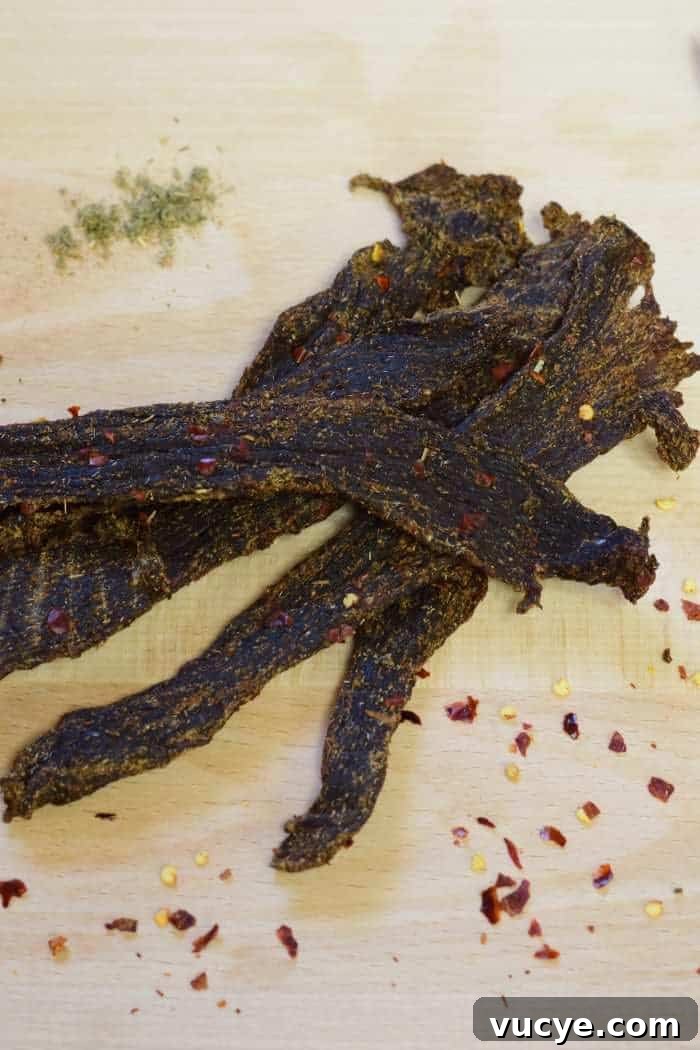
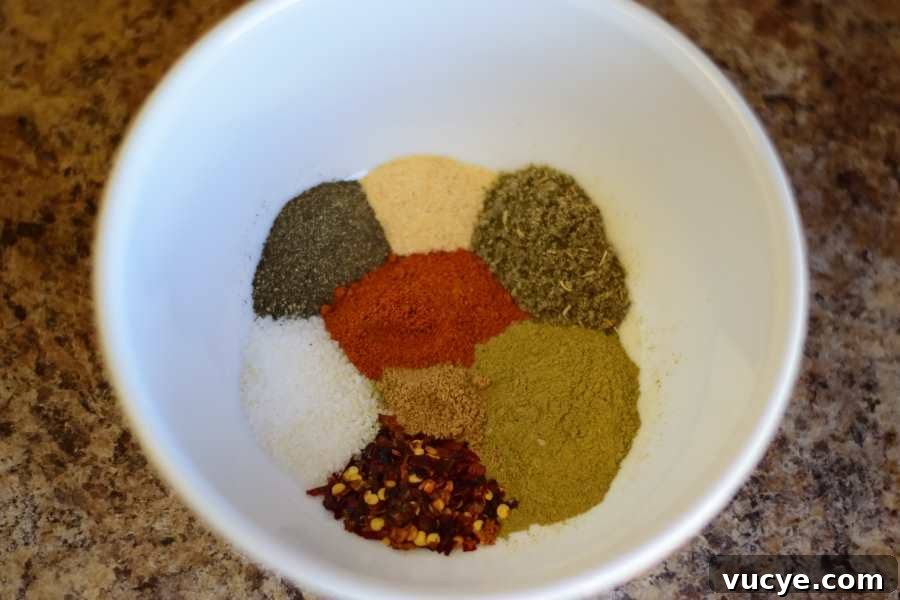
Key herbs like rubbed sage and ground thyme form the backbone of the marinade, and cayenne pepper provides a clear spicy kick that balances the savory herbs. If you prefer milder jerky, reduce the red pepper flakes and cayenne by half to soften the heat while keeping the same breakfast-style flavor.
I sliced the venison with the grain for a chewier texture; if you want a more tender bite, slice against the grain. Chilling the meat slightly before cutting makes cleaner slices and helps maintain consistent thickness. The strips were marinated for 18 hours, which allowed the herb and spice flavors to penetrate the meat deeply and produce a well-seasoned jerky.
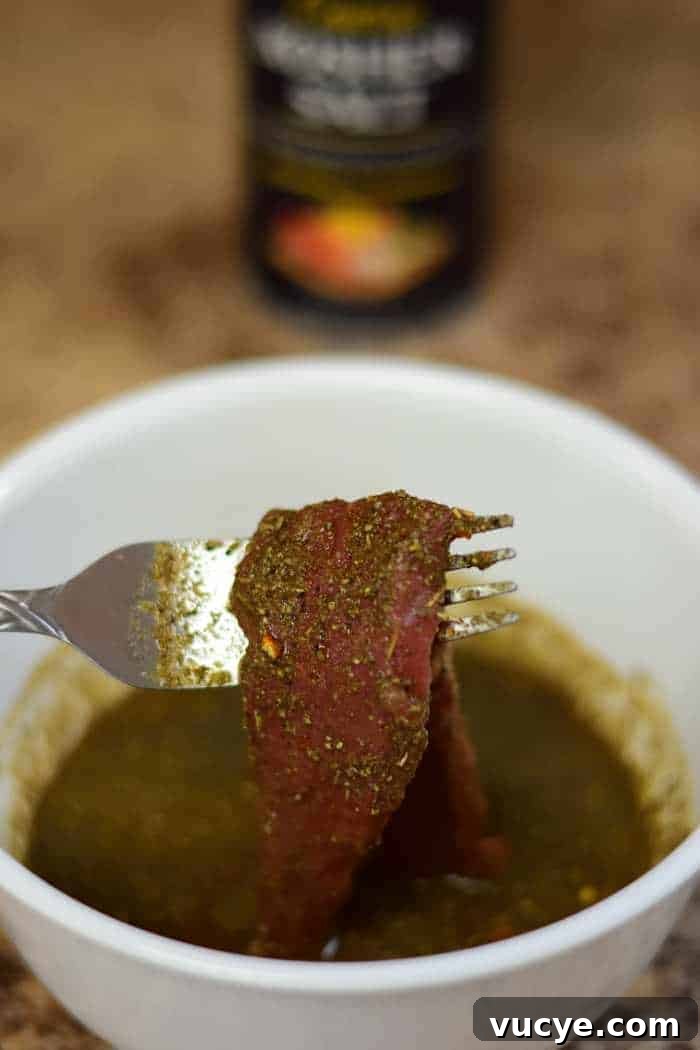
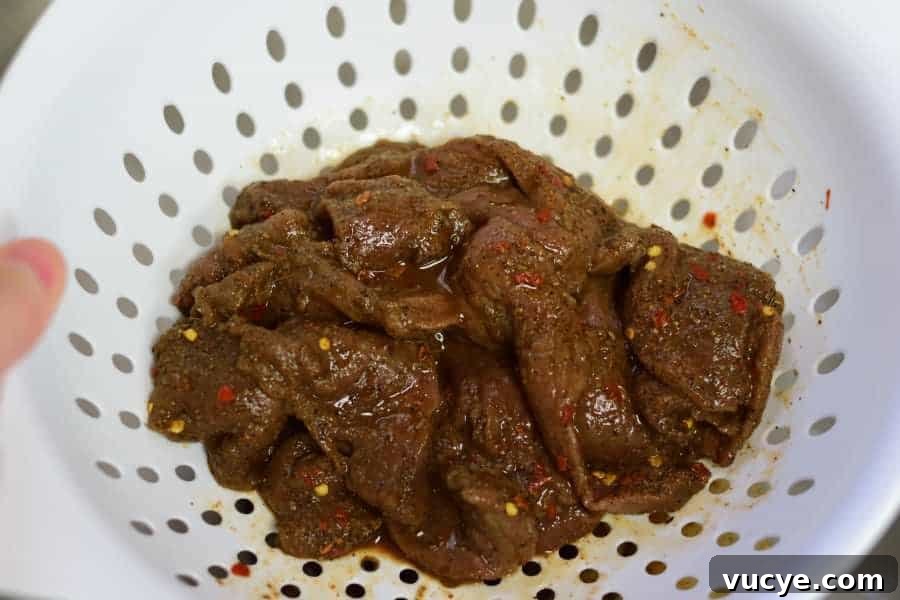
After marinating, I strained the meat but avoided wiping it with paper towels because I didn’t want to remove the visible thyme and sage pieces that cling to the surface. If you prefer, you can pat the strips lightly with paper towels to remove excess marinade; just dab gently so you don’t remove too much seasoning.
For an initial heat treatment I placed the slices on a baking rack set over an aluminum foil–lined cookie sheet so air could circulate above and below the strips. The foil lining makes cleanup quick and easy. The tray went into a preheated oven at 300°F for twelve minutes with the oven door closed to raise the internal temperature of the meat.
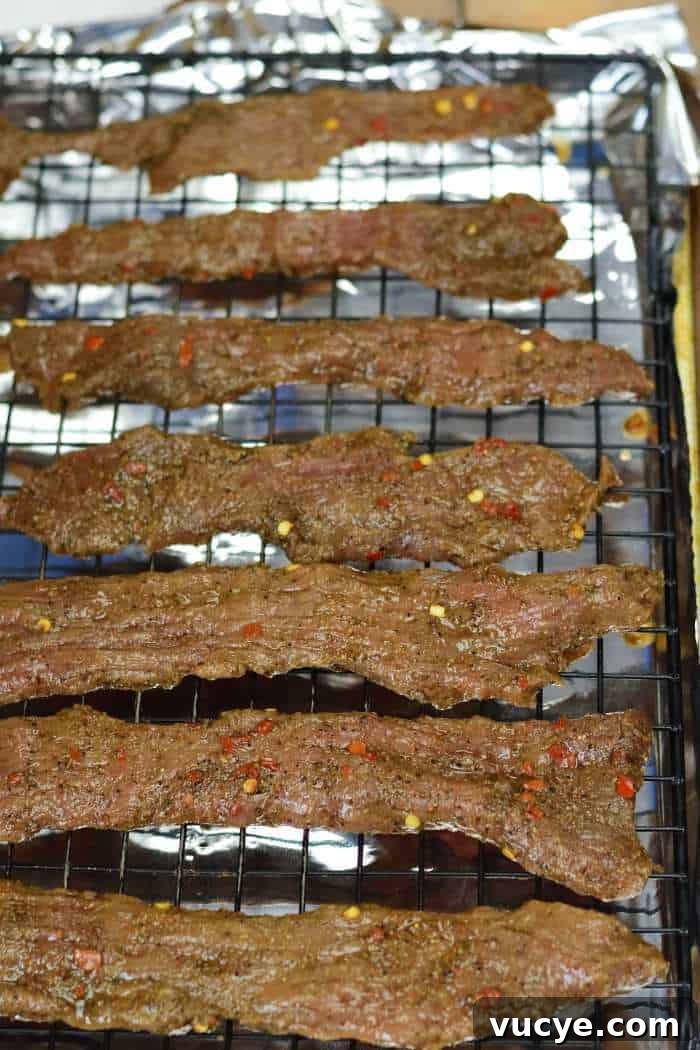
I omitted curing salt for this batch, so I used the oven step as an initial heat treatment to ensure food safety. Bringing the meat to the safe internal temperature before dehydration helps eliminate potential bacteria when curing agents aren’t used. After the oven step, I finished drying the strips in a dehydrator to reach the ideal jerky texture.
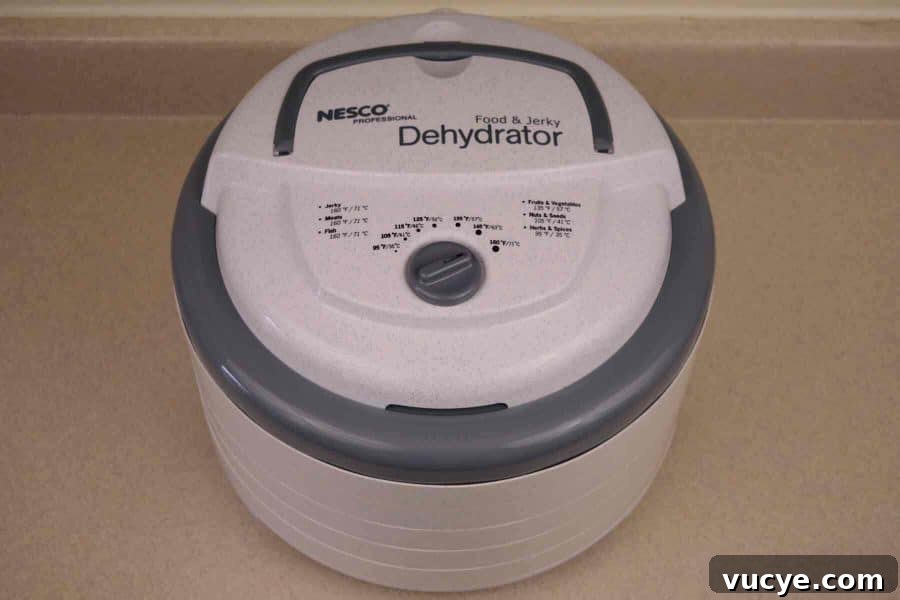
Once the strips completed the initial oven treatment, they were transferred to a dehydrator. I dried at 160°F for two hours, then lowered the temperature to 145°F and dried for an additional 1.5 hours. The jerky was done when it bent and cracked but did not snap completely in two—tender and chewy, but stable.
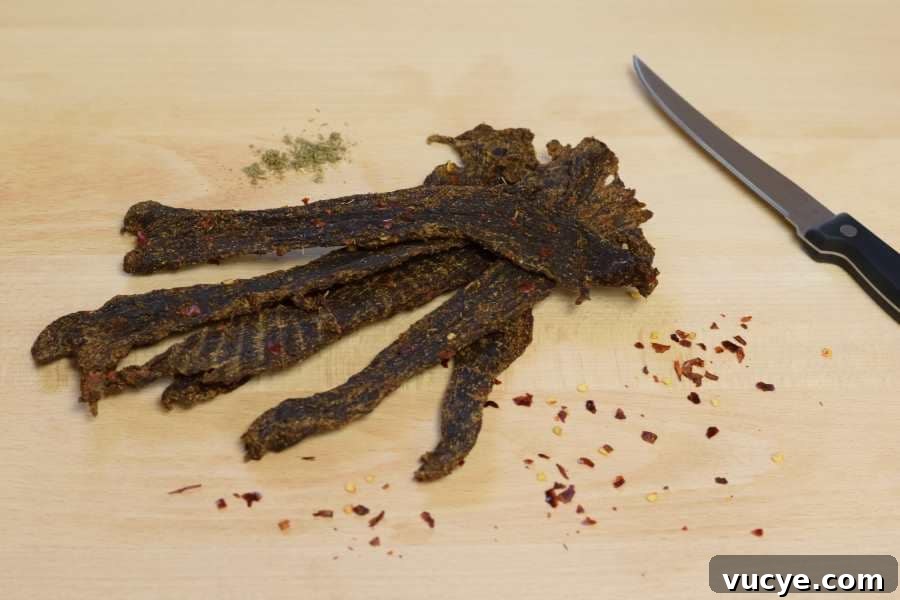
The finished jerky captures savory herb notes reminiscent of breakfast sausage with a clean, peppery heat that lingers. Texture and flavor are both excellent—herbal, salty, slightly smoky from the dehydration process, and nicely spiced. If you want a milder result, reduce the cayenne and red pepper flakes; if you prefer more heat, increase them to taste.
Tips: Partially freezing the meat before slicing makes cleaner, more consistent cuts. Marinate between 8 and 24 hours depending on how intense you want the flavor. Use a baking rack over foil for the oven step to allow airflow and simplify cleanup. Dry until the jerky bends and cracks but doesn’t break, and always follow safe temperature practices if you skip curing salts.
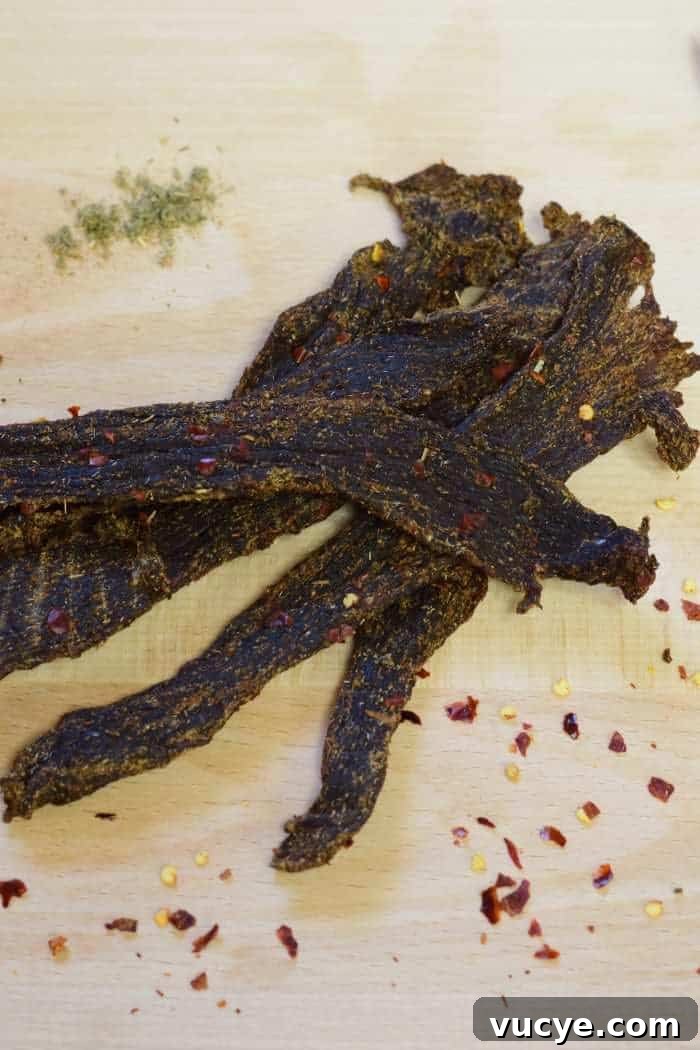
First Light Deer Jerky
Pin Recipe
Rate Recipe
Ingredients
Lean Protein
- 1 lb Venison (Beef can also be used)
Marinade
- 2 teaspoon rubbed sage
- 1 ½ teaspoon ground thyme
- 1 teaspoon red pepper flakes
- 1 teaspoon kosher salt
- 1 teaspoon black pepper
- 1 teaspoon cayenne pepper
- ½ teaspoon garlic powder
- ¼ teaspoon ground coriander
- ½ cup cold water
Optional
- ¼ teaspoon Curing Salt (Prague Powder #1)
Equipment


Instructions
- Trim all visible fat from the venison and place the meat in the freezer for an hour or two so it firms up for slicing.
- While the meat chills, combine the marinade ingredients in a bowl or zip-top bag and mix thoroughly.
- Remove the meat from the freezer and slice into 1/4-inch strips. Slice with the grain for a chewier jerky, or against the grain for a more tender bite.
- Add the sliced venison to the marinade in a bag or container and refrigerate for 8–24 hours to develop flavor.
- After marinating, strain the strips in a colander to remove excess marinade. You may lightly dab with paper towels if desired, but avoid removing too much seasoning.
- Arrange the jerky strips on a baking rack set above an aluminum foil–lined cookie sheet so air circulates beneath and above the meat.
- Place in a 300°F preheated oven for 12 minutes as an initial heat treatment if you are not using curing salt.
- Transfer the strips to a dehydrator. Dry at 160°F for two hours, then lower to 145°F and dry for another 1.5 hours or until the jerky bends and cracks but doesn’t snap.
Nutrition
Let us know how it was!
You might also like: