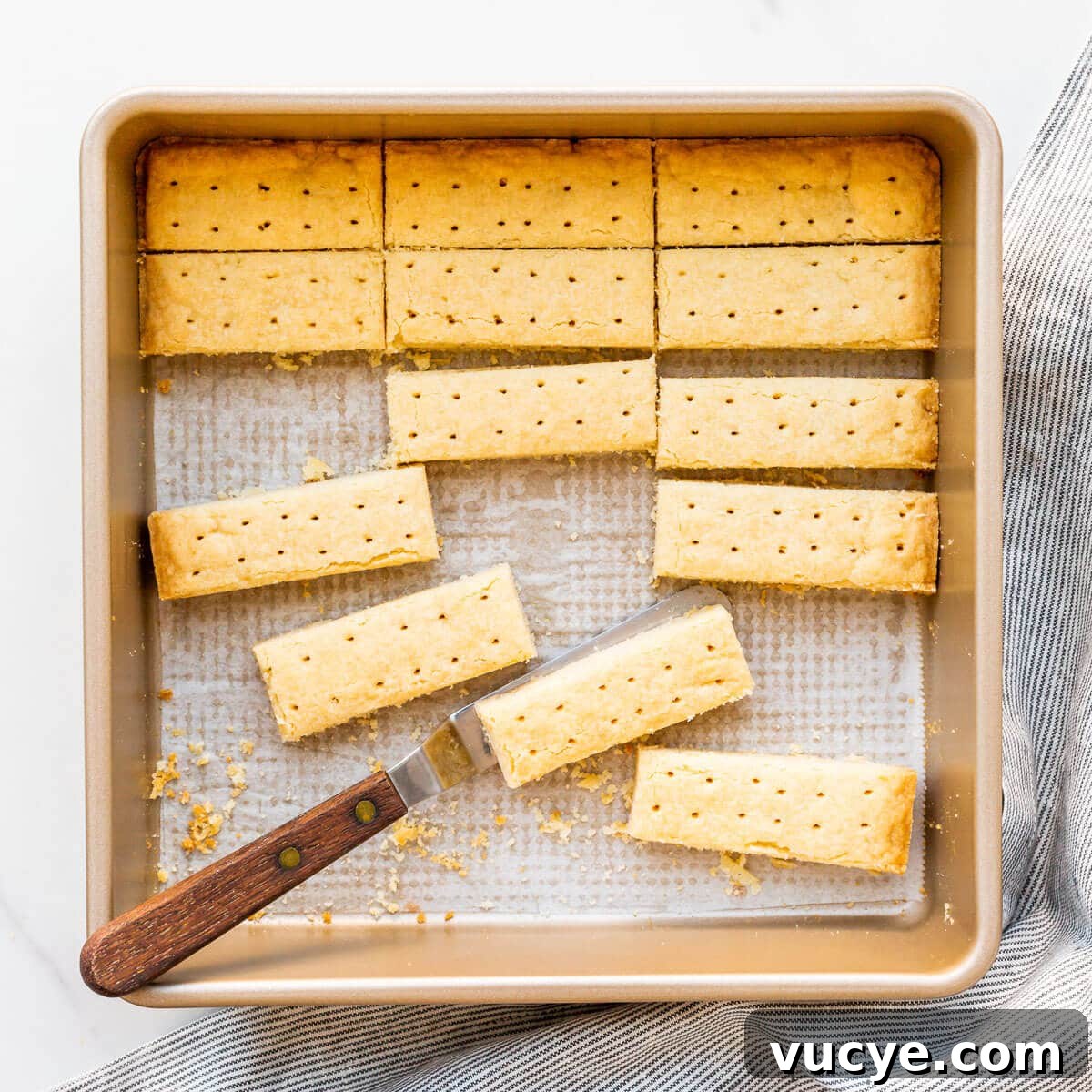
This easy recipe for 3-ingredient shortbread cookies uses the classic 1:2:3 ratio—one part sugar, two parts butter, three parts flour (by weight)—plus a pinch of salt. The dough is pressed into a square pan, scored into bars, and baked until dry and lightly golden. This straightforward method is simple to scale and easy to adapt with flavour variations.
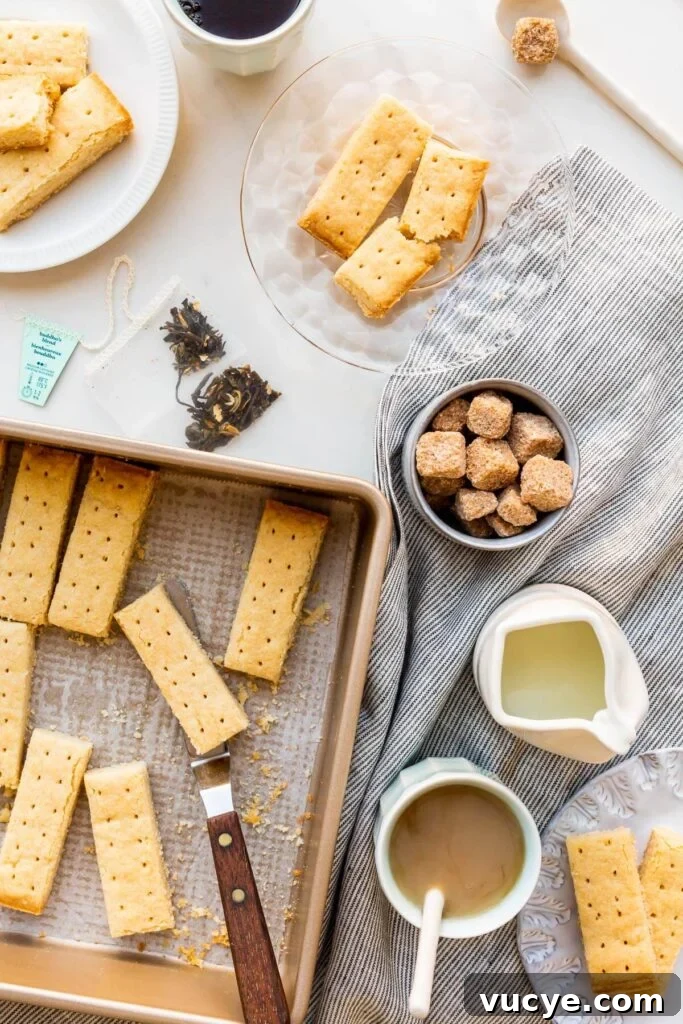
Traditional shortbread is made from butter, sugar, and flour. Some bakers omit salt, but a small amount can brighten the flavour. Variations exist that add eggs or milk for more structure, but purists prefer the three-ingredient approach. What defines great shortbread is the ratio of ingredients: keep the balance right and the texture will be tender and buttery without being greasy.
The standard ratio is 1:2:3 by weight: sugar:butter:flour. This format makes the recipe simple to scale up or down while maintaining consistent results. The amount of butter is especially important—too much yields very buttery but fragile cookies; too little produces dry, tough shortbread. If your batch crumbles, those crumbs still make an excellent ice cream topping.
Shortbread differs from sugar cookies, which typically include eggs or milk for added structure, making them sturdier for decorating and shipping. Shortbread should be dry, sandy, and melt-in-your-mouth or slightly crumbly, depending on personal preference.
Ingredients
You likely already have everything you need. For best results use simple, quality staples:
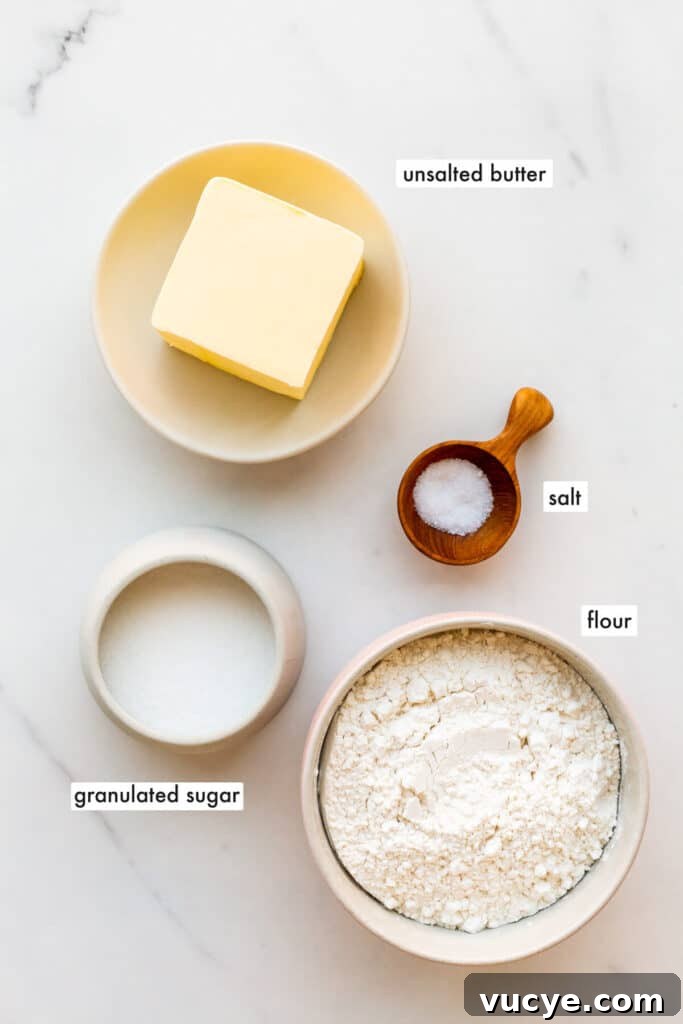
- Butter – use unsalted so you control the seasoning.
- Sugar – granulated sugar preserves the classic sandy texture and lets the butter shine.
- Flour – all-purpose flour gives structure without making the cookie tough. You can substitute part of the flour with buckwheat or rice flour for a more tender crumb.
- Salt – optional but recommended to balance flavour. If using table salt, use about half the amount compared to kosher salt.
See the recipe card below for exact quantities in metric and US measurements.
Substitutions and Variations
This 1-2-3 base is very adaptable. A few ideas:
- Sugar choices: Granulated sugar yields crisp, sandy shortbread. Confectioners’ sugar (icing sugar) produces a softer, more tender cookie.
- Shape and method:
- Press the dough into a pan and bake, then cut into bars, or form a log, chill, slice, and bake for slice-and-bake cookies.
- Use the same dough as a base for bars (lemon bars, caramel shortbread) by adding a filling and topping.
- Flavour additions:
- Vanilla: 1 teaspoon vanilla extract mixed into the creamed butter and sugar.
- Chocolate chips: ½ cup mini chips for chocolate chip shortbread.
- Citrus: 1 tablespoon citrus zest for lemon, orange, or lime shortbread.
- Tea: 2 tablespoons finely ground tea leaves mixed with the flour.
- Spices: 1 teaspoon cinnamon or cardamom added to the flour.
- Nuts: ½ cup finely chopped toasted nuts blended with the flour.
- Seeds: 3 tablespoons sesame or poppy seeds with the flour.
- Brown sugar or maple sugar: Replace half the granulated sugar by weight for a chewier or maple-scented cookie.
- Flour swaps: Replace up to about 95 g of AP flour with buckwheat or rice flour for a more tender result; note texture will change.
- Cocoa: Replace part of the flour with Dutch-process cocoa for chocolate shortbread.
Directions
Shortbread is straightforward and forgiving when you respect the ratio.
Step 1: Use the creaming method. Beat the room-temperature butter, sugar, and salt together until smooth, light, and creamy—about 3–4 minutes. Scrape the bowl to ensure it’s uniform.
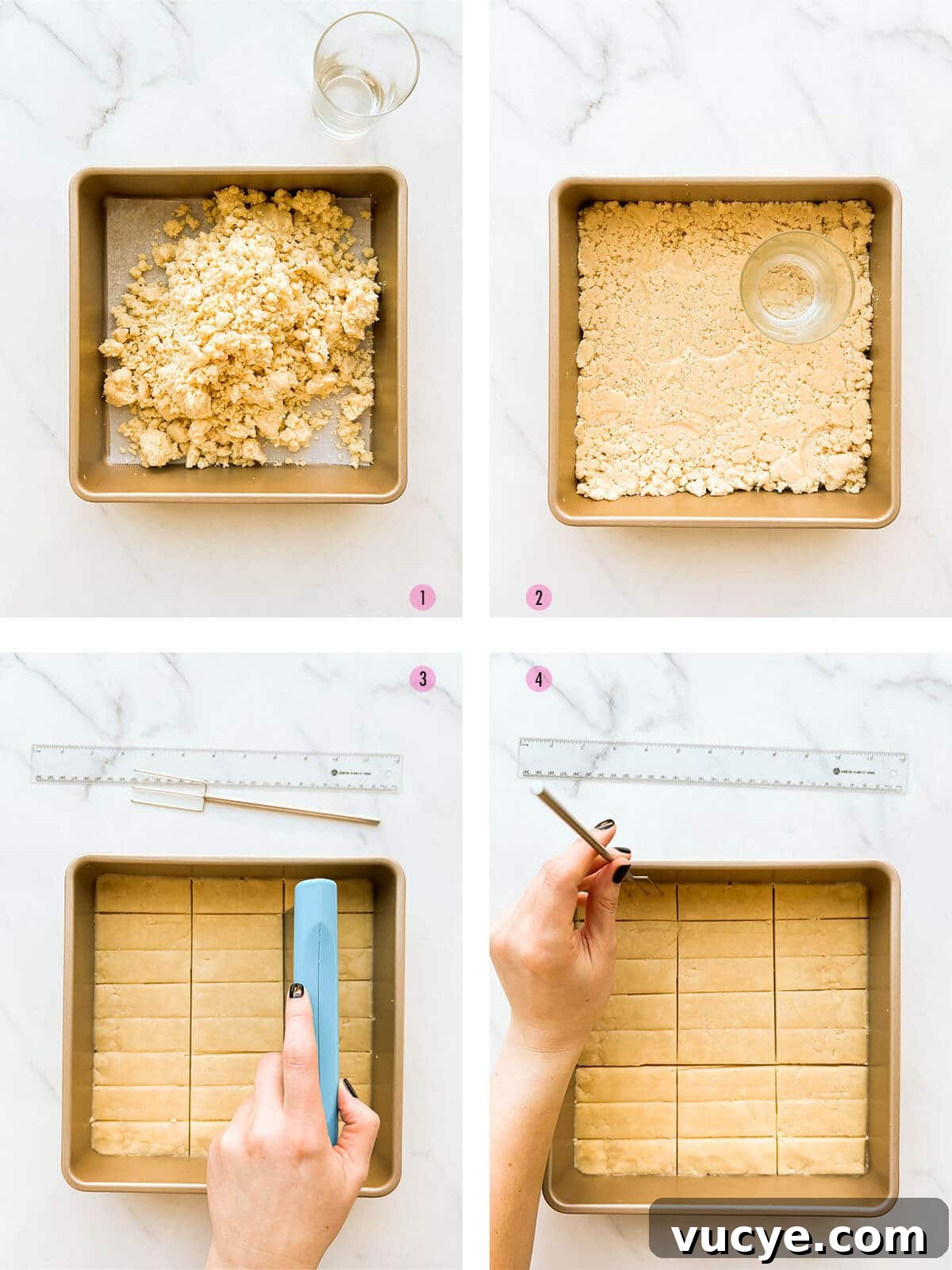
Step 2: Add the flour and mix until the dough resembles a sandy crumble that holds when pressed. Transfer to a lined 9-inch (23 cm) square pan and spread evenly.
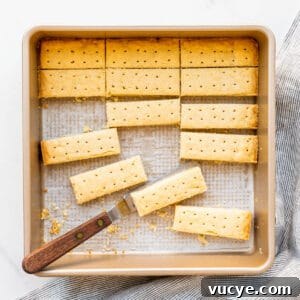
Step 3: Press the dough firmly and evenly using your fingertips or a flat-bottomed glass to smooth the surface. Pre-cut into 24 rectangles and dock (prick) the surface with a fork to let steam escape.
Step 4: Bake at 350°F (175°C) for 35–40 minutes or until the edges are golden and the surface looks dry and set. Let cool in the pan for 5 minutes, re-cut along the lines, then cool another 10 minutes before unmolding.
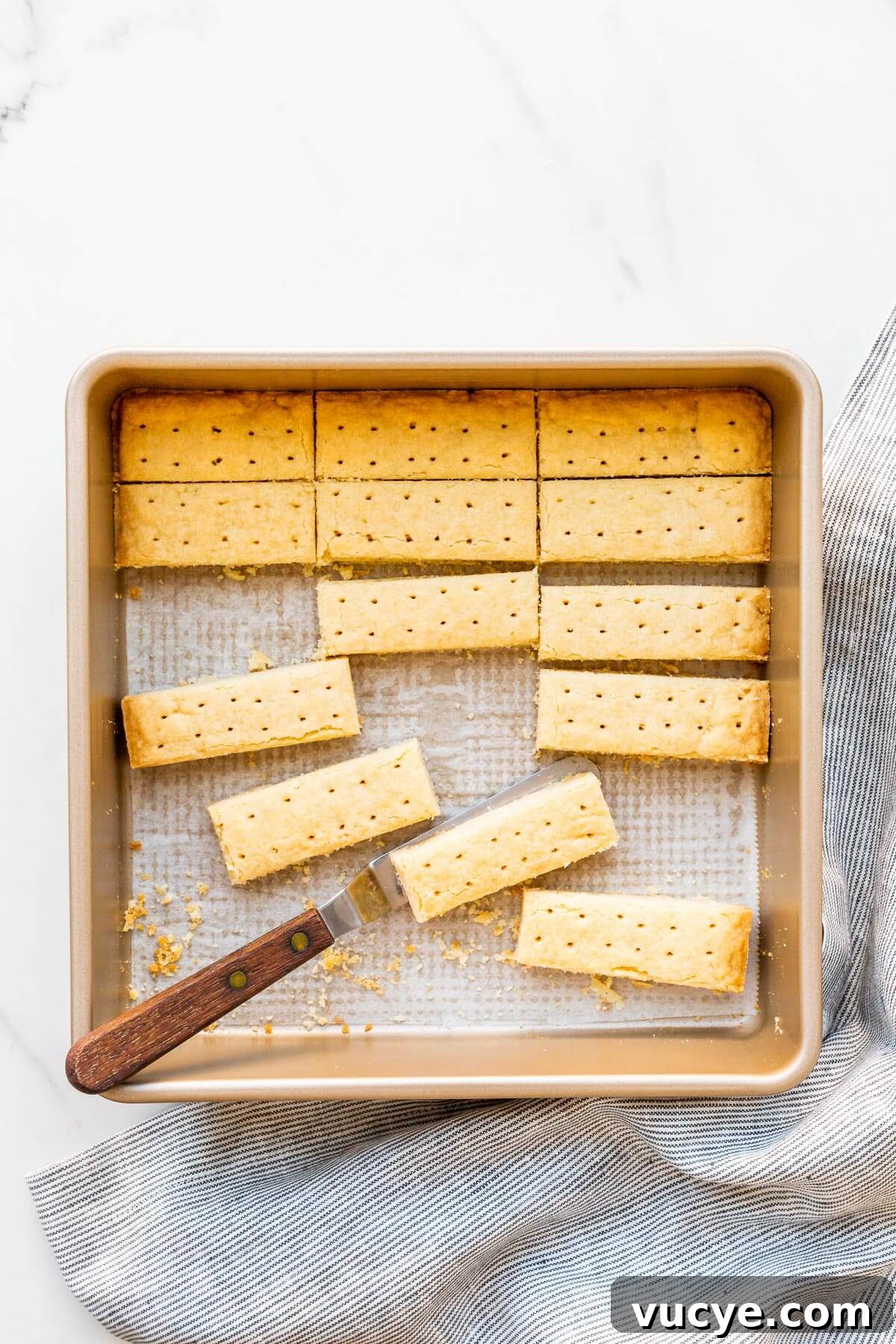
Tip: If the center still feels soft, remove the bars from the pan, place them on a parchment-lined sheet about 1 inch apart, and bake at 325°F (160°C) for another 10–20 minutes. A low, slow finish helps dry the cookies through without over-browning.
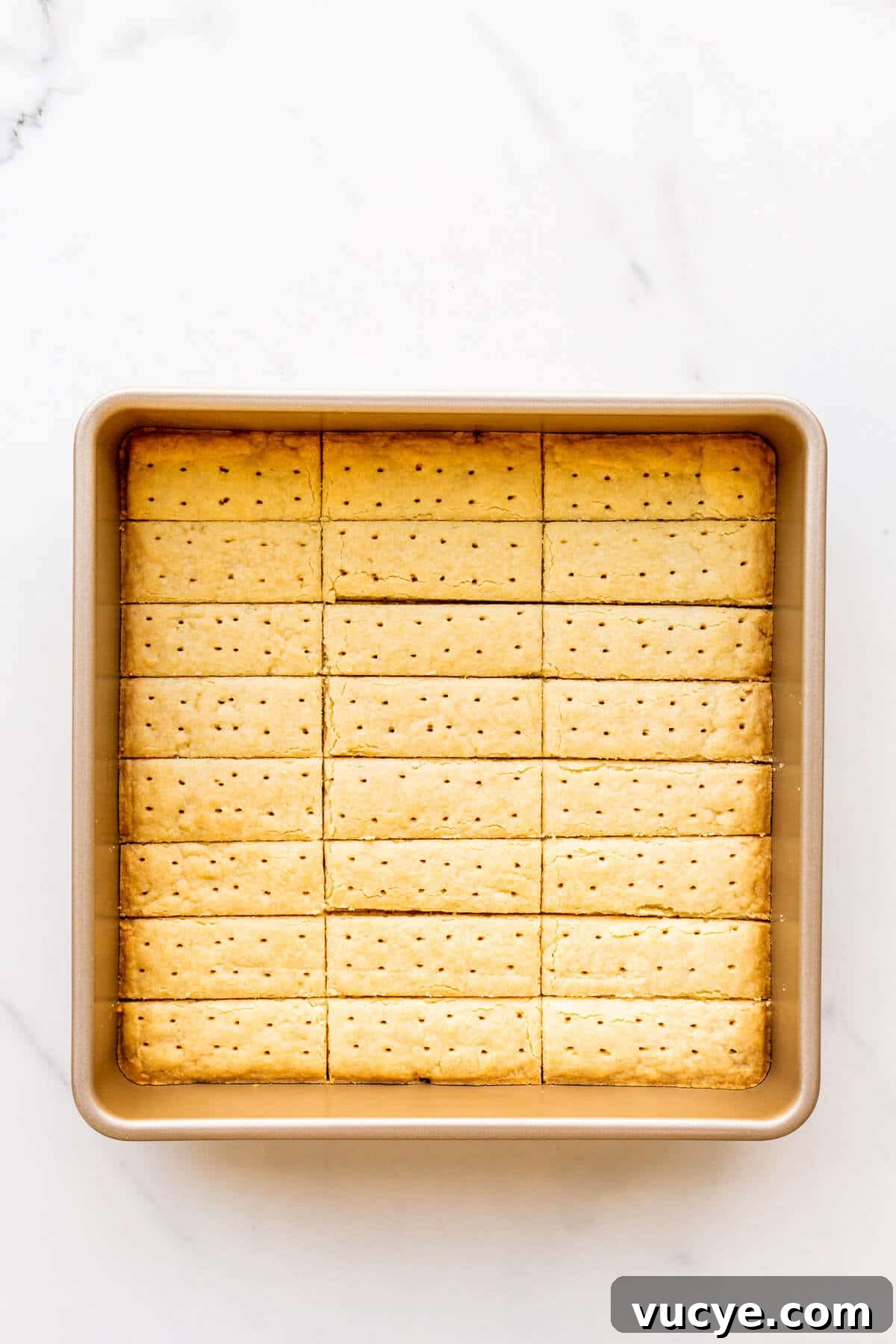
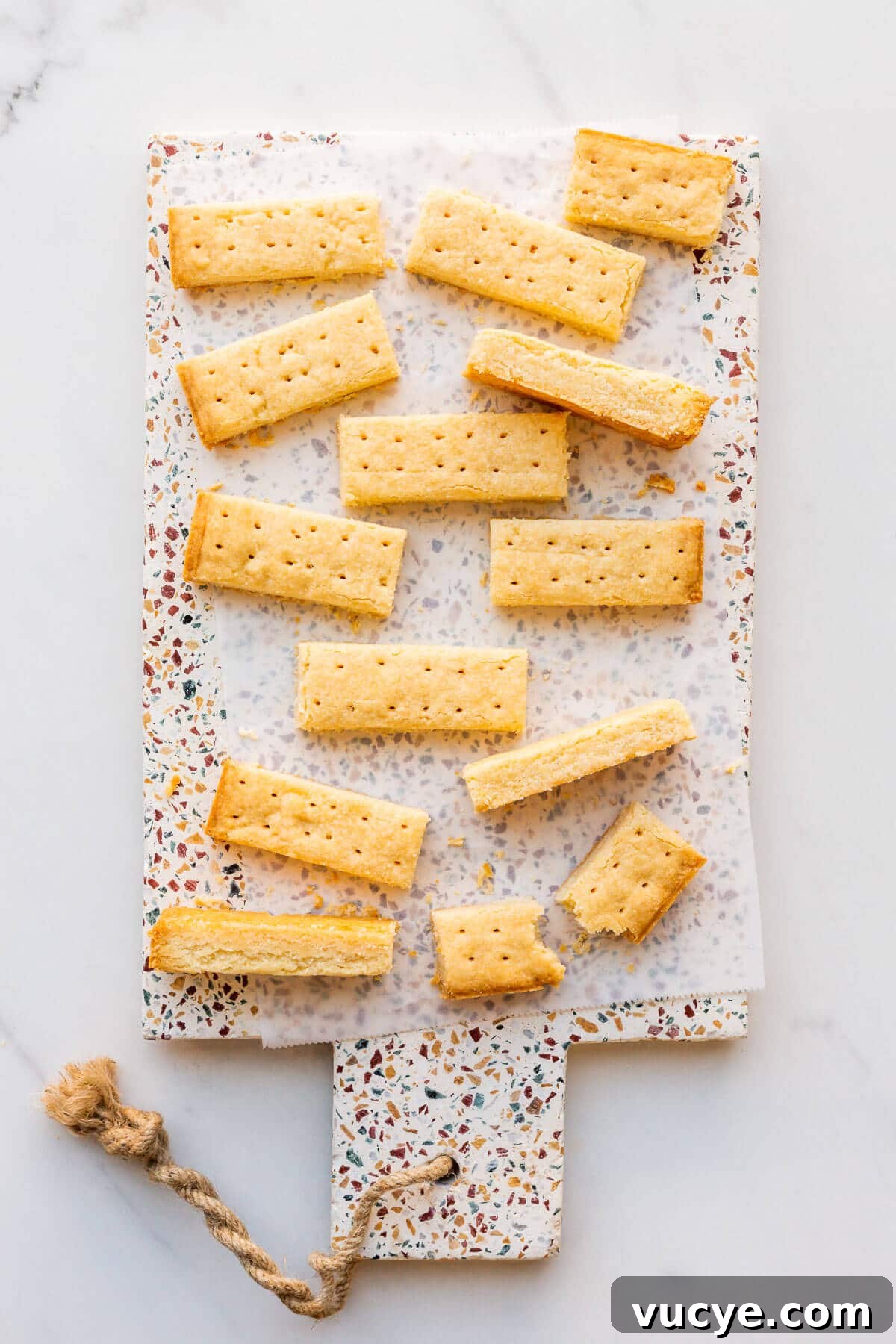
Let cool completely before serving or storing. Properly cooled shortbread stores well in an airtight container in a cool, dry place.
Shortbread Cookie Baking Tips
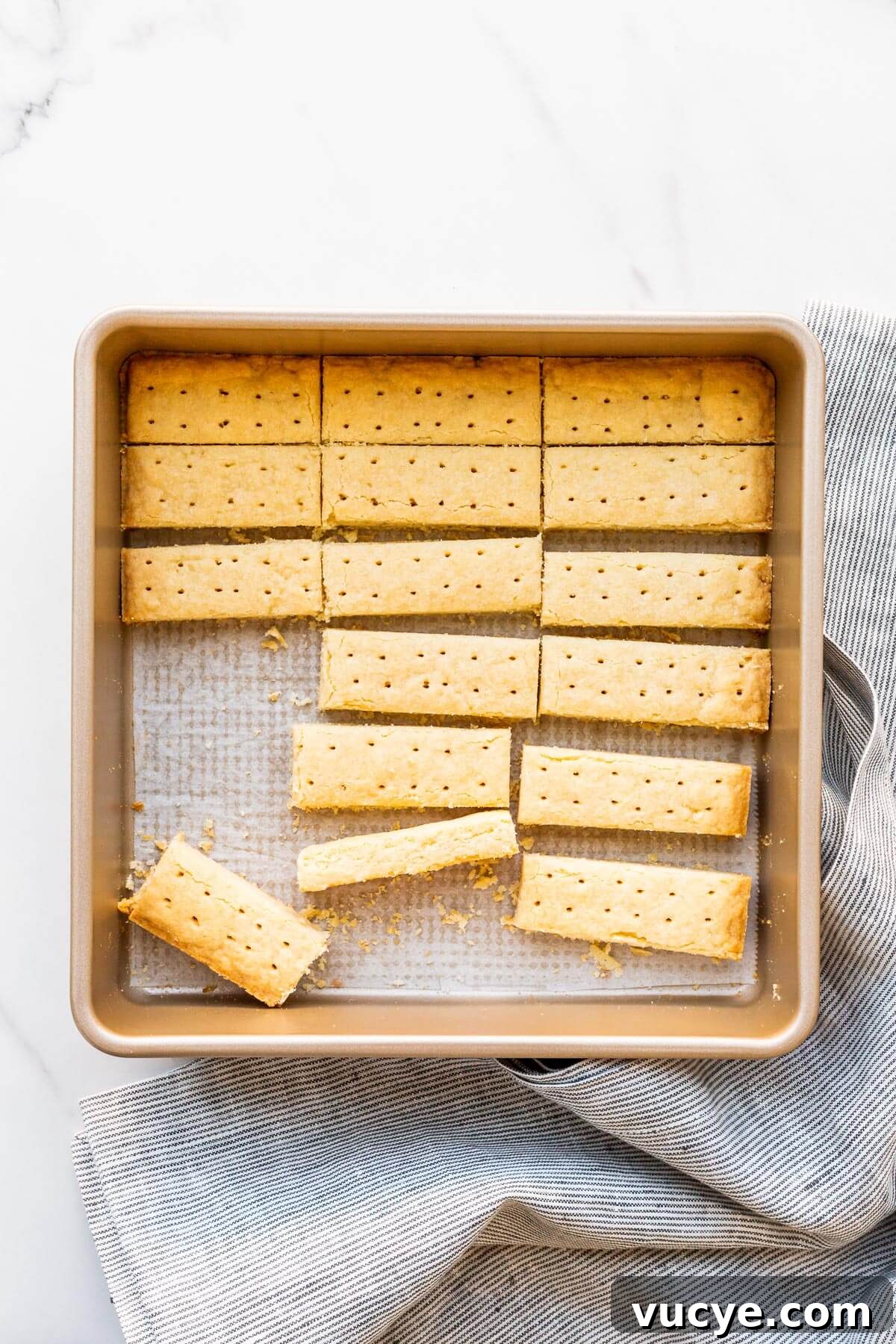
To avoid gummy or chewy shortbread, ensure the cookies are dried through. Docking helps, but finishing the bake on a sheet pan or lowering the oven temperature and extending the baking time can provide a consistently dry, sandy texture. Metal pans conduct heat best, and thinner layers will bake more evenly.
Shortbread Cookie Baking FAQs
“Short” in baking refers to a high proportion of fat, which produces a tender, crumbly texture. The higher the fat content, the more “short” or sandy the baked good becomes.
Chewy shortbread usually means they haven’t been dried out enough in the oven, the dough was overworked, or the sugar proportion is off. Try docking the dough, baking longer at a lower temperature, or finishing the bake on a separate sheet to dry the centers.
Soggy cookies indicate underbaking or excess moisture. Bake longer at a lower temperature, use a metal pan, or spread the dough thinner so it bakes through without over-browning.
Too much butter relative to flour can make shortbread overly crumbly. If you replace butter with other fats, you may need to add a splash of liquid to help the dough bind, since butter contributes some water to the recipe.
Some prefer pale shortbread, but a lightly golden edge and a dry, set surface are reliable signs that the cookies are done. The center should not appear shiny.
Once completely cooled, store shortbread in an airtight container in a cool, dry place.
Other Shortbread Cookies to Try
If you want to explore more shortbread-style cookies, try variations that incorporate nuts, jams, spices, or alternative flours. Examples include jam-filled shortbread, walnut crescents, maple sable cookies, alfajores, and buckwheat slice-and-bake shortbread.
If you try this recipe, leave a star rating and let the author know how it turned out.
📖 Recipe
Shortbread Cookies
Ingredients
- 230 grams unsalted butter, room temperature
- 115 grams granulated sugar
- 3.75 mL fine kosher salt (or a pinch)
- 345 grams all-purpose flour
Instructions
- Line the bottom of a 9-inch (23 cm) square pan with parchment. Preheat oven to 350°F (175°C).
- Cream butter, sugar, and salt in a mixer fitted with a paddle attachment until light and creamy, about 3–4 minutes. Scrape the bowl as needed.
- Add the flour and mix until the mixture forms a sandy crumble that holds together when pressed.
- Spread the mixture evenly in the prepared pan and press down firmly with a flat-bottomed glass or your fingertips. Pre-cut into 24 rectangles and dock with a fork.
- Bake 35–40 minutes, until edges are golden and the surface is dry. Let cool in the pan for 5 minutes, re-cut, then cool another 10 minutes before removing.
- If centers remain soft, transfer pieces to a parchment-lined sheet and bake at 325°F (160°C) for an additional 10–20 minutes until fully dry.
Notes
- If using table salt instead of kosher salt, use half the amount.
- Add citrus zest, spices, tea, seeds, or chopped nuts to vary the flavour. Replace part of the sugar with brown or maple sugar for a different taste and texture.
- Finishing the bake at a lower temperature or on a separate sheet ensures the middle dries without excessive browning.
Nutrition
Carbohydrates: 16 g
Protein: 2 g
Fat: 8 g
Nutrition information is an estimate.
How to Use Baking Ratios
Baking ratios describe the relationship between ingredient weights and make scaling recipes simple and reliable. For shortbread the 1:2:3 ratio represents sugar:butter:flour by weight. Once you understand the ratio, you can create any batch size by multiplying each part uniformly.
For example, using the 1:2:3 ratio you could make a small batch with 50 g sugar, 100 g butter, and 150 g flour, or scale up proportionally for larger quantities. Always confirm whether the ratio is intended by weight (recommended) or by volume.
Why Ratios Matter
Ratios let you understand how ingredient proportions affect texture and performance. Knowing the butter-to-flour and butter-to-sugar relationships helps you adjust recipes confidently without breaking the formula. Expressing a recipe as a ratio is often more practical than percentages when scaling or adapting a recipe.
How to Calculate Ingredient Ratios
To find a recipe’s ratio, divide each ingredient weight by the smallest weight in the recipe. In this shortbread (115 g sugar, 230 g butter, 345 g flour), divide each by 115:
- Sugar: 115 ÷ 115 = 1
- Butter: 230 ÷ 115 = 2
- Flour: 345 ÷ 115 = 3
That gives a 1:2:3 ratio of sugar:butter:flour by weight, which is easy to scale and adapt.
Baking with Ratios Versus Percentages
Percentages show each ingredient as part of the total, but ratios more clearly express the relationship between key ingredients. For example, a 1:2:3 shortbread is 33% butter by total weight, but the balance of sugar and flour is what determines texture. Trusting the ratio helps you reproduce consistent shortbread regardless of batch size.