Everyone loves flowers, and nearly every culture finds a way to use them. In Japan, that appreciation evolved into ikebana — a refined art of flower arranging with roots stretching back centuries. Initially practiced as an offering to the gods, ikebana has been passed down through generations and is still taught in dedicated schools today.
Ikebana goes beyond simply arranging cut flowers for beauty. It emphasizes harmony, line, and form, as well as techniques that help flowers last longer. Each element carries meaning; flower types, placement, and combinations communicate subtle messages. An odd number of stems is traditionally preferred, both for its symbolic luck and because it avoids strict symmetry, which classic ikebana seeks to transcend. The practice highlights shape and negative space rather than an abundance of color, creating compositions that feel intentional and meditative.
Minimalism is at the heart of ikebana: a few carefully chosen stems in a simple, elegant vase often have more impact than a crowded bouquet. Various ikebana schools emphasize different approaches and techniques, but they share an appreciation for restraint, balance, and the natural beauty of each element. Below are six approachable ikebana-inspired projects and ideas to inspire you to try this time-honored practice yourself.
6 Simply Beautiful Ikebana Flower Arrangements
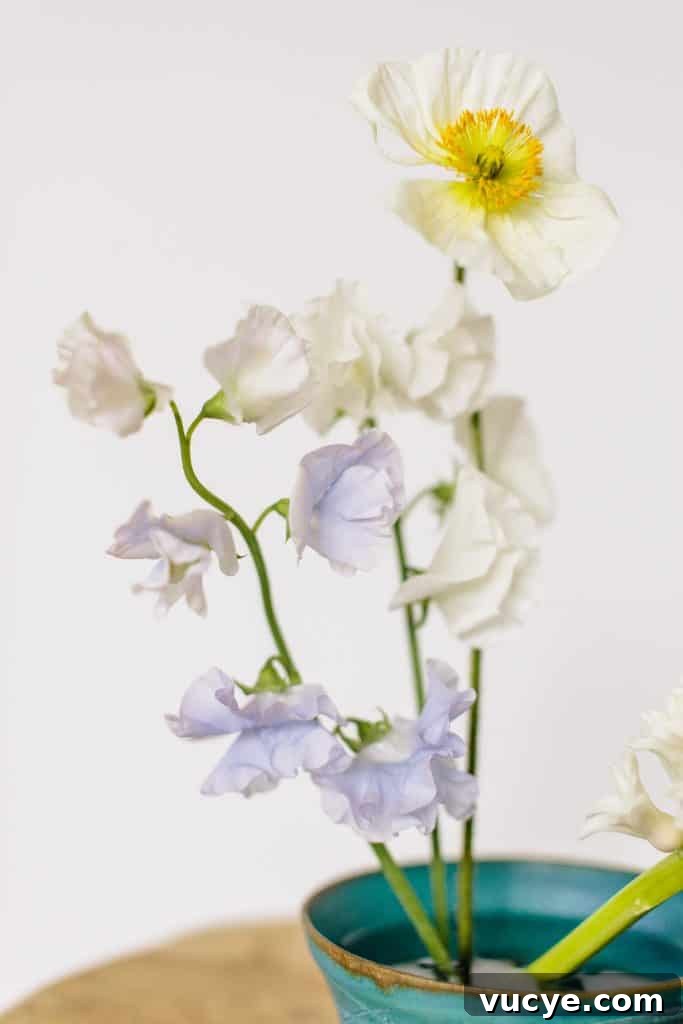
1. Minimalist Ikebana Flower Arrangement from Hello Nest
This modern take on classic ikebana uses pale, seasonal blooms arranged simply in a shallow bowl with a flower frog to hold stems in place. The restrained palette and clean lines let each stem breathe, and the arrangement remains elegant as the flowers age. It’s an easy project to recreate at home and teaches the value of patience and observation as the composition changes over time.
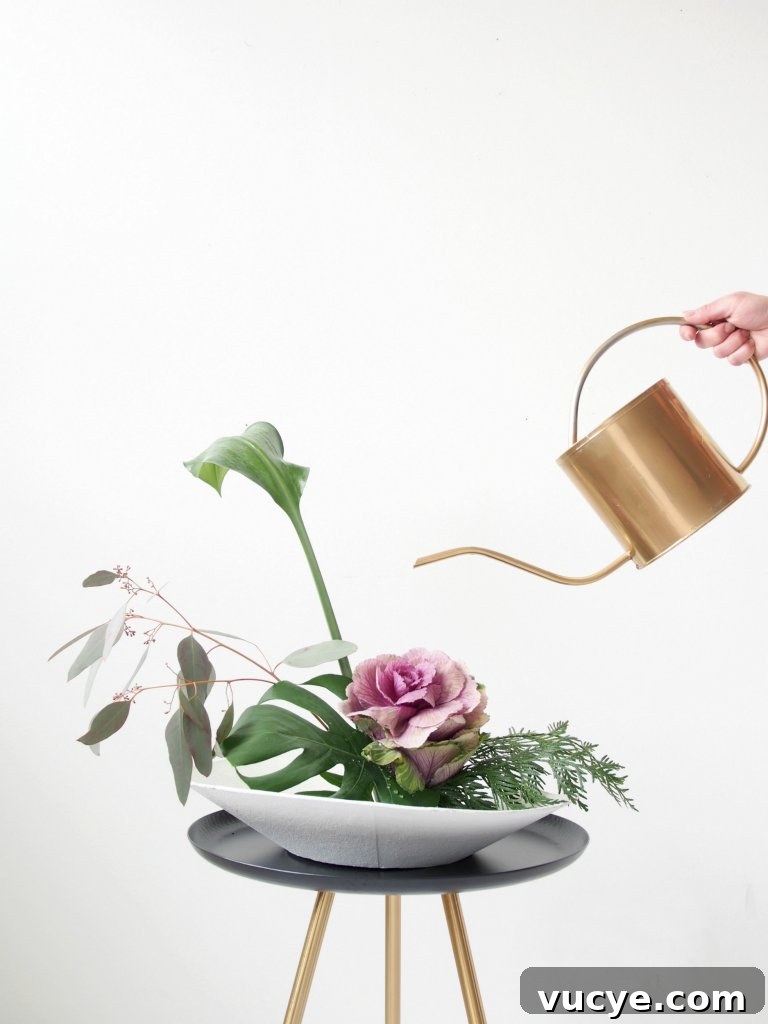
2. DIY Ikebana Decoration from Monster Circus
This design blends Japanese ikebana with Scandinavian minimalism for a low, thoughtfully composed arrangement. Ikebana often uses more than just blooms — leaves, stems, and roots become integral parts of the design. Using the whole plant keeps the arrangement economical and sustainable while emphasizing texture and line over flower quantity.
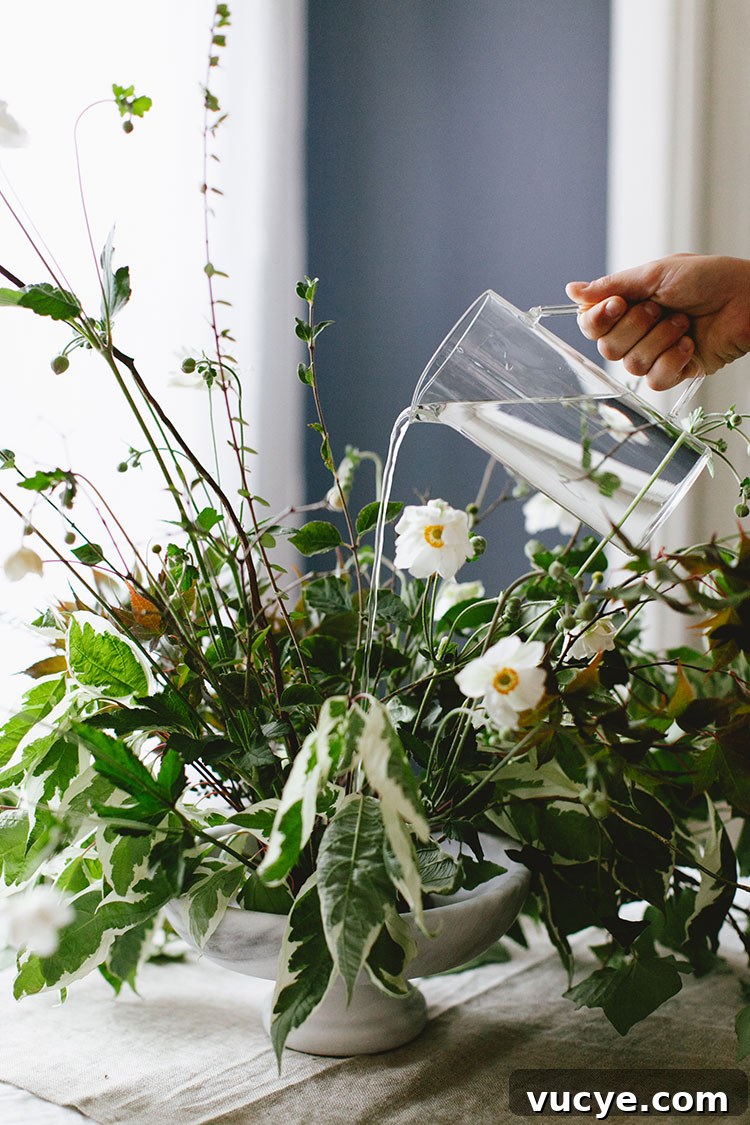
3. Ikebana-Inspired Foraged Centerpiece from Jojotastic
While traditional ikebana often centers on a few well-placed stems, you can also create a richer, foraged centerpiece that still preserves a minimalist spirit. Gather branches, seasonal foliage, and restrained blooms to build a textured, natural composition that feels curated rather than crowded. This approach works well for dining tables and seasonal displays.
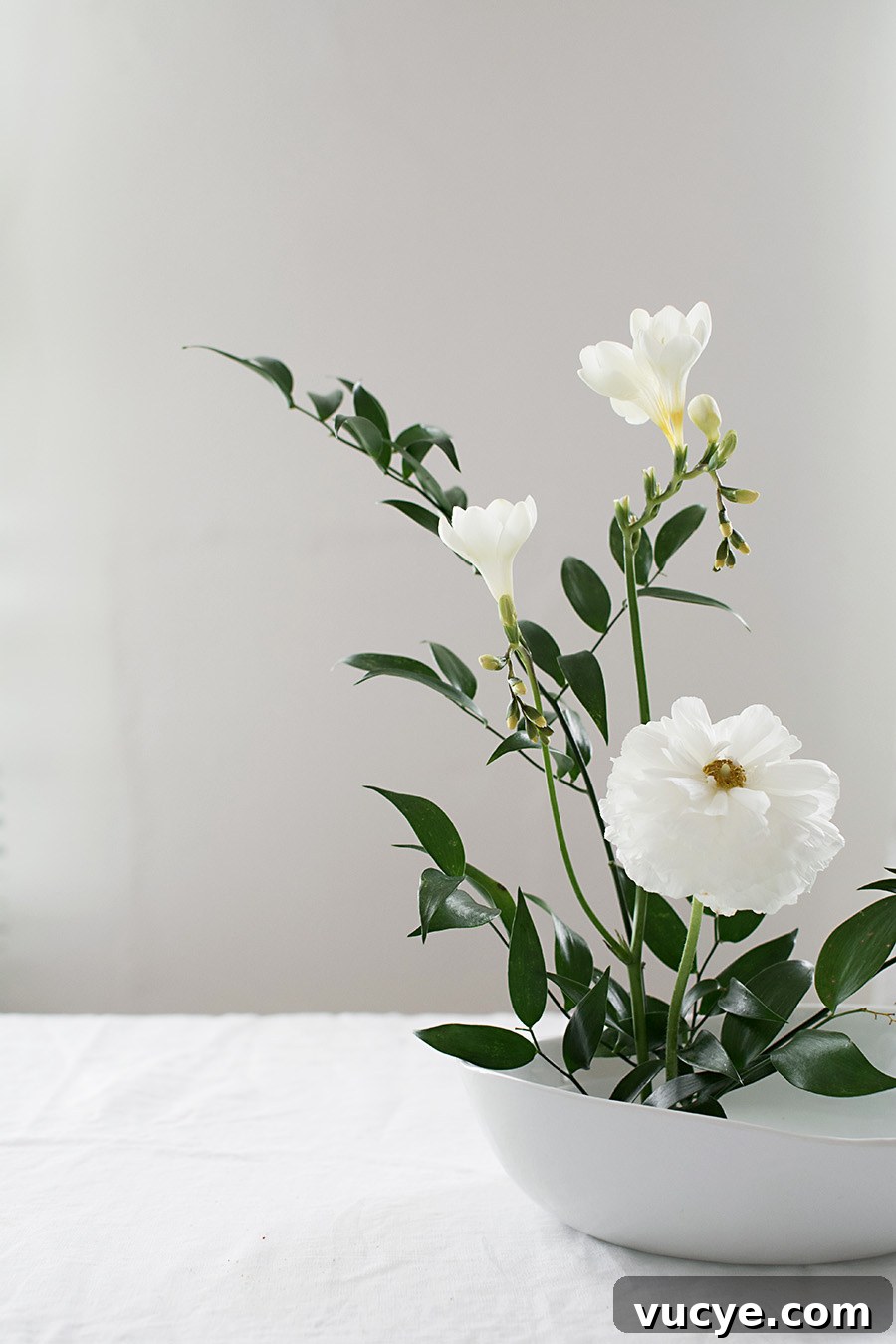
4. Basic Ikebana Flower Arrangement from Home Oh My
This simple white-and-green arrangement captures the ‘less is more’ philosophy. The challenge lies in selecting stems and blooms that complement one another while keeping the overall design minimal. Choosing seasonal materials encourages creativity and helps the arrangement feel connected to its time of year.
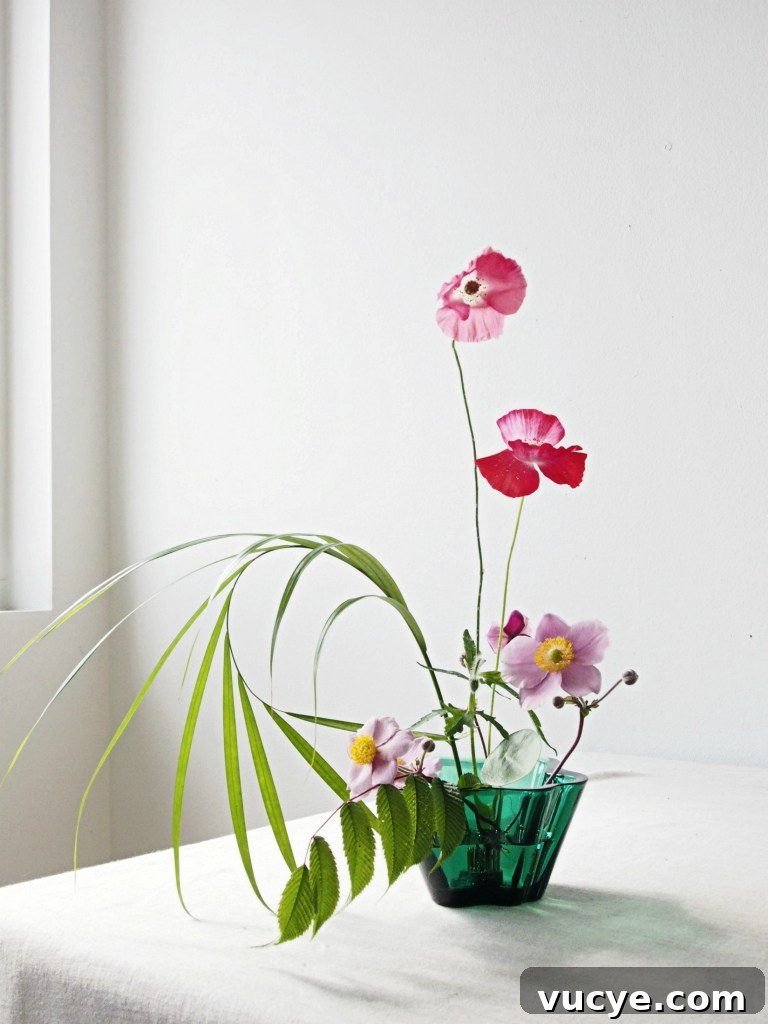
5. DIY Japandi Ikebana from Monster Circus
Japandi merges Japanese and Scandinavian design sensibilities, celebrating natural materials, muted tones, and clean lines. Applied to ikebana, this hybrid style yields arrangements that are serene and modern — ideal for contemporary interiors seeking a calm focal point.
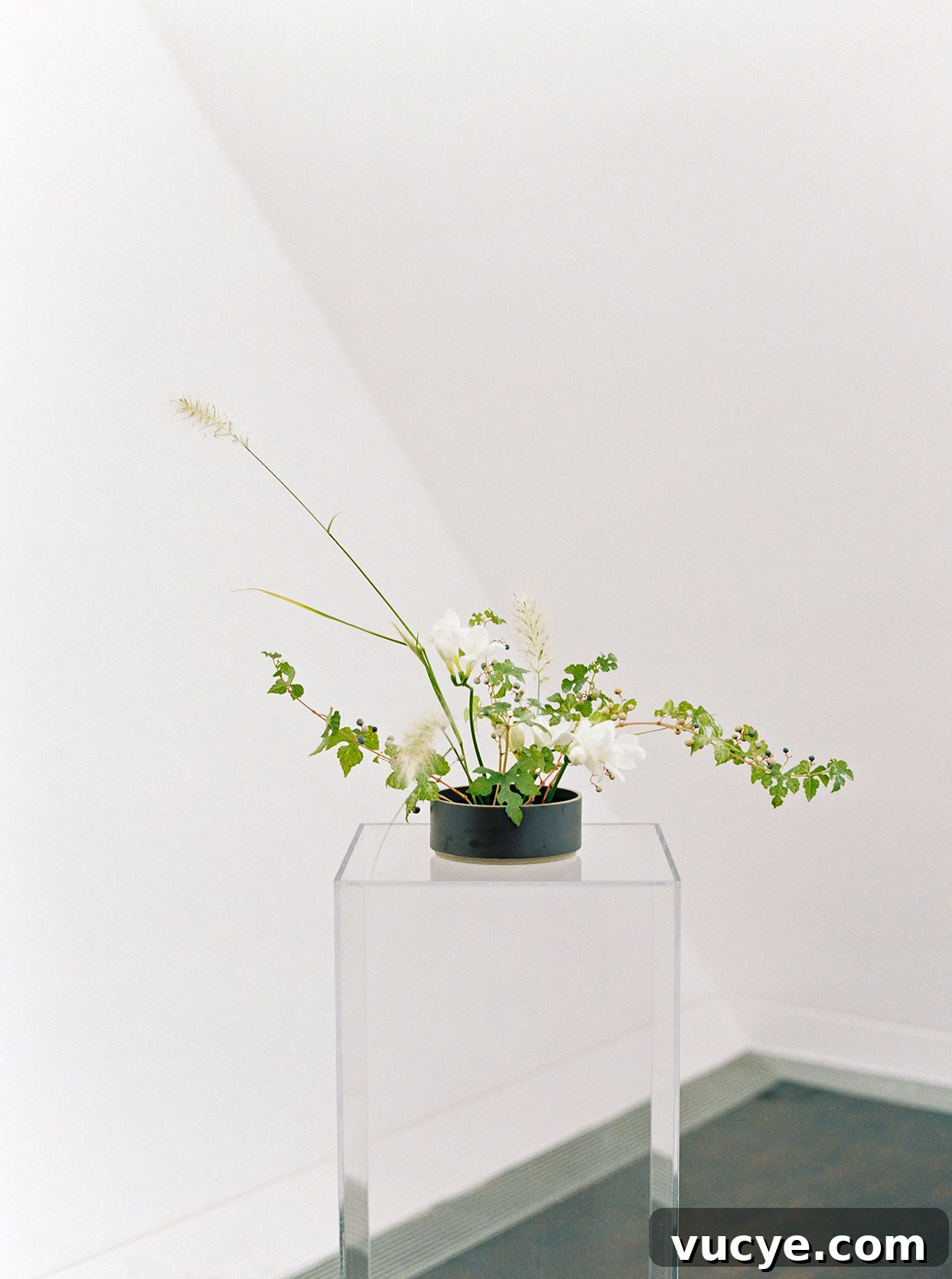
6. Ikebana-Inspired Wedding Flower Ideas
Ikebana principles can translate beautifully to wedding florals, offering a cost-effective alternative that still feels elegant and distinctive. Minimal, thoughtfully arranged bouquets and centerpieces can complement the ceremony and decor rather than overpower them. Brides and planners who favor simplicity and intentional design will find ikebana-inspired ideas especially appealing for creating cohesive, memorable floral aesthetics.
Whether you prefer strictly traditional techniques or a modern interpretation, ikebana encourages a mindful approach to arranging flowers. By focusing on line, balance, and seasonal materials, you can create arrangements that feel both timeless and personal. Try starting with a single stem and a simple vessel, and let the practice teach you how less can truly be more.