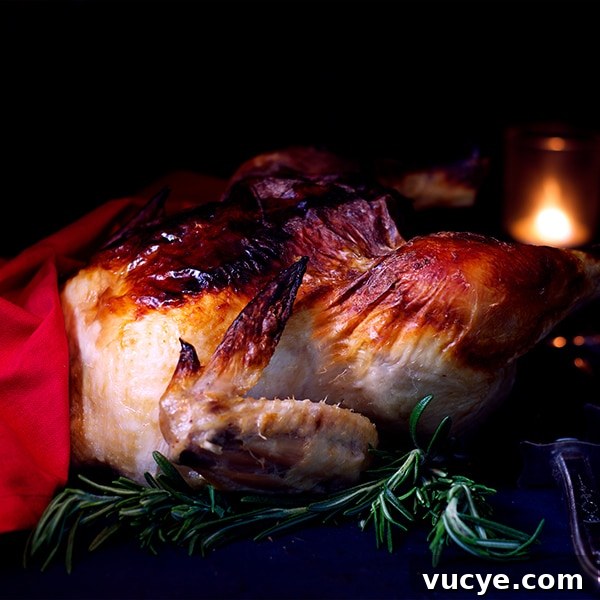
Two straightforward methods from acclaimed chefs that deliver tender, juicy, and deeply flavorful roast chicken. Both require minimal prep (5–10 minutes) and use only three ingredients including the bird.
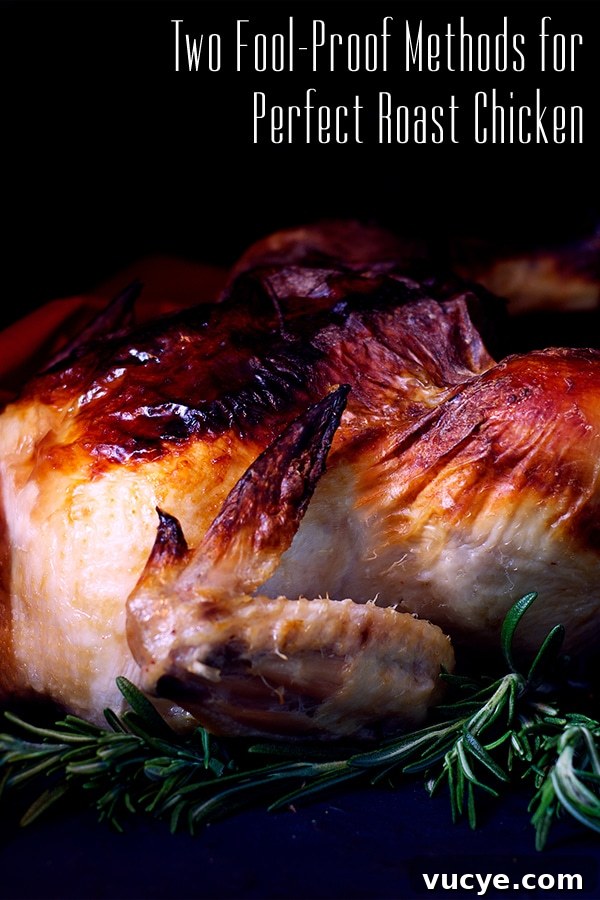
Two Foolproof Methods for Perfect Roast Chicken
There are hundreds of ways to roast a whole chicken—high heat or low, herb rubs or simple salt and pepper, buttered or dry, stuffed or unstuffed. Some cooks truss the bird tight, others spatchcock it. Despite the variety, roast chicken remains a timeless, comforting dish because the basic techniques are forgiving: as long as the bird isn’t undercooked or severely overcooked, it will taste great.
After testing many approaches, I return to two methods again and again because they share three advantages:
- Minimal prep time (about 5–10 minutes)
- Very few ingredients (three including the chicken)
- Consistent results: tender, juicy meat and crisp, well-seasoned skin
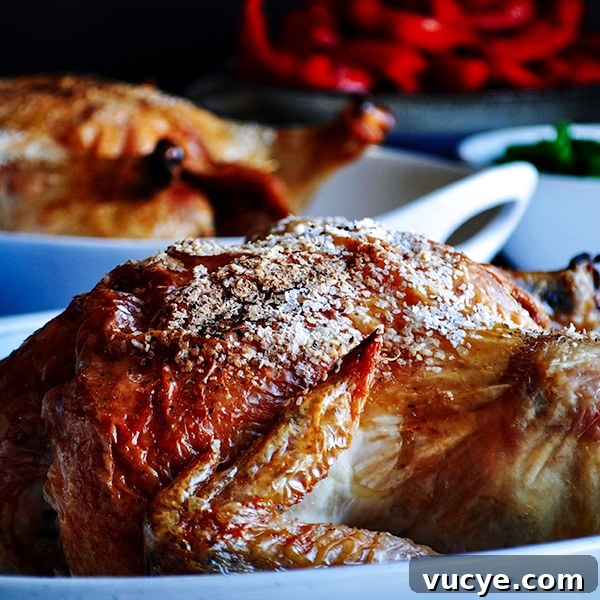
Roast Chicken, Method #1
Thomas Keller’s 5-Minute Prep Roast Chicken
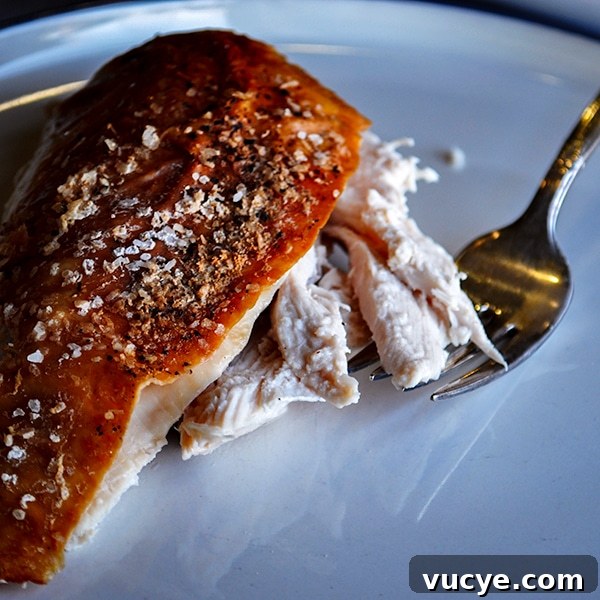
Thomas Keller opens his Bouchon cookbook with a simple roast chicken recipe, and for good reason: the technique is elegant in its simplicity. Keller’s version needs almost no hands-on time—just basic seasoning—and it produces a reliably delicious roast bird.
I roast a chicken nearly every week. Sometimes I brine it in buttermilk (Method #2). Other times I follow Keller’s minimal approach when I want dinner fast and effortless.
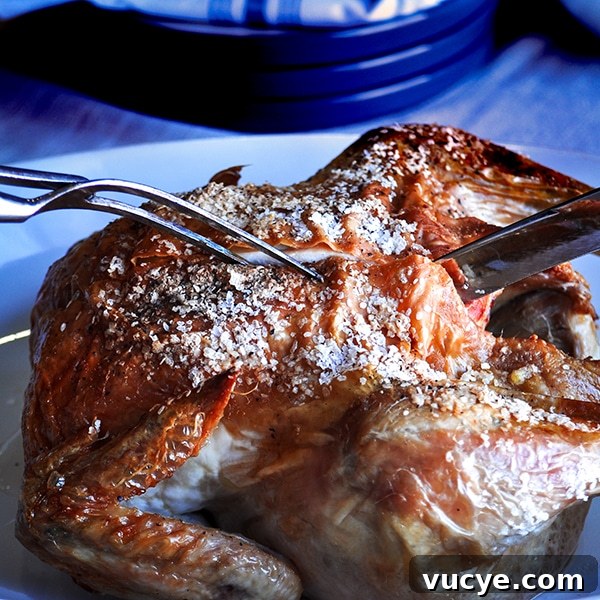
How To Make Thomas Keller’s Simple Roast Chicken
- Preheat the oven to 450°F.
- Rinse a 2–4 pound chicken and pat it completely dry with paper towels. Dry skin roasts to crispness; excess moisture causes steaming and soft skin.
- Season the cavity with kosher salt and freshly ground black pepper, then place the bird in a baking dish. Generously sprinkle kosher salt over the outside of the chicken and finish with pepper, raining the salt so it covers the skin evenly.
- Roast until an instant-read thermometer inserted into the thickest part of the thigh reads 165°F, about 50–80 minutes depending on size and whether you’re cooking multiple birds.
- Baste with pan juices, then let the chicken rest on a cutting board for 15 minutes.
- Carve and serve.
Keller recommends serving the bird with butter and Dijon mustard alongside a simple green salad. It’s a classic combination that never gets old.
Roast Chicken, Method #2
Samin Nosrat’s Buttermilk-Marinated Roast Chicken
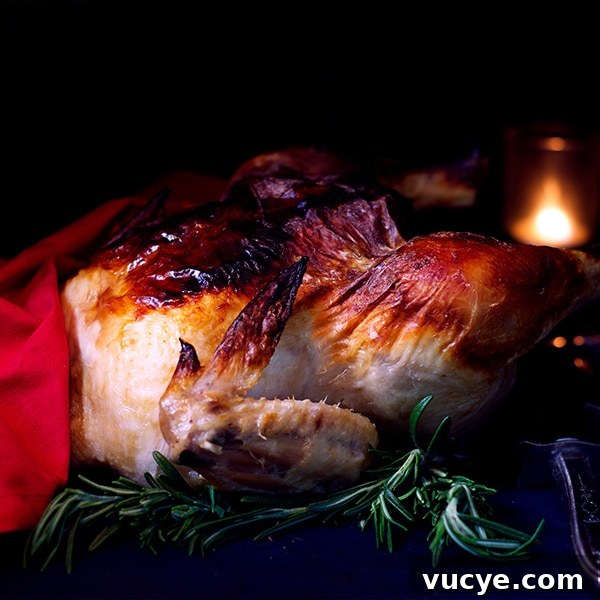
Samin Nosrat’s Salt, Fat, Acid, Heat emphasizes foundational techniques, including the power of salt. For this roast chicken, she combines salt with buttermilk and lets the bird marinate for 24 hours. The salt seasons the meat throughout, while the acidity and proteins in the buttermilk tenderize and help retain juices during roasting. The milk sugars also promote deep browning and a beautiful, caramelized skin.
This method requires a day of advance planning but very little active time, and it rewards you with exceptionally tender, well-flavored chicken.
How To Make Samin Nosrat’s Buttermilk-Marinated Roast Chicken
- About 24 hours before roasting, sprinkle a 3–4 pound chicken with a generous amount of kosher salt and let it rest at room temperature for 30 minutes.
- Place the chicken in a zip-top bag. Stir 2 tablespoons kosher salt into 2 cups buttermilk, then pour the mixture over the bird. Seal the bag and massage it so the chicken is fully coated. Refrigerate, and consider double-bagging in case of leaks.
- Turn the bag occasionally to distribute the marinade; if you forget, it’s not critical.
- An hour before roasting, remove the chicken from the refrigerator and let it sit at room temperature (still in the bag) for an hour. Preheat the oven to 425°F. Remove the chicken from the bag, shake off excess buttermilk, and place it in a roasting pan.
- Roast for 20 minutes, then reduce the oven to 400°F and continue roasting 40–60 more minutes depending on size, until the thigh reaches 165°F and the skin is nicely browned.
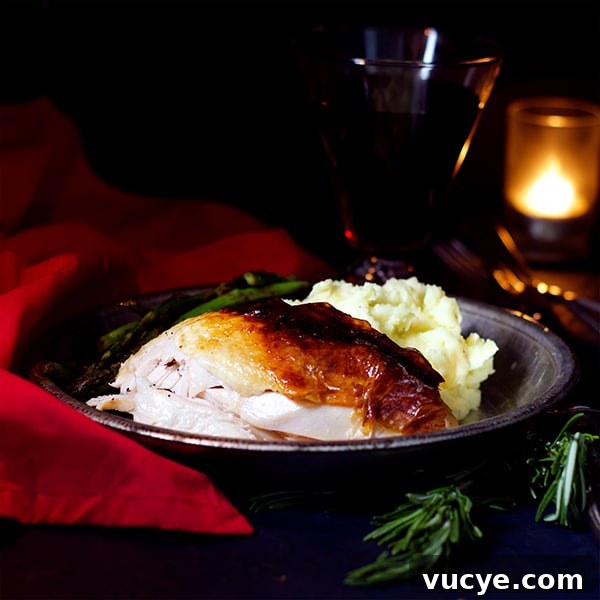
- Let the chicken rest 10 minutes, then carve and serve.
Is It Important to Truss the Chicken Before Roasting?
Both Keller and Nosrat recommend securing the bird in some fashion. Keller prefers a full truss; Nosrat advises trimming wing tips to prevent burning and tying the legs together. Tying the legs helps the thighs and breasts cook more evenly; without it, the breast can finish earlier and dry out. A simple tie, or a full truss if you prefer, is easy to do and worthwhile.
How to Truss a Chicken:
- Place the chicken breast side up with the legs toward you.
- Tuck the wing tips under the bird.
- Cut a 3-foot length of kitchen twine and slide it under the chicken between wings and thighs.
- Bring the twine up under the wings and stretch the ends away from you along either side of the neck.
- Cross the twine at the neck and bring the ends back toward you so the string encircles the outside of the breast and the ends lie beside the legs.
- Cross the string again in front of the cavity and pull tightly.
- Loop the ends under the legs, then over and across the tops of the legs, pulling tight once more.
- Flip the bird and tie the strings in a knot around the tail. Trim excess twine.
Roast More than One Chicken at a Time
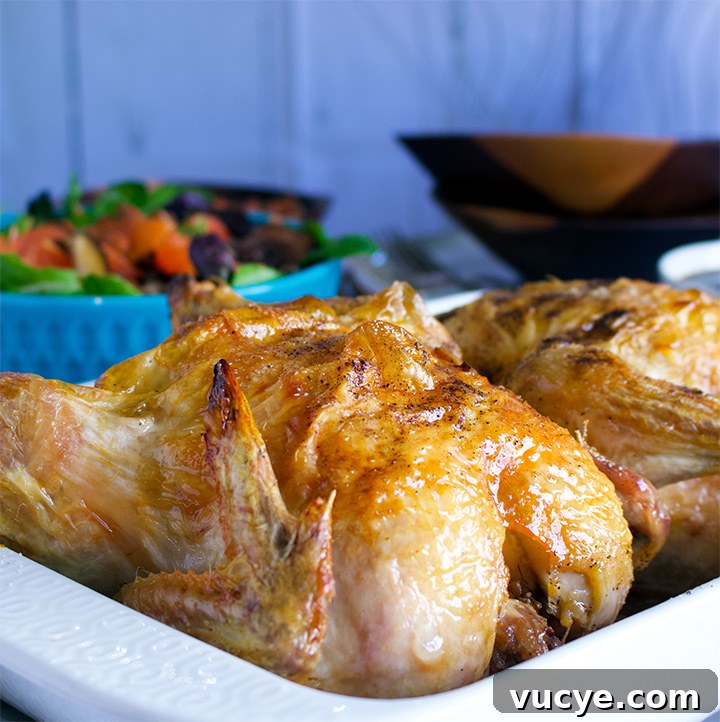
Roasting extra birds is efficient: leftover meat is ready for salads, sandwiches, or quick dinners, and the carcasses make excellent broth. I often roast two or three chickens on a Sunday—one for dinner and the rest for meals throughout the week.
If you plan to roast multiple birds, give each chicken its own pan or enough space in a large roasting pan so heat circulates evenly. Avoid crowding, which can prevent proper browning and crisping.
After a roast, pick the meat from the bones and simmer the carcasses in a slow cooker or stockpot with water overnight to make homemade chicken broth—an inexpensive, flavorful base for soups and stews.
17 Recipes That Use Leftover Roast Chicken
- Spinach Artichoke Chicken Casserole
- 30-minute Chicken Soup
- Chicken Lettuce Wraps
- Dutch Oven Pot Pie
- Creamy Chicken Chili
- Cheese Enchilada Casserole
- Crispy Corn Tortilla Quesadillas
- Roast Chicken Salad with Lemon Vinaigrette and Sesame Crunch
- Creamy Chicken Noodle Soup with Garlic and Mushrooms
- 20-Minute Garlic Chipotle Pasta with Chicken
- Chili Chicken Nachos with Chimichurri Sauce
- Open Face Chicken Salad Sandwiches
- Chicken Chopped Salad
- Enchiladas Verdes (Green Enchiladas)
- Creamy Chicken and Rice
- Chicken Tortilla Soup
- Chicken Salad Niçoise
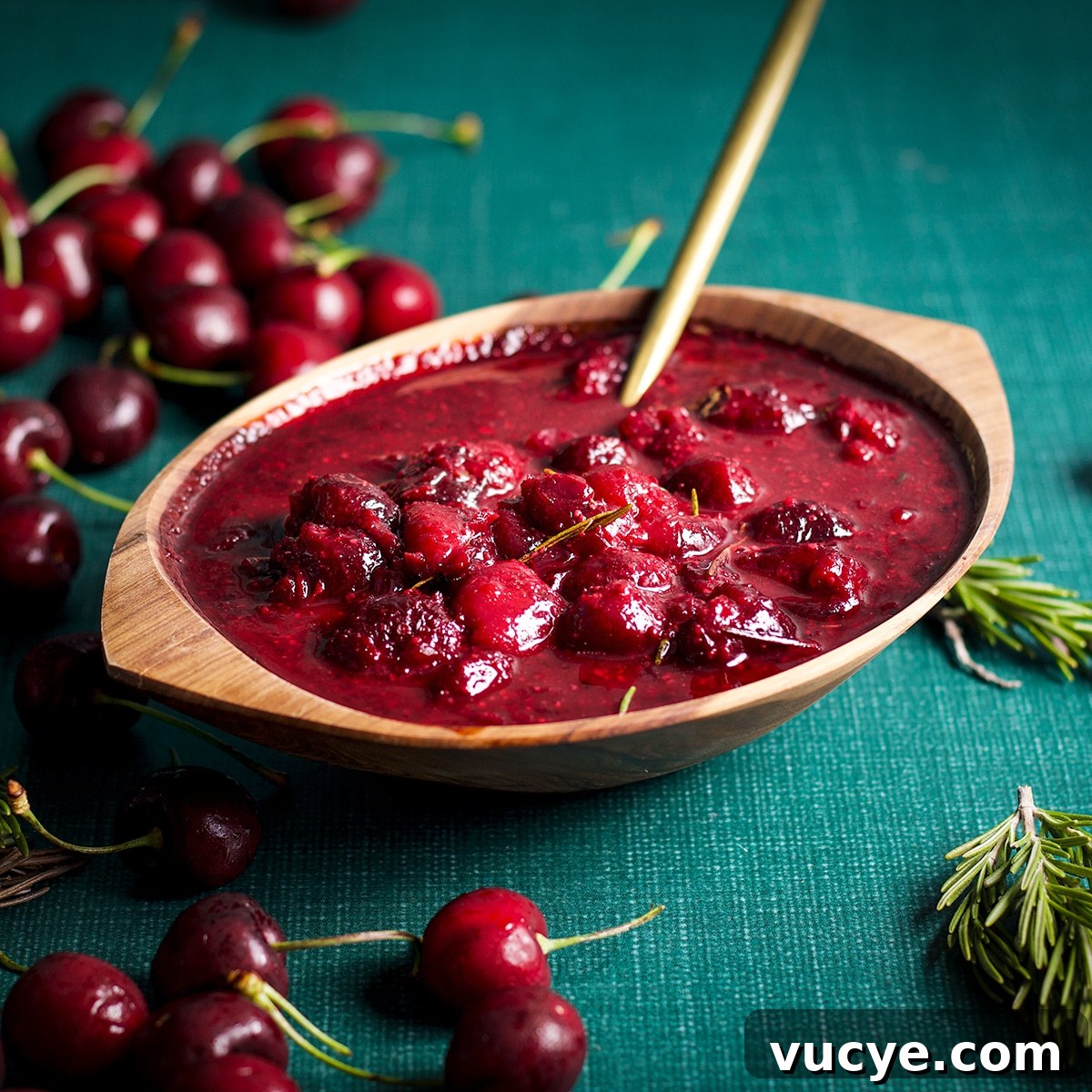
For an extra layer of flavor, finish roast chicken with a savory sauce such as a cherry sauce or a quick miso butter for an umami boost.
If you try either method, leave a comment or share a photo—it’s always great to hear how your roast chicken turned out.
📖 Recipe
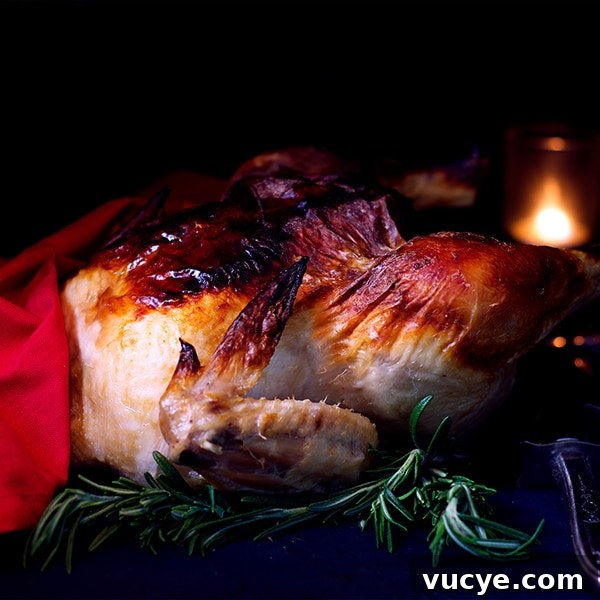
How to Roast Chicken {2 Fool Proof Methods}
10 minutes
1 hour 30 minutes
1 hour 40 minutes
Ingredients
(*Modified from Bouchon, by Thomas Keller)
- One 3–4 pound chicken
- Kosher salt and ground black pepper
(*Modified from Salt, Fat, Acid, Heat, by Samin Nosrat)
- One 3–4 pound chicken
- Kosher salt
- 2 cups buttermilk
Instructions
Method #1:
- Preheat your oven to 450°F.
- Rinse a 3–4 pound chicken and dry thoroughly with paper towels. Dry skin crisps better; excess moisture causes steaming.
- Season the cavity with kosher salt and ground black pepper. Place the bird in a baking dish, sprinkle kosher salt generously over the outside, and finish with pepper so the skin is evenly seasoned.
- Roast until an instant-read thermometer in the thickest part of the thigh reads 165°F, about 50–80 minutes depending on size and number of birds.
- Baste with pan juices and let rest for 15 minutes on a cutting board.
- Carve and serve.
Method #2: Buttermilk-Marinated Roast Chicken
- About 24 hours before roasting, sprinkle a 3–4 pound chicken generously with salt and let it sit at room temperature for 30 minutes.
- Place the chicken in a zip-top bag. Dissolve 2 tablespoons kosher salt in 2 cups buttermilk and pour over the bird. Seal and massage to coat. Refrigerate and double-bag if desired.
- Turn the bag occasionally to redistribute the marinade; it’s forgiving if you don’t.
- One hour before cooking, let the chicken sit at room temperature in the bag for an hour. Preheat the oven to 425°F. Remove the chicken, shake off excess buttermilk, and place in a roasting pan.
- Roast 20 minutes, then reduce oven to 400°F and continue 40–60 minutes until the thigh reaches 165°F and the skin is well browned.
- Rest 10 minutes, then carve and serve.
Notes
No buttermilk? Several simple substitutes work well if you don’t have buttermilk on hand.
Nutrition Information:
Amount Per Serving:
Calories: 0Total Fat: 0gSaturated Fat: 0gTrans Fat: 0gUnsaturated Fat: 0gCholesterol: 0mgSodium: 0mgCarbohydrates: 0gFiber: 0gSugar: 0gProtein: 0g
Did you make this recipe?
Please leave a comment or share a photo.