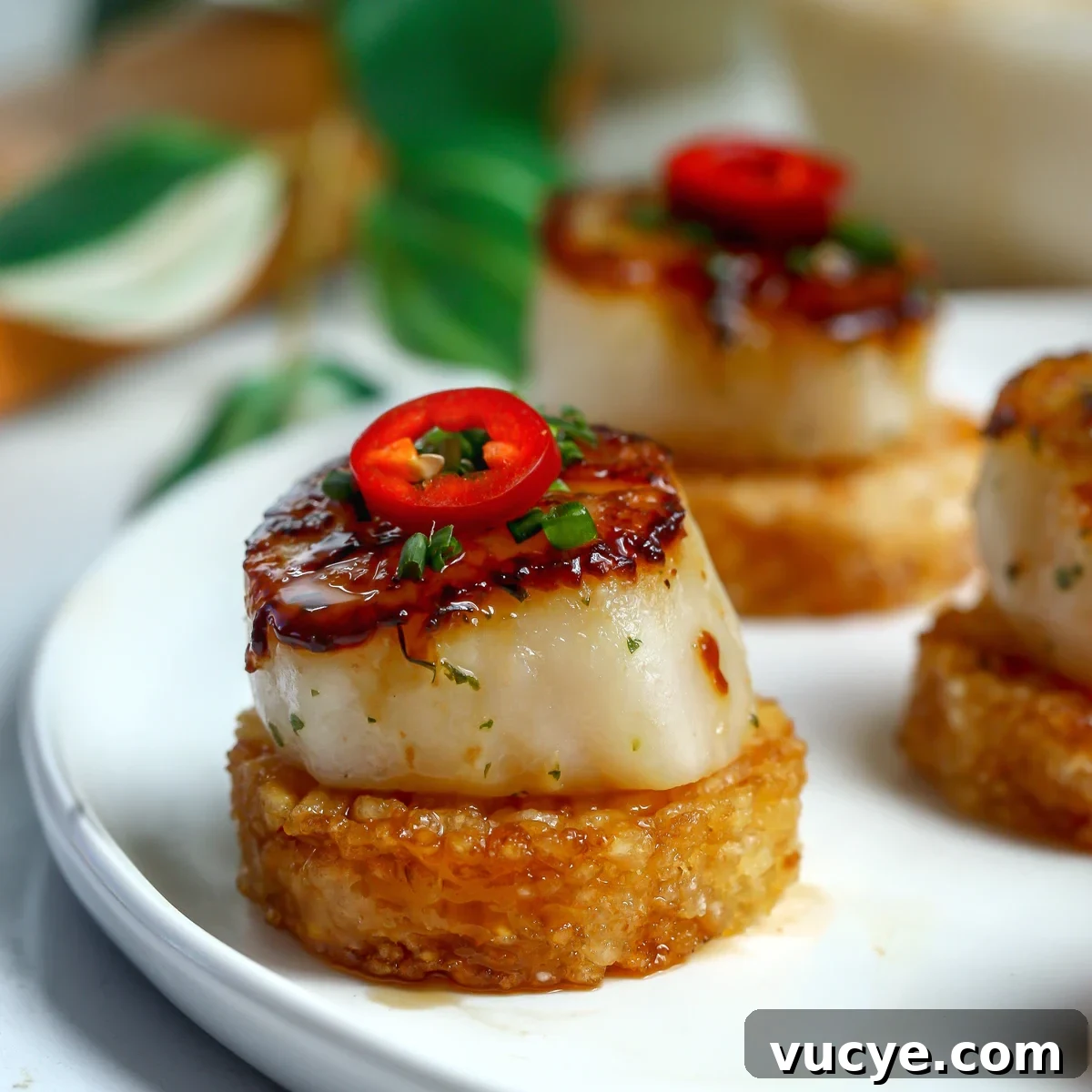
This Scallop Crispy Rice is a refined twist on a classic crispy rice appetizer. Large U-10 sea scallops are seared in unsalted butter to develop a deeply caramelized crust and tender interior. The base uses Calrose sushi rice flavored with kombu, rice vinegar, and cane sugar, then bound with a little potato starch and fried until golden and crunchy. A glossy glaze of tamari, sesame oil, agave, and sriracha provides sweet-savory heat, and the bites are finished with thin Fresno chile slices and fresh chives for brightness and texture.
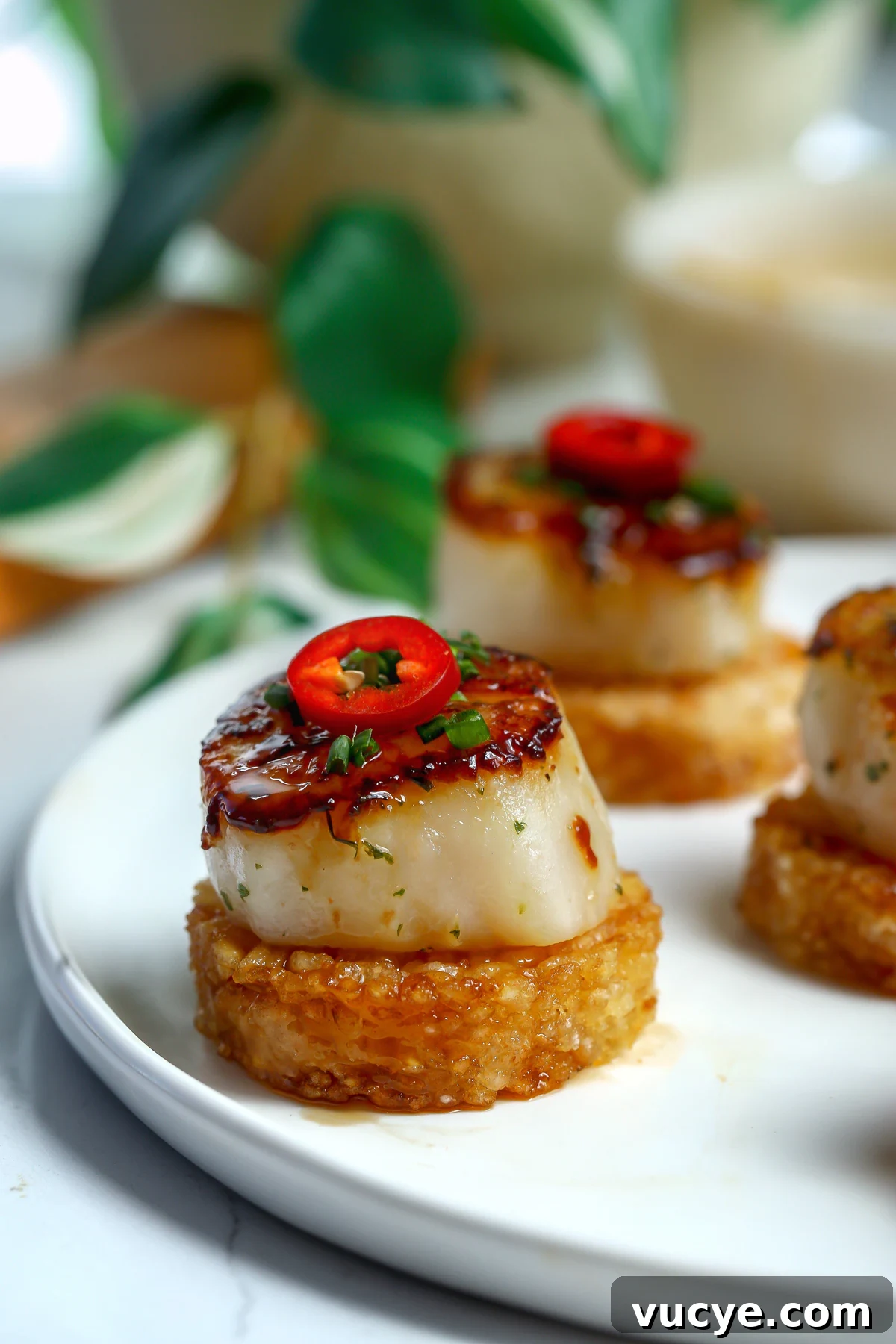
Table of Contents
- About the Taste
- Everything You Need To Know About Buying Scallops
- What “U-10” Means
- Dry vs. Wet Scallops
- Freshness and Quality Checks
- Ingredient Swaps
- Crispy Rice Variations
- Scallop Crispy Rice FAQ
- Chef Nadia’s Tips For The Perfect Crispy Rice
- Scallop Crispy Rice Recipe
About the Taste
This dish captures a contrast of textures and balanced flavors. The rice is seasoned with kombu and rice vinegar for subtle umami and acidity, then chilled and fried to create a crisp exterior with a slightly chewy center. The scallops are rich and buttery inside, with a nutty, caramelized crust from searing in butter. The sriracha-agave glaze offers a sweet heat that clings to both scallop and rice, while sesame oil and tamari add depth. A final garnish of chives and thin Fresno chile slices provides a fresh, slightly sharp finish that brightens each bite.
Everything You Need To Know About Buying Scallops
A great sear depends on scallop quality and size as much as pan temperature. If you’re new to buying scallops, here are the essentials to help you choose the right ones for this recipe.
What “U-10” Means
Scallops are categorized by the number per pound. “U-10” means there are under 10 scallops per pound — these are the largest sea scallops and are often labeled “colossal.” If you can’t find U-10, U-12 or U-15 are good alternatives. Avoid bay scallops for this preparation; they are too small to sit on the rice rounds.
Dry vs. Wet Scallops
This distinction is critical for searing. Dry scallops are untreated and will develop a superior brown crust. Wet scallops are treated with a phosphate solution to retain moisture and appear very white; they tend to release water during cooking and steam instead of searing. For the best results in this recipe, seek out “dry-packed” or “chemical-free” scallops.
Freshness and Quality Checks
- Smell: Fresh scallops should smell like a clean ocean breeze. Avoid any strong fishy or ammonia-like odors.
- Texture: The meat should be firm and spring back when touched. Soft, slimy, or overly mushy scallops indicate age or spoilage.
- Frozen Options: Individually quick-frozen (IQF) dry scallops can be an excellent choice when fresh options are limited. Look for labels that specify “dry-packed” or “chemical-free.”
Ingredient Swaps
- Sushi Rice: Calrose is ideal for stickiness and crisping. Arborio can work in a pinch because of its starch content.
- Tamari: Regular soy sauce or liquid aminos work if gluten isn’t a concern. Coconut aminos yield a slightly sweeter, lower-sodium option.
- Agave: Honey or maple syrup are suitable substitutes; honey is thicker, maple adds a woodsy note.
- Sriracha: Sambal oelek or another chili-garlic paste can replace sriracha. Gochujang adds a fermented depth but will change the flavor profile.
- Fresno Chiles: Red jalapeños are the closest substitute. For no heat, use thinly sliced red bell pepper for color only.
- Potato Starch: Cornstarch or arrowroot powder can help the rice hold together during frying.
- Kombu: If unavailable, a pinch of dashi powder in the cooking water can mimic the oceanic umami.

Want to save this recipe to your collection?
Crispy Rice Variations
There are many ways to top crispy rice: spicy tuna, smoked salmon, cured egg yolks, toro, and more. The technique for making a sturdy, crisp rice base remains the same: properly seasoned rice, pressed and chilled, then fried in oil until deeply golden.
- Crispy Rice with Spicy Tuna — a classic spicy tuna on fried rice rounds.
- Tamari-Cured Confit Yolks — rich, jammy yolks over crispy rice.
- Smoked Salmon or Salmon Crispy Rice — smoky or fresh fish variations with creamy contrasts.
- Toro or Tuna Crispy Rice — fatty tuna or clean tuna for a simpler presentation.
Scallop Crispy Rice FAQ
Yes. Chill the seasoned rice for at least 8 hours so it sets firmly. This makes it easy to cut clean shapes and fry without falling apart.
It can be. Use tamari labeled gluten-free and check your sriracha and rice vinegar brands. The core ingredients—rice, scallops, agave, kombu—are naturally gluten free.
Sticking usually means the pan wasn’t hot enough or the scallops were damp. Pat scallops very dry, heat the pan until oil shimmers, and leave them undisturbed until they release naturally.
U-12 or U-15 scallops are good substitutes. Avoid tiny bay scallops, which are too small for this presentation.
No. You can slice the chilled rice slab into squares or rectangles with a wet sharp knife. The key is pressing the rice firmly before chilling so the shapes hold together during frying.
Chef Nadia’s Tips For The Perfect Crispy Rice
- Don’t Skip the Starch: A light dusting of potato starch helps bind the rice and creates a shatteringly crisp exterior.
- The Chill: Refrigerate the pressed rice for at least 1 to 8 hours (8–12 is ideal) so the grains set and cut cleanly.
- Avoid Overcrowding: Fry in small batches to keep the oil temperature steady; overcrowding yields soggy, greasy rice.
- Hands Off: Once the rice hits the oil, don’t disturb it for 2–3 minutes so a golden crust can form and the pieces will release naturally.
|
8 bites
Equipment
- fine mesh strainer
- rice cooker or saucepan
- small bowl
- 2 rimmed quarter baking sheets
- plastic wrap
- cans or weights to press the rice
- 2-inch round cookie cutter (optional)
- heavy-bottom skillet
Ingredients
The Crispy Rice
- 1 1/4 cup sushi rice (Calrose recommended)
- 1 2/3 cup water
- 1 pinch salt
- 1 kombu strip, optional
- 1/2 tbsp cane sugar
- 2 tbsp rice vinegar
- 2 tbsp potato starch
- avocado oil for frying
The Scallops
- 8 U-10 scallops
- salt, to taste
- avocado oil for frying
The Sauce
- 4 tbsp rice vinegar
- 2 1/2 tbsp agave syrup
- 2 tbsp sriracha
- 1 tsp sesame oil
- 1 1/2 tbsp tamari (or soy sauce)
- 3 tbsp unsalted butter, room temperature
Toppings
- chives, chopped
- Fresno chiles, thinly sliced
Instructions
The Crispy Rice
- Prepare and cook the rice: Rinse the rice until the water runs mostly clear. Combine rice, water, kombu (if using), and a pinch of salt in a rice cooker or saucepan. Cook according to the appliance or package instructions. Discard the kombu after cooking.
- Season: While the rice is hot, stir together the cane sugar and rice vinegar until dissolved, then fold into the rice. Add potato starch and mix gently until combined.
- Press and chill: Line a rimmed baking sheet with plastic wrap and press the rice firmly into an even layer roughly 1/4–1/2 inch thick. Cover with plastic wrap, place a second baking sheet on top, and weigh it down. Refrigerate 8–12 hours to set, then transfer to the freezer for about 30 minutes so the slab is firm but not frozen solid.
- Cut and fry: Remove the chilled rice slab and cut rounds with a 2-inch cutter or slice into squares. Heat about 1/2 inch of oil in a heavy skillet over medium heat. Fry the rice pieces in batches for 8–10 minutes, turning once, until deeply golden on both sides. Drain on a rack or paper towels.
The Scallops
- Prepare: Remove the small foot from each scallop, if present. Let scallops sit at room temperature for 15–20 minutes. Pat very dry and season lightly with salt.
- Optional dry time: For an even better sear, place unseasoned scallops uncovered in the refrigerator for 1–4 hours to dry the surface.
- Sear: Heat a large skillet over high heat for a few minutes, then reduce to medium-high. Add a thin coat of oil. Place scallops in the pan with space between them and avoid moving them. Sear about 3 minutes until a deep golden crust forms, then flip and cook about 1 minute more. Remove from the pan and keep warm.
The Sauce
- In the skillet used for scallops, add the rice vinegar and reduce briefly. Stir in agave, sriracha, and sesame oil and reduce until the mixture thickens by about one-third. Add tamari and cook for another 30 seconds until slightly thickened. Remove from heat and whisk in the cold butter until the sauce is glossy and emulsified.
Assemble
- Spoon a little sauce onto the softer side of each crispy rice piece, top with a scallop, add more sauce, and finish with chopped chives and a thin slice of Fresno chile. Serve immediately.
Nutrition
Calories: 200 kcal • Carbohydrates: 32 g • Protein: 4 g • Fat: 6 g • Sodium: 376 mg
Nutrition information is approximate and should be used as a guideline.
Additional Info