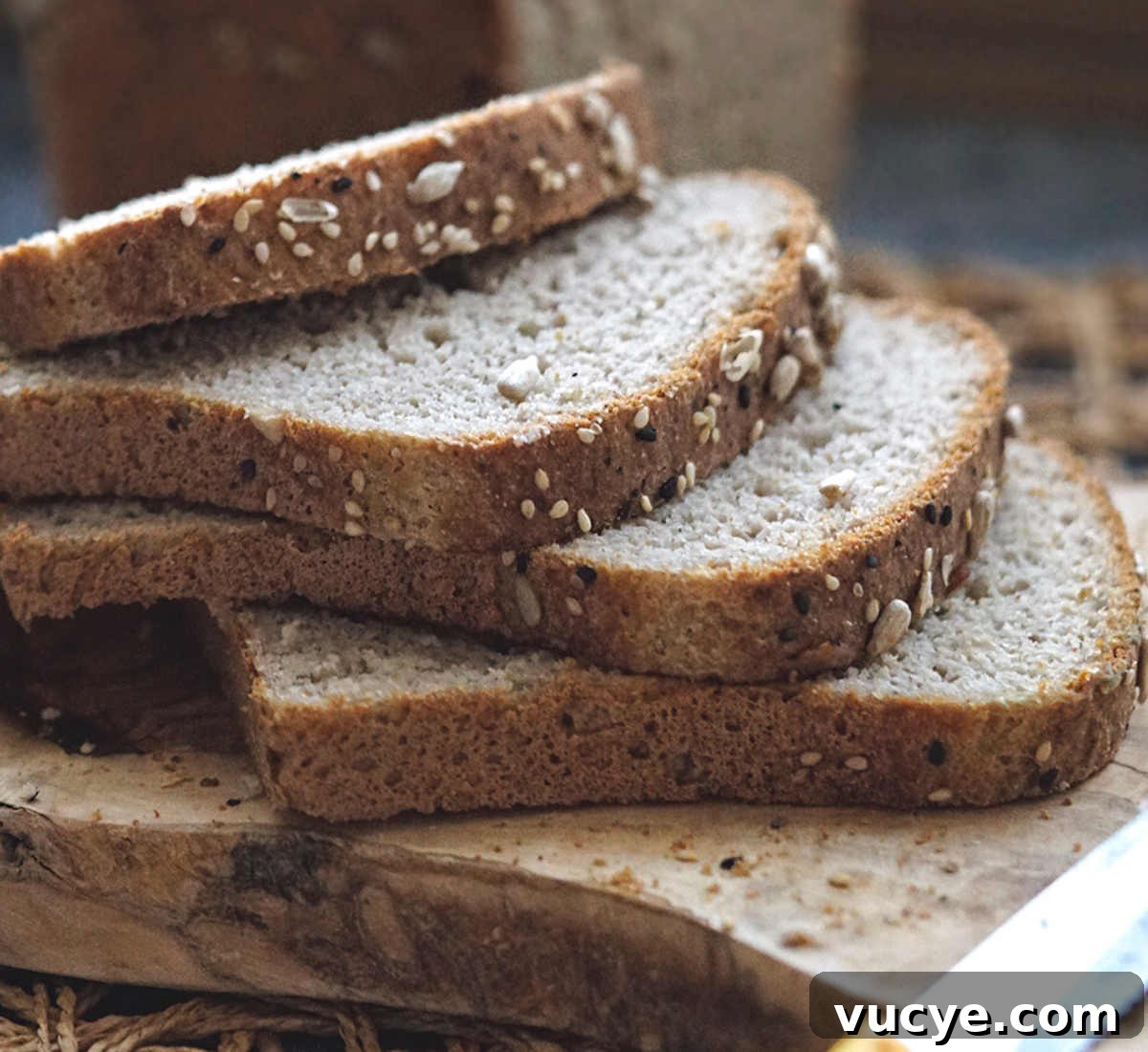
This soft, sliceable buckwheat bread is gluten-free and dairy-free, built with yeast, psyllium, flax and egg for reliable structure. The dough is mixed in one bowl and behaves more like a thick batter than a traditional kneadable dough. It freezes well and is perfect for sandwiches and toast.
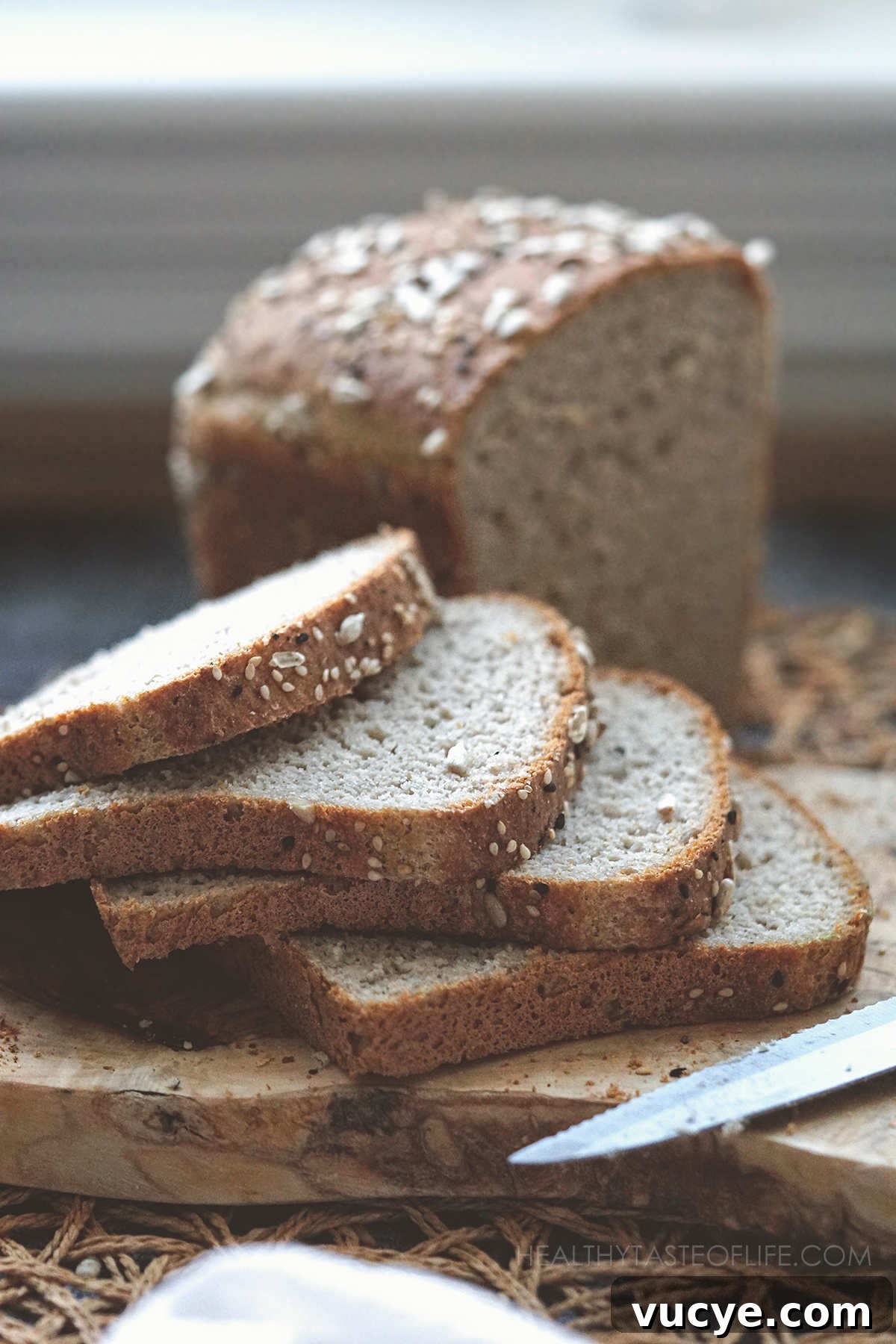
Quick Expectations
- Texture: soft and flexible, not crumbly (for the soft sandwich loaf)
- Best use: sandwiches, toast, freezer slices
- Flavor: mild, slightly earthy—similar to whole-wheat bread
- Dough: thick, sticky, spreadable (not kneadable and not pourable)
- Rise: a decent, tall loaf that roughly doubles
- Best pan: 8×5 inch loaf pan
- Alternate option: mostly-buckwheat version with minimal starch
Why buckwheat bread can be tricky
Pure buckwheat tends to produce dense loaves because it can’t trap gas the way gluten-containing flours do. This recipe balances that by combining:
- Buckwheat flour for flavor and nutrition
- A gluten-free flour mix to improve rise and crumb
- Psyllium + flax gel for elasticity and sliceability
- Egg to keep the crumb from becoming too gummy
The binder-to-flour ratio has been adjusted to use slightly less psyllium and more buckwheat so the dough behaves consistently across different brands. There’s also a variation for a more buckwheat-forward loaf.
If you want a sourdough-style buckwheat loaf, you can adapt a gluten-free sourdough starter by using buckwheat in place of rice flour and follow the usual sourdough maintenance and build-up.
Buckwheat Bread Ingredients
Key components for success:
- Buckwheat flour – a finer, lighter buckwheat flour yields a fluffier loaf; quality varies by brand.
- Flour (gluten-free mix or all-purpose) – buckwheat alone usually makes a heavy, dry loaf; a blend improves rise and texture.
- Psyllium husk – the essential binder that provides elasticity; use husk (not powder) if possible.
- Flax seeds – ground to a flour-like consistency to reduce gumminess and improve texture.
- Fat – oil or melted butter keeps the crumb tender.
- Egg – helps structure and keeps the crumb from being overly gummy; beaten egg gives a lighter texture.
- Acid – apple cider vinegar or lemon juice adds a subtle tang.
- Yeast – active dry yeast is necessary for a sponge-like texture; quick leaveners alone didn’t work as well.
- Sweetener – a little honey or maple sugar helps activate the yeast.
- Warm water (about 105°F is ideal).
- Salt – to enhance flavor.
See full measurements in the recipe card below:
Step By Step: How To Make This Buckwheat Bread
Prepare your flours and grind the flax seeds finely before starting. If you make your own gluten-free flour mix, have it ready.
Step 1. Activate the yeast:
- In 1/4 cup warm water dissolve 1 packet (about 7 g) of dry yeast and 1/2 teaspoon sugar (maple sugar works well).
- Let it sit until foamy while you assemble the other ingredients.
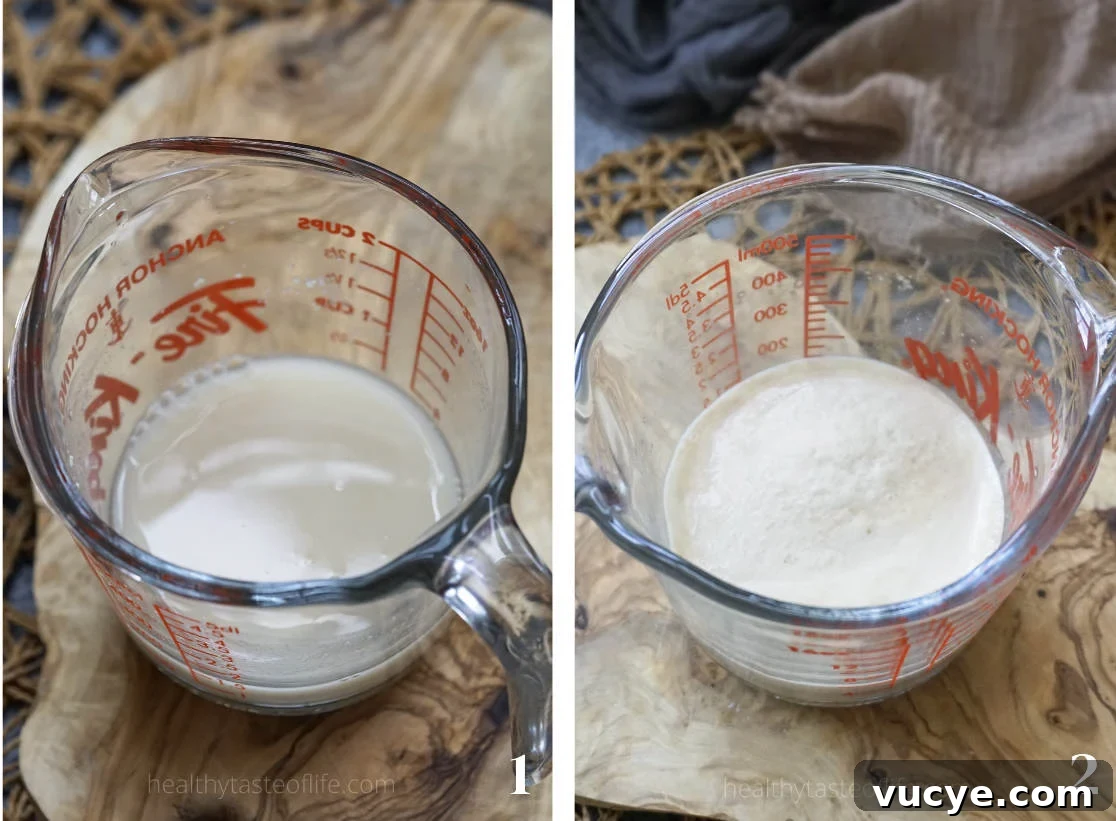
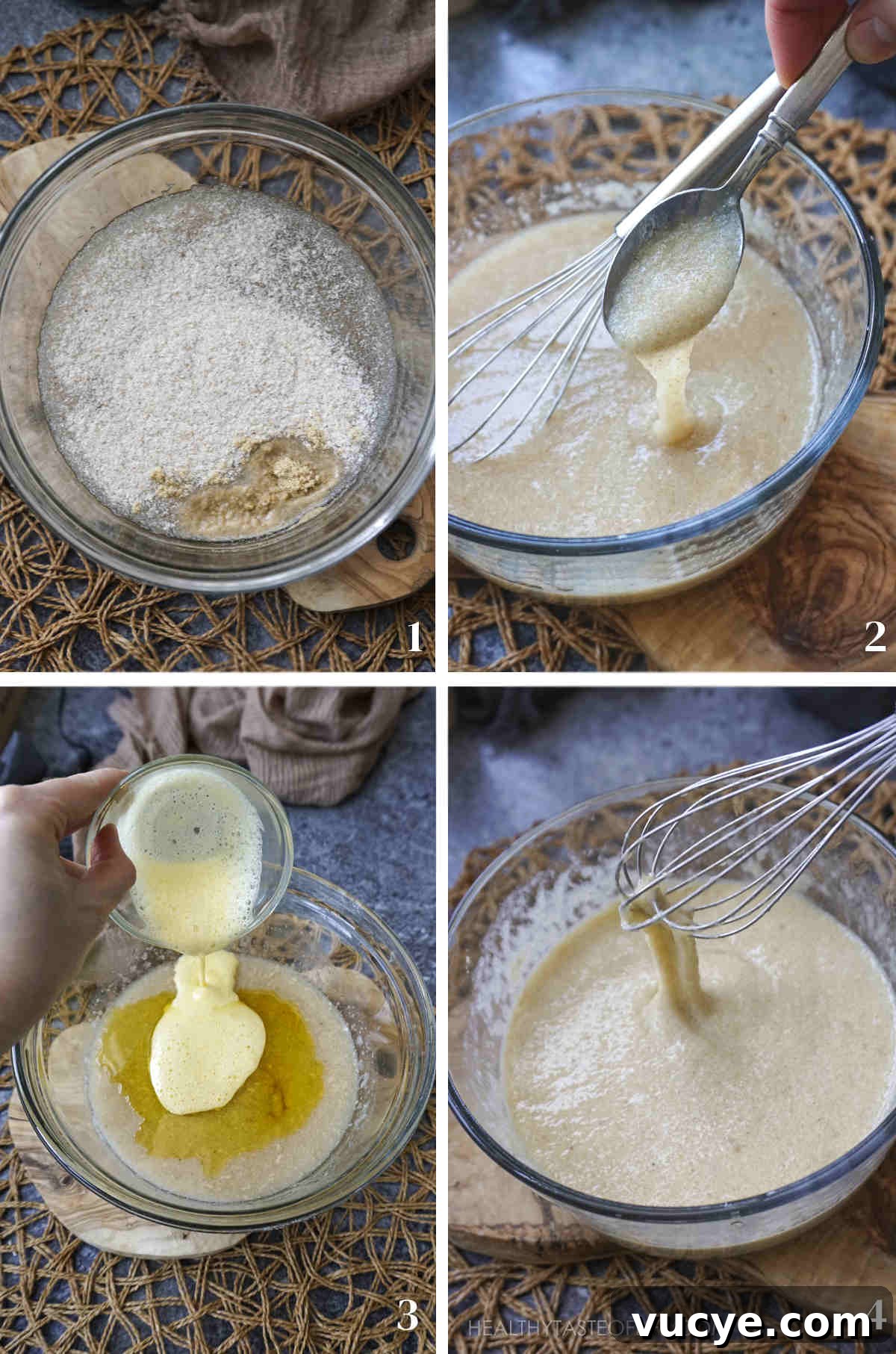
Step 2. Soak the psyllium husk and flax seeds in liquid:
- Combine psyllium husk and ground flax with warm water so they expand and form a gel that provides the main structure.
- In a large bowl whisk 1½ cups warm water with 2 Tbsp psyllium and 3 Tbsp ground flax (about 21–24 g) until uniform; it will thicken quickly into a loose gel.
- Add the remaining wet ingredients—3 Tbsp oil or melted butter, 1 Tbsp apple cider vinegar, 1 Tbsp honey, the beaten egg and the activated yeast—then mix to combine.
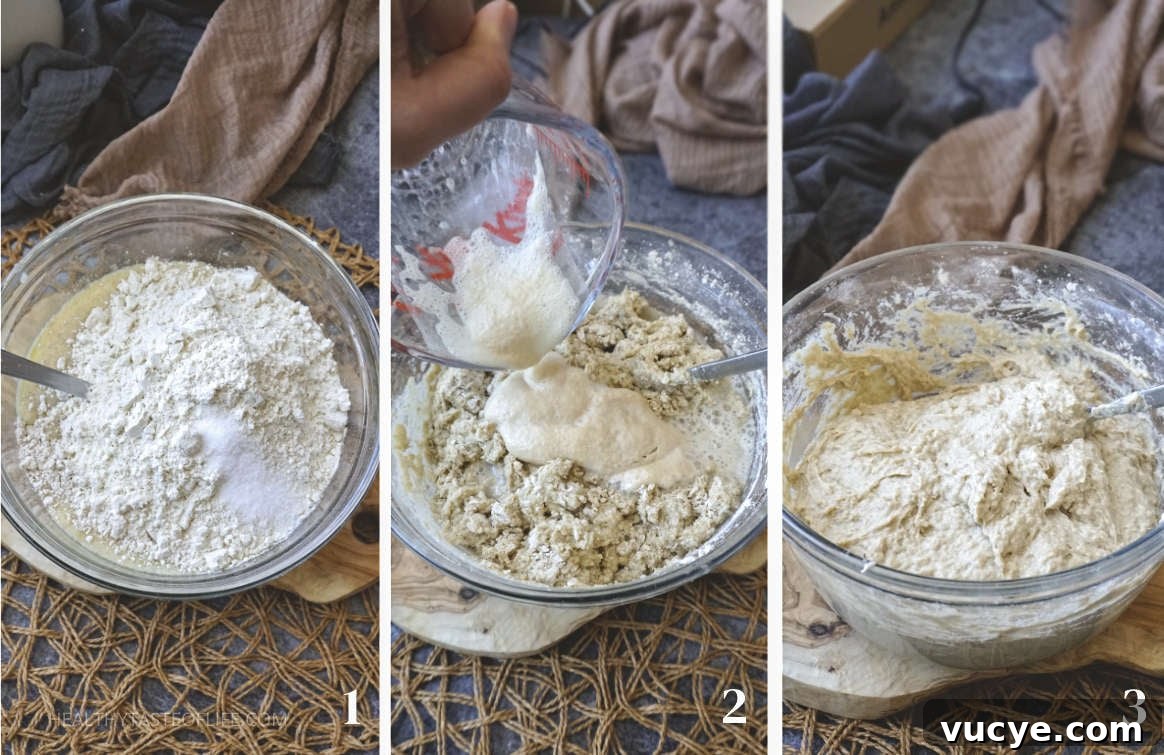
Step 3. Add dry ingredients and mix everything together:
- Gently fold in the flours (1½ cups buckwheat flour + 1 cup gluten-free flour mix) and 1 tsp salt. Mix with a spatula until incorporated. The batter should be sticky and spreadable.
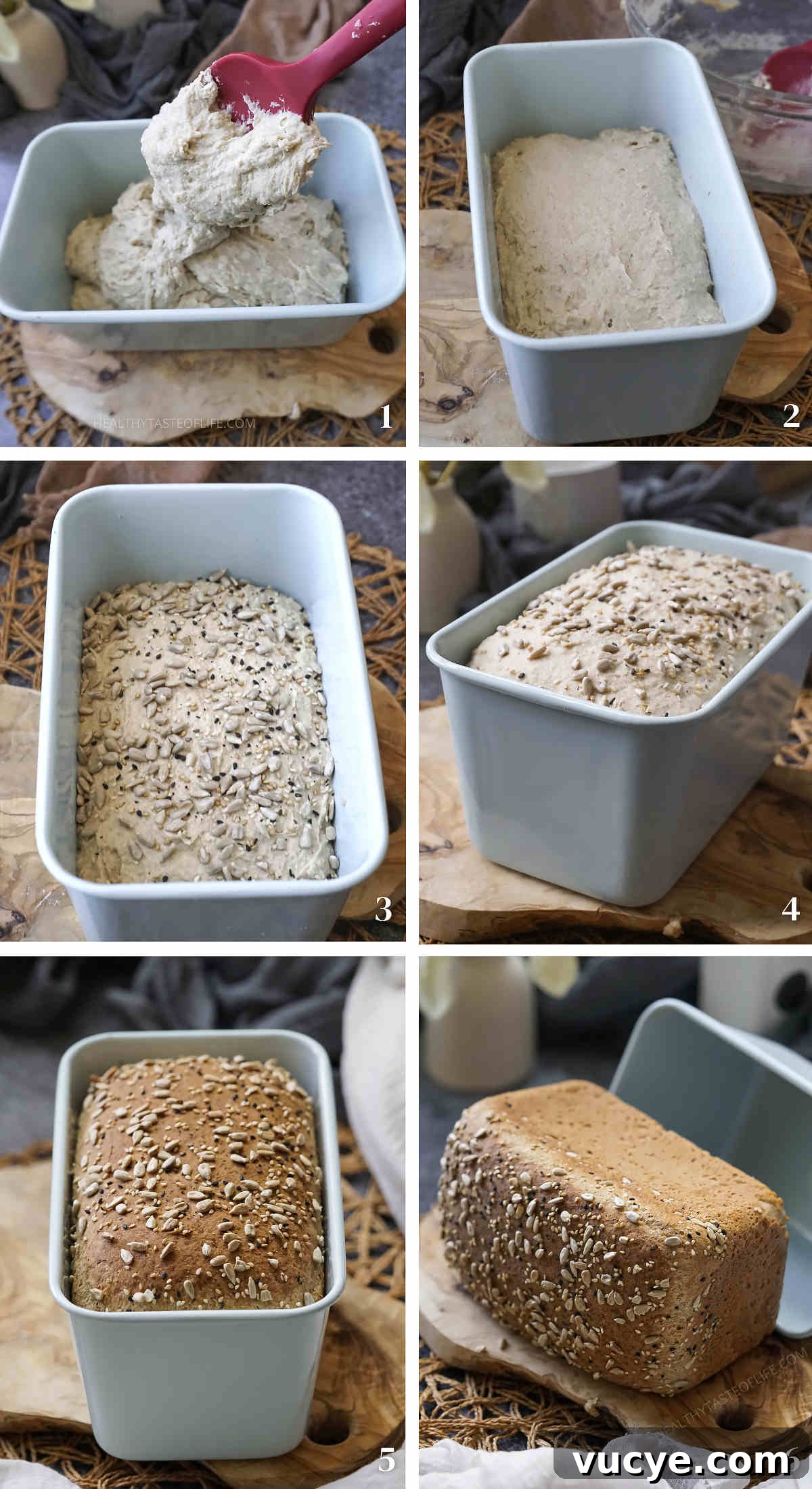
Step 4. Bake the buckwheat bread:
- Transfer the dough into an 8×5 inch loaf pan (non-stick or lined with parchment).
- Smooth the top with a spatula and round the edges. Optionally sprinkle seeds or crushed nuts.
- Cover and let rise for 50–60 minutes until visibly puffed.
- Bake at 350°F (175°C) for about 50–55 minutes.
- If the crust browns too quickly, tent loosely with foil for the last 10–15 minutes.
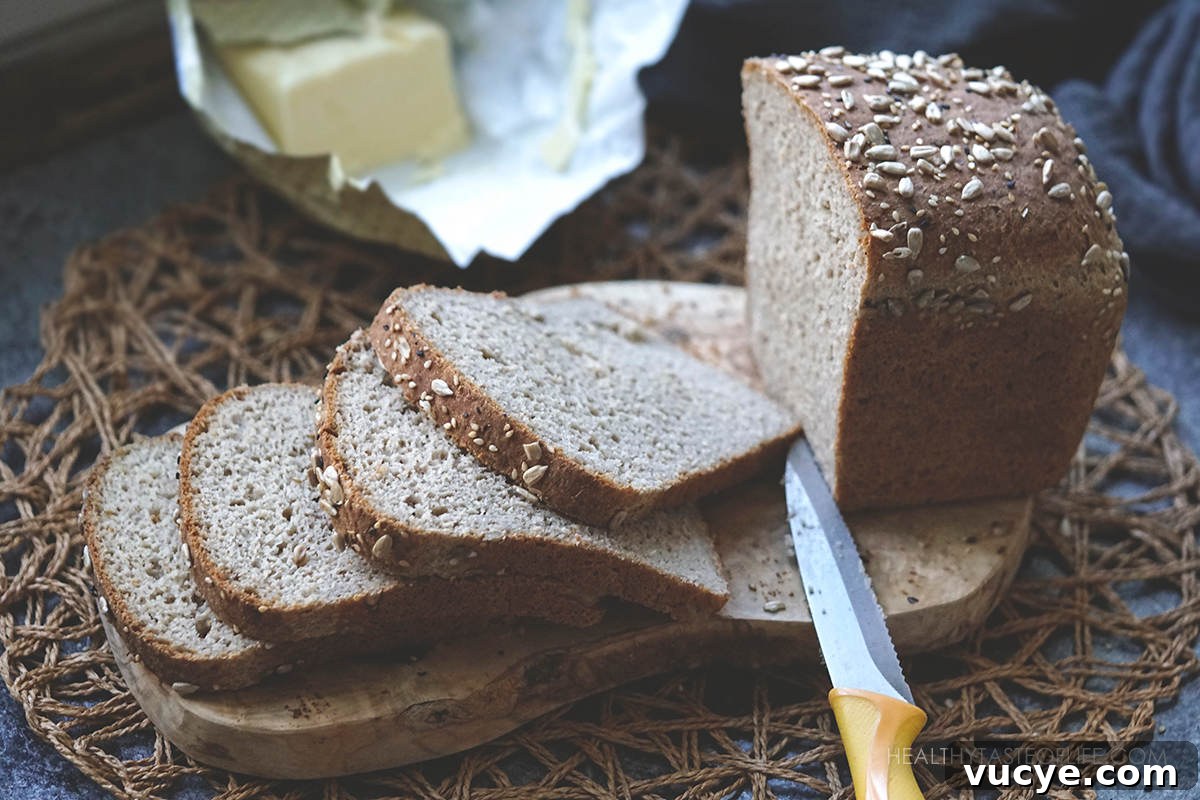
- Cool at least 10 minutes in the pan, then transfer to a wire rack and cool completely before slicing with a serrated knife.
How Does This Buckwheat Bread Taste?
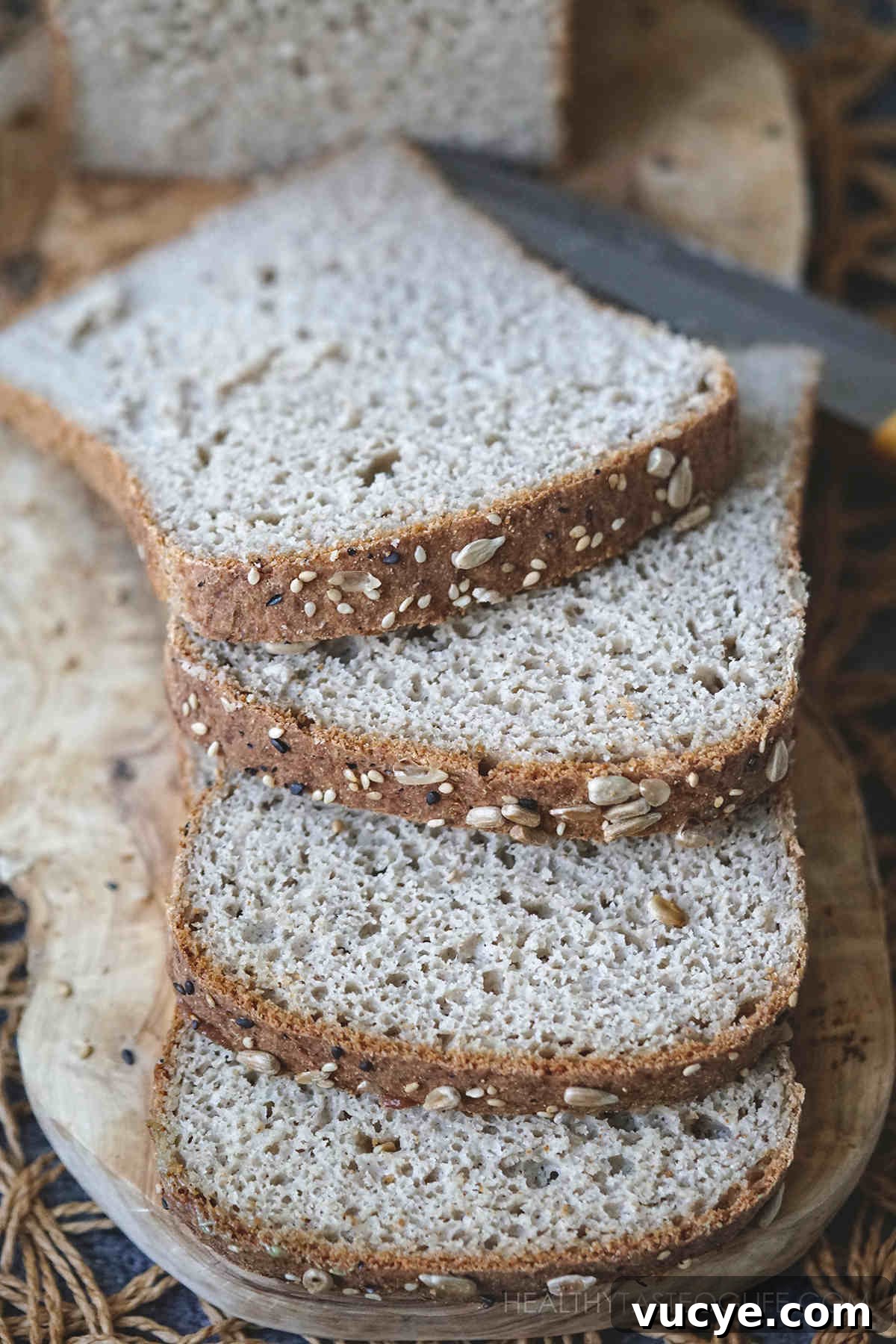
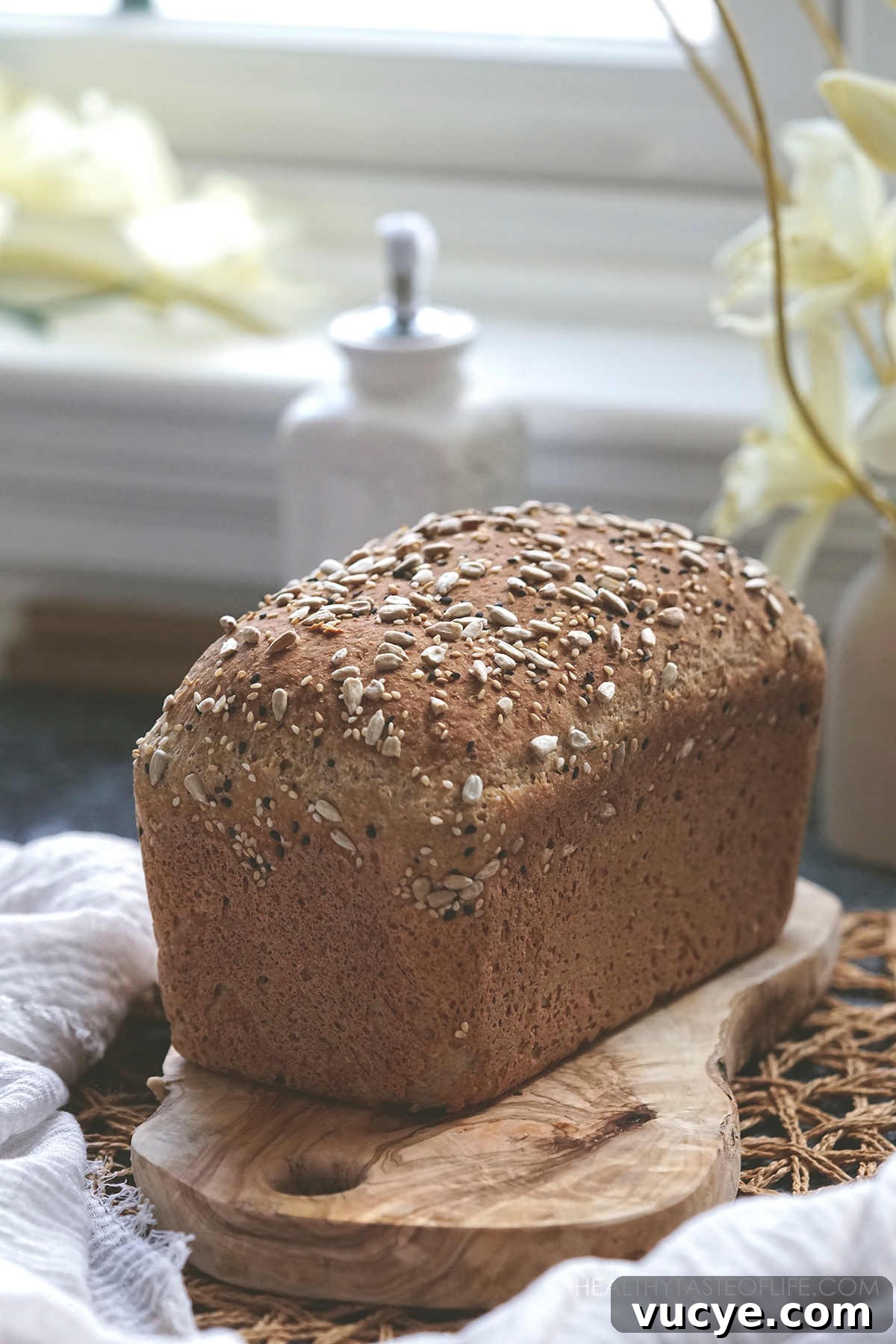
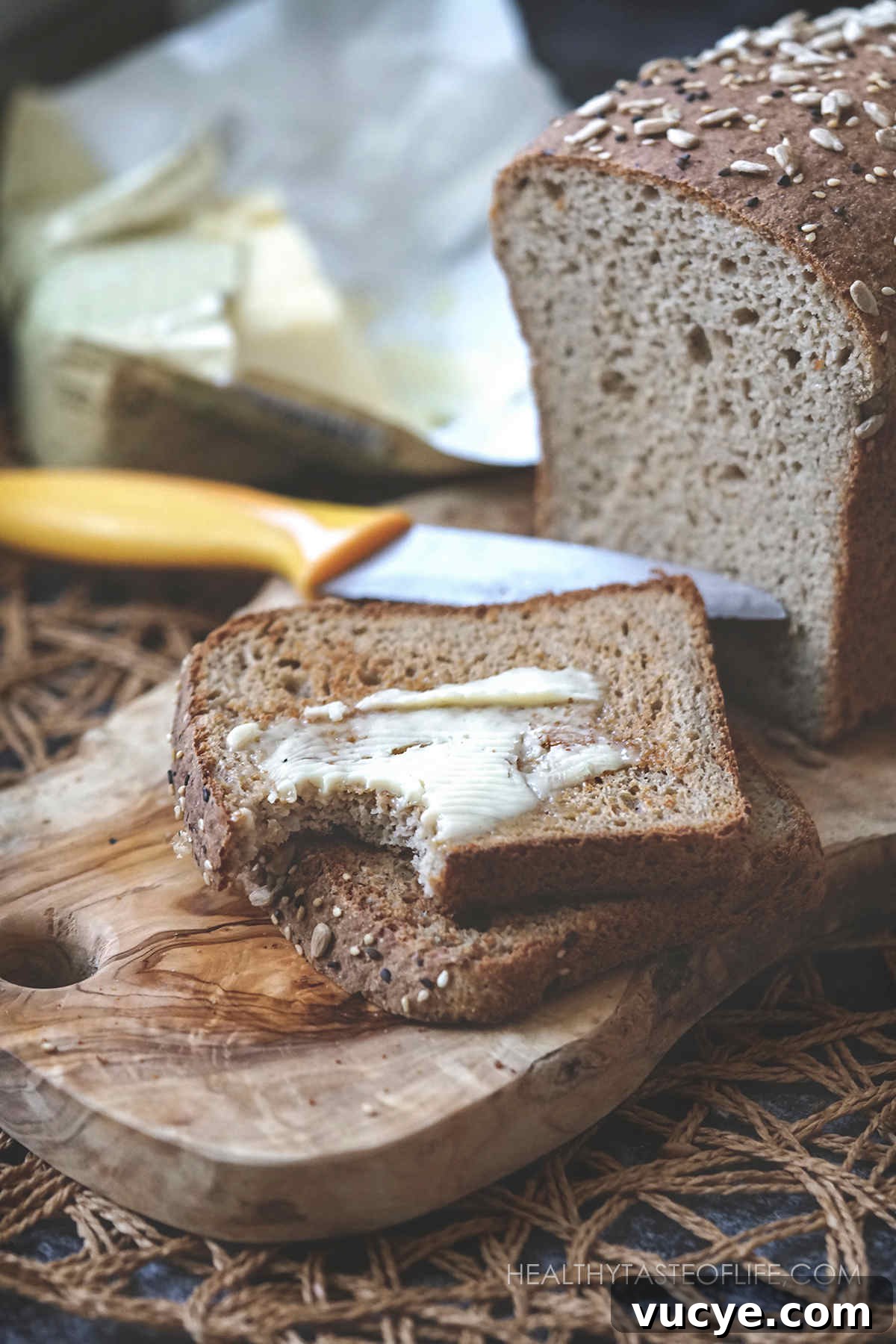
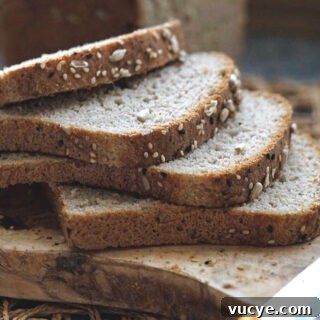
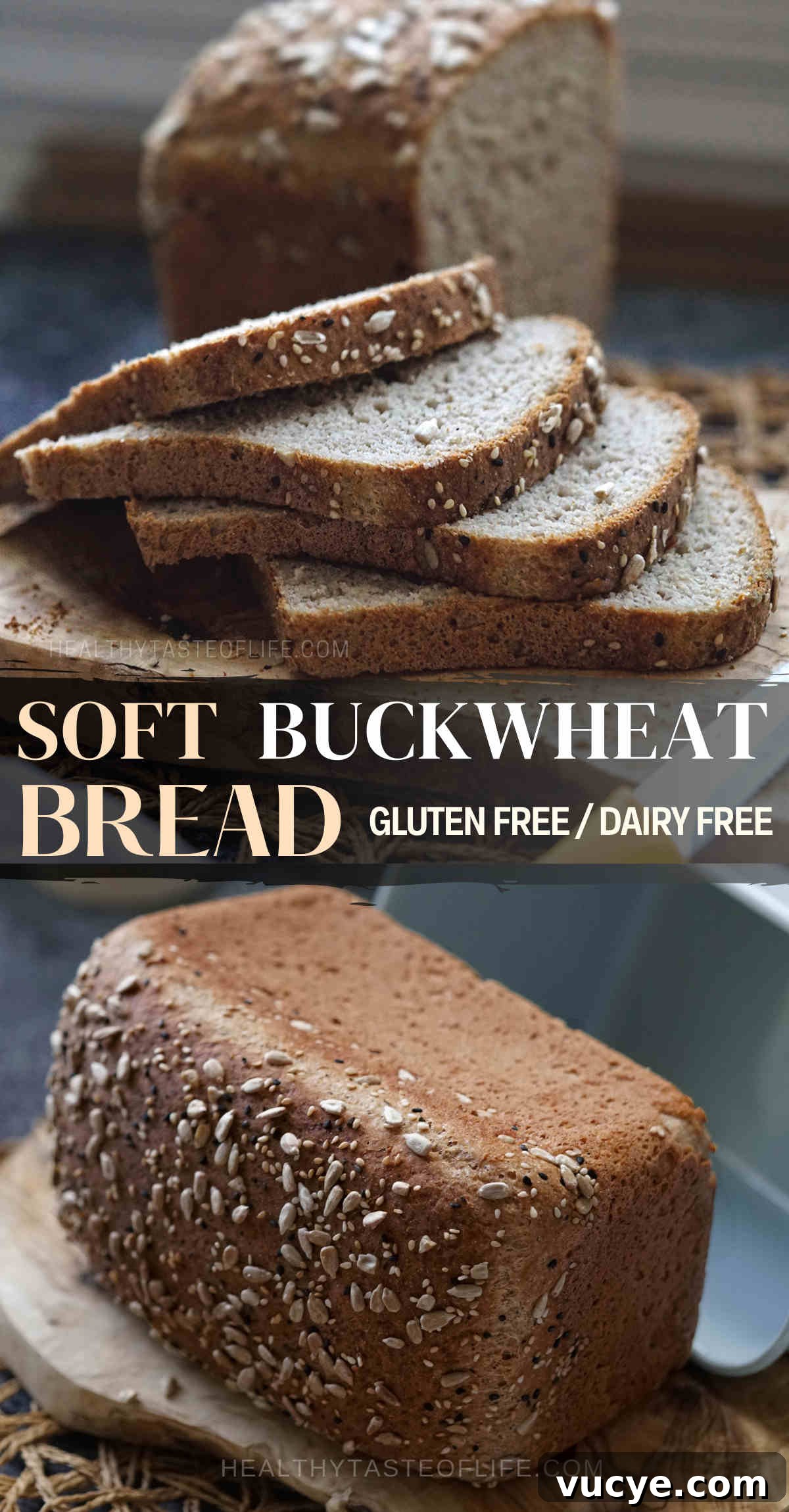
The crumb is moderately dense but flexible with a golden-brown crust. Toasting produces a crisp, crunchy slice while the interior remains tender. The flavor is mild and slightly earthy, reminiscent of whole-grain breads thanks to the flour blend.
Troubleshooting
Loaf is gummy inside
Common causes and fixes:
- Sliced too soon — gluten-free loaves need to cool completely to set.
- Underbaked center — bake until set and use the temperature cue below.
- Dough too wet for your flour brand — reduce water slightly or add 1–2 Tbsp buckwheat flour next time.
Loaf didn’t rise much
Check these:
- Yeast wasn’t foamy before mixing — always confirm activation.
- Proofing environment was too cool — try a warmer spot.
- Yeast was weak or expired — use fresh yeast.
Loaf is dry or crumbly
- Often caused by insufficient moisture, using very dry flours, or not enough binder for your flour brand.
- Fix: follow the recommended flour proportions and adjust water by feel.
What “done” looks like (so you don’t end up with a gummy center)
A loaf can brown on the outside yet be underbaked inside. Use these cues:
- Top + sides: firm to the touch and not sinking when pressed.
- Edges: slightly pulling away from the pan.
- Center: feels set, not jiggly, when tapped.
- Internal temp: about 200–205°F (93–96°C) in the center if you use a thermometer.
- After baking: cool completely before slicing so the crumb finishes setting.
Recipe Variations & Substitutions
- Vegan option: omit the egg and replace with a moist binder like applesauce or vegan yogurt, but expect a slightly different texture.
- Other gluten-free flours: try sorghum + oat or arrowroot + teff blends; you may need to adjust water since absorbency varies.
- Not gluten-free? Use all-purpose flour alongside buckwheat and reduce psyllium and water accordingly.
- Add-ins: seeds, chopped nuts, buckwheat groats, or ground almonds work well.
- No yeast? Yeast is recommended—baking powder/soda alone produced gummy, compact loaves in tests.
- Fruit: raisins, chopped prunes or dried cranberries can be folded in.
- Serving ideas: enjoy with vegetable soups, open-faced toasts, or as sandwich bread.
Mostly Buckwheat Flour Option (Buckwheat-Dominant Version)
For a loaf that tastes strongly of buckwheat while still remaining sliceable, use this swap. It keeps the buckwheat flavor but adds a small amount of starch for better texture.
Flour swap (keep other ingredients the same)
- Buckwheat flour: 2 cups (instead of 1½ cups)
- Replace the 1 cup flour mix with one of:
- ½ cup cassava flour (simplest)
- OR ¼ cup cassava flour + ¼ cup arrowroot starch (slightly lighter crumb)
Water guidance for this version
Start with the same psyllium/flax gel, then adjust by feel:
- If the dough is too stiff to spread, add 1 Tbsp warm water at a time, up to +3 Tbsp.
- If the dough looks loose or runny, add 1–2 Tbsp buckwheat flour and wait 5 minutes to let it absorb.
Target texture: thick, sticky, spreadable—more like a very thick batter than kneadable dough.
This version bakes up heartier and more whole-grain in character. It’s excellent toasted and holds up well for open-faced sandwiches once cooled.
Storing Tips
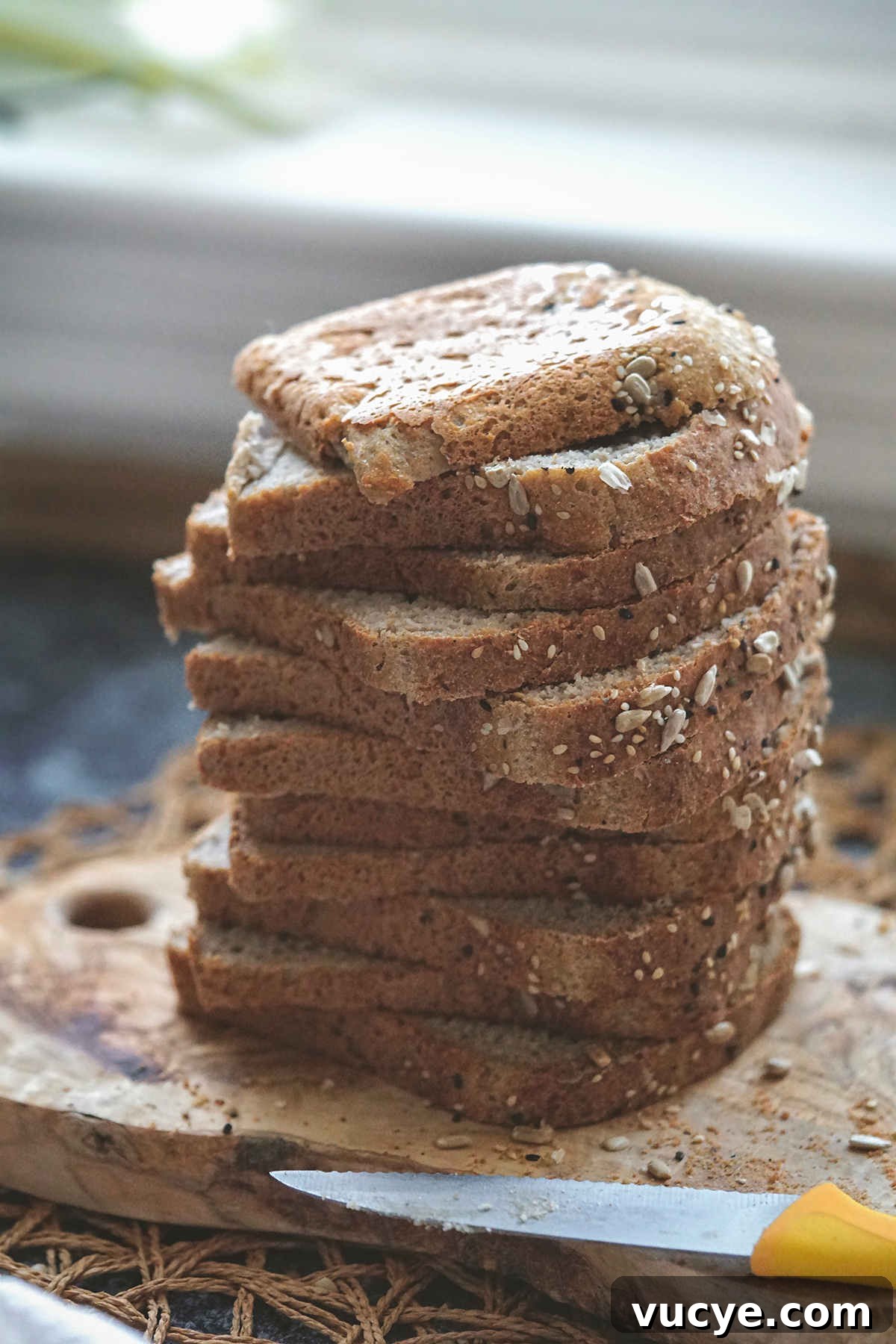
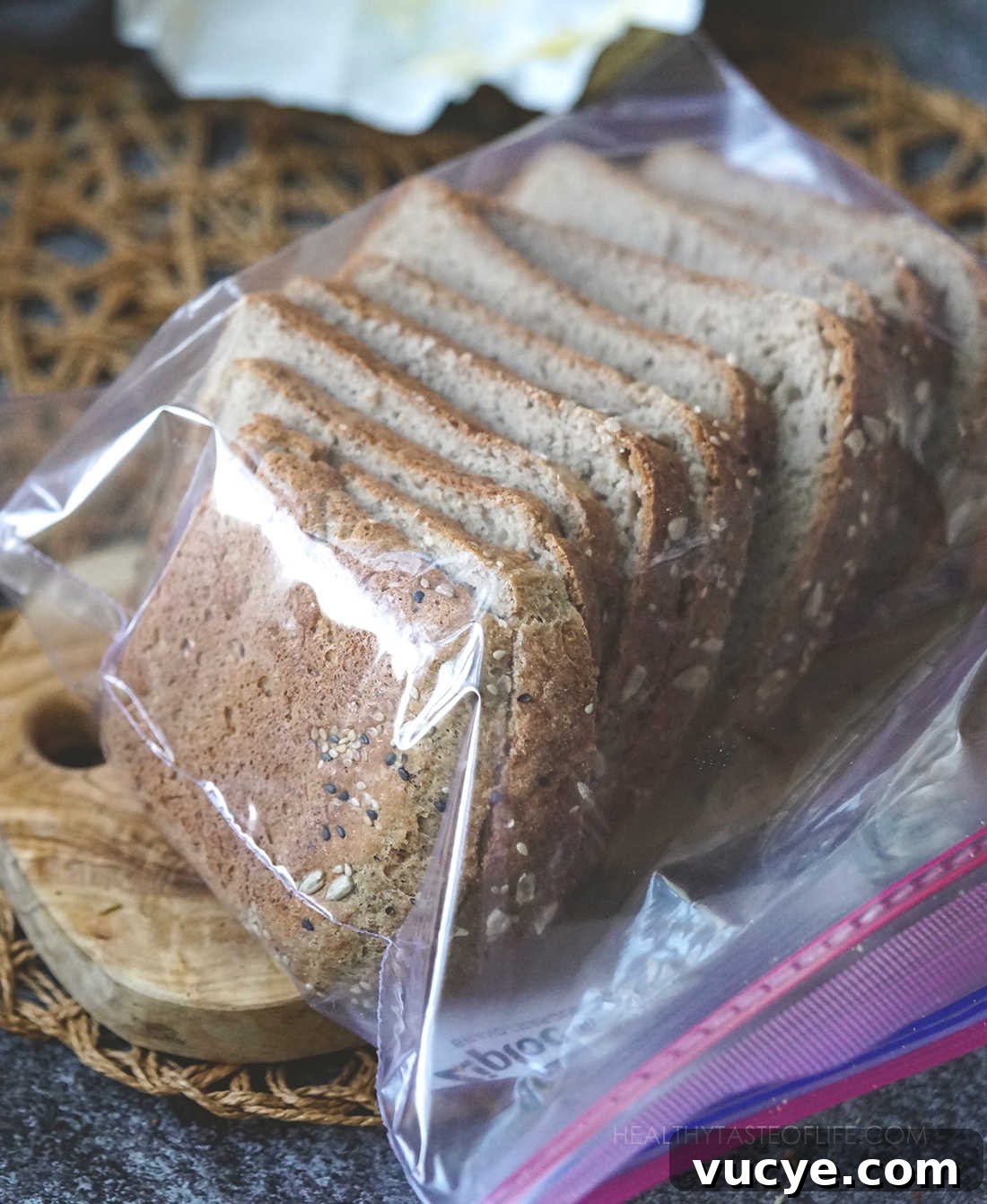
- Storing leftovers: keep the loaf at room temperature up to 5–6 days in an airtight bag or container. Pre-slicing after baking makes serving easy.
- Freezing: cool completely, slice, and freeze slices in a sealed bag for up to 3 months.
- Thawing: toast frozen slices directly from the freezer for best texture.
FAQs
Buckwheat tends to yield a heavier texture, darker color when toasted, and an earthy flavor.
You can, but 100% buckwheat loaves are usually denser and more likely to be dry or gummy. The mostly-buckwheat option here preserves flavor while adding a bit of starch for sliceability.
Without gluten, buckwheat needs assistance from other flours and a raising agent to trap gas and rise satisfactorily.
Buckwheat comes as dark (from unhulled groats) or light (from hulled groats). Dark flour has more fiber and stronger flavor; light flour is finer and paler.
Yes—buckwheat is naturally gluten-free, but check for cross-contamination if processed in facilities that handle wheat.
For this style of gluten-free yeast bread, psyllium is the main structure builder. Omitting it often leads to crumbly or gummy loaves.
Yes. A smaller pan yields a taller loaf and may need longer baking; a larger pan bakes faster. Use the visual and temperature cues rather than time alone.
Made it? Tap ⭐⭐⭐⭐⭐ and leave a quick comment below, noting which version you tried.
Print Recipe
Soft Buckwheat Bread Recipe (GF/DF)
Ingredients
For Yeast Activation
- ¼ cup warm water
- ¼ oz (1 packet) yeast
- ½ tsp sugar (maple sugar optional)
Wet Ingredients and Binders
- 1½ cups warm water
- 2 Tbsp psyllium husk (not powder)
- 3 Tbsp flax seeds, ground (21–24 g)
- 1 large egg, beaten (omit if vegan)
- 3 Tbsp neutral oil or melted butter
- 1 Tbsp apple cider vinegar or lemon juice
- 1 Tbsp honey or maple syrup
Dry Ingredients
- 1½ cups buckwheat flour (hulled, lighter color)
- 1 cup gluten-free flour mix (or all-purpose as noted)
- 1 tsp sea salt
Instructions
Step 1. Activate the yeast:
- In ¼ cup warm water dissolve the yeast and ½ tsp sugar. Let it bloom until foamy.
Step 2. Make the gel (this is the structure):
- Whisk 1½ cups warm water with 2 Tbsp psyllium and 3 Tbsp ground flax until it forms a loose gel.
- Stir in the beaten egg, 3 Tbsp oil, 1 Tbsp vinegar and 1 Tbsp honey.
- Add the activated yeast liquid and mix.
Step 3. Add dry ingredients and mix:
- Fold in 1½ cups buckwheat flour, 1 cup flour mix and 1 tsp salt until evenly combined. The dough should be thick and spreadable—more like very thick batter.
Step 4. Proof + Bake
- Transfer the batter to an 8×5 inch loaf pan. Smooth the top and add seeds if desired.
- Cover and let rise until visibly puffier, about 50–60 minutes.
- Bake at 350°F for 50–55 minutes. Tent with foil if crust browns too quickly.
- Cool 10 minutes in pan, then finish cooling on a wire rack. Slice only when fully cooled.
Notes
Because gluten-free flours vary, treat cup measures as a guide and finish by feel:
- If dough is too stiff, add 1 Tbsp warm water at a time.
- If dough looks runny, add 1–2 Tbsp buckwheat flour and wait 5 minutes to allow absorption.
Mostly Buckwheat Flour Option
Swap dry ingredients for:
- 2 cups buckwheat flour
- Replace the 1 cup flour mix with ½ cup cassava flour OR ¼ cup cassava + ¼ cup arrowroot starch.
Start with the same gel water and adjust by feel—add up to +3 Tbsp warm water if too stiff.
Storage: slice and freeze for best texture; toast from frozen.
Nutrition
Calories: 148 kcal
|
Carbohydrates: 22.1 g
|
Protein: 3.82 g
Nutrition is an estimate from an online calculator.
Other Recipes With Buckwheat or Buckwheat Flour
- Buckwheat Crackers | Crisps (GF, V)
- Stir Fried Buckwheat Soba Noodles (GF, V)
- Gluten Free Sourdough Pumpernickel Bread (GF, V)
- Snowflake Bundt Cake (GF, DF)
- Gluten Free Carob Cake – DF, Sugar Free
More Gluten Free Bread Recipes
©HealthyTasteOfLife. Content and photographs are copyright protected and require permission to reuse. Linking to this recipe is encouraged and appreciated.