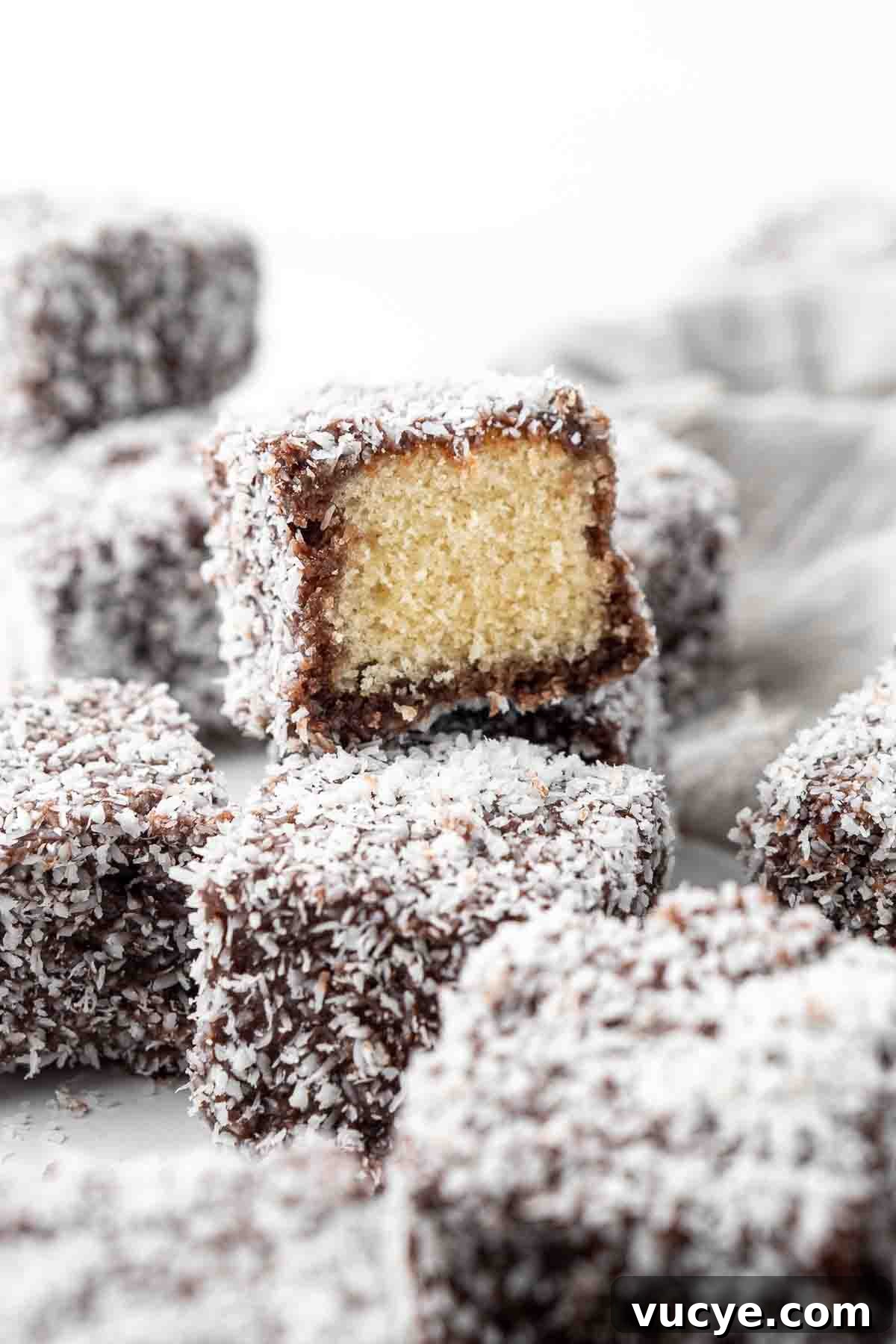
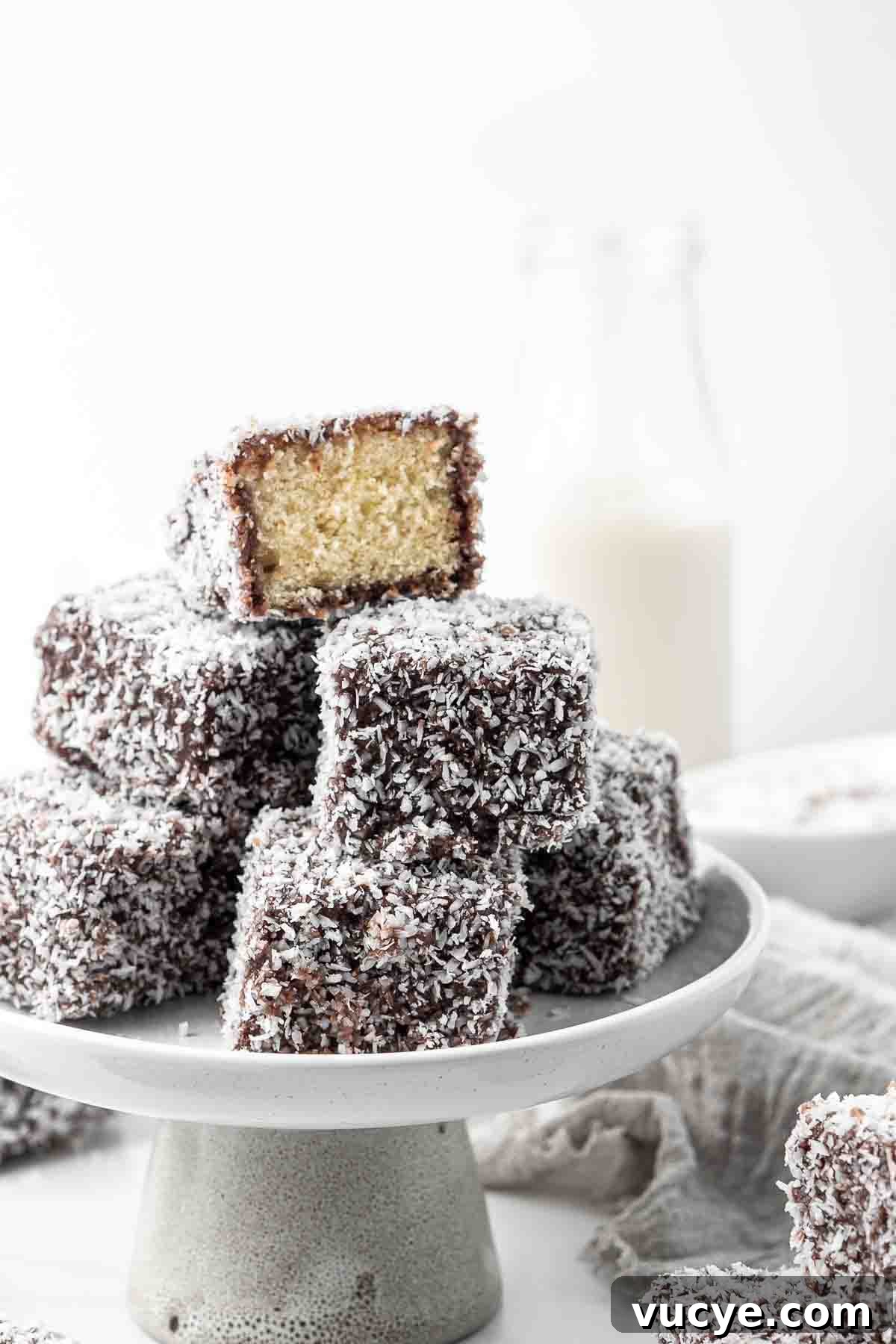
These classic lamingtons are a beloved Australian treat: a light, tender butter cake dipped in chocolate icing and rolled in desiccated coconut. It’s easy to see why lamingtons remain a national favourite.
For a twist on the original, try raspberry lamingtons.
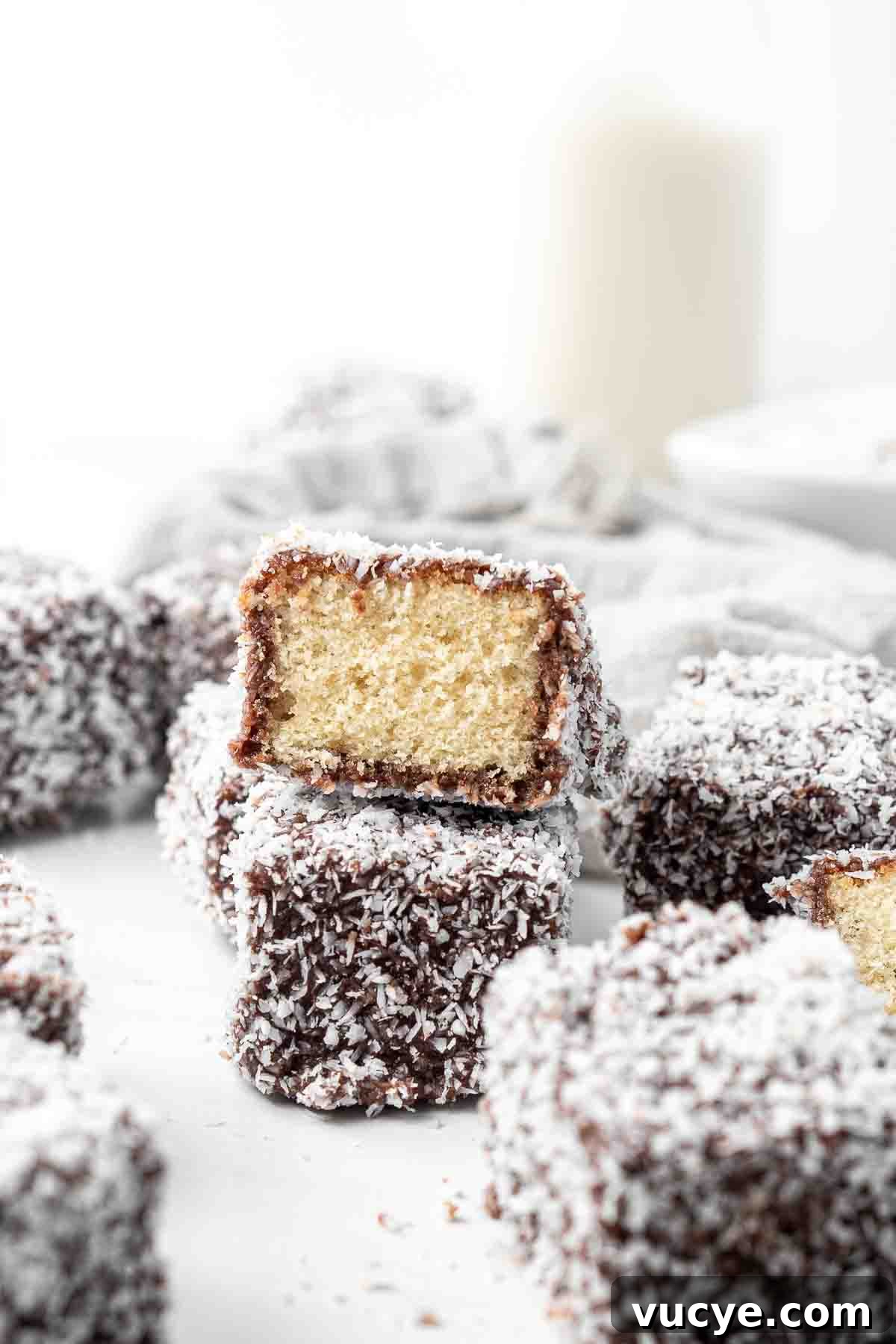
Lamingtons are a nostalgic staple for many Australians. Simple, satisfying and reliably delicious, they hold a firm place in the country’s baking traditions.
Their origin is the subject of friendly debate. One popular story credits Lord Lamington, then-governor of Queensland, who is said to have revived stale sponge by dipping it into chocolate and rolling it in coconut to feed unexpected guests. Another account suggests the treat may have first appeared in New Zealand. Regardless of the precise origin, the lamington was recorded in print in the early 1900s and has been enjoyed across the region ever since.
The earliest published recipe did not include jam, and this version keeps to that classic simplicity. If you prefer a jam filling, you can slice the cake pieces and sandwich a spoonful of strawberry jam before coating.
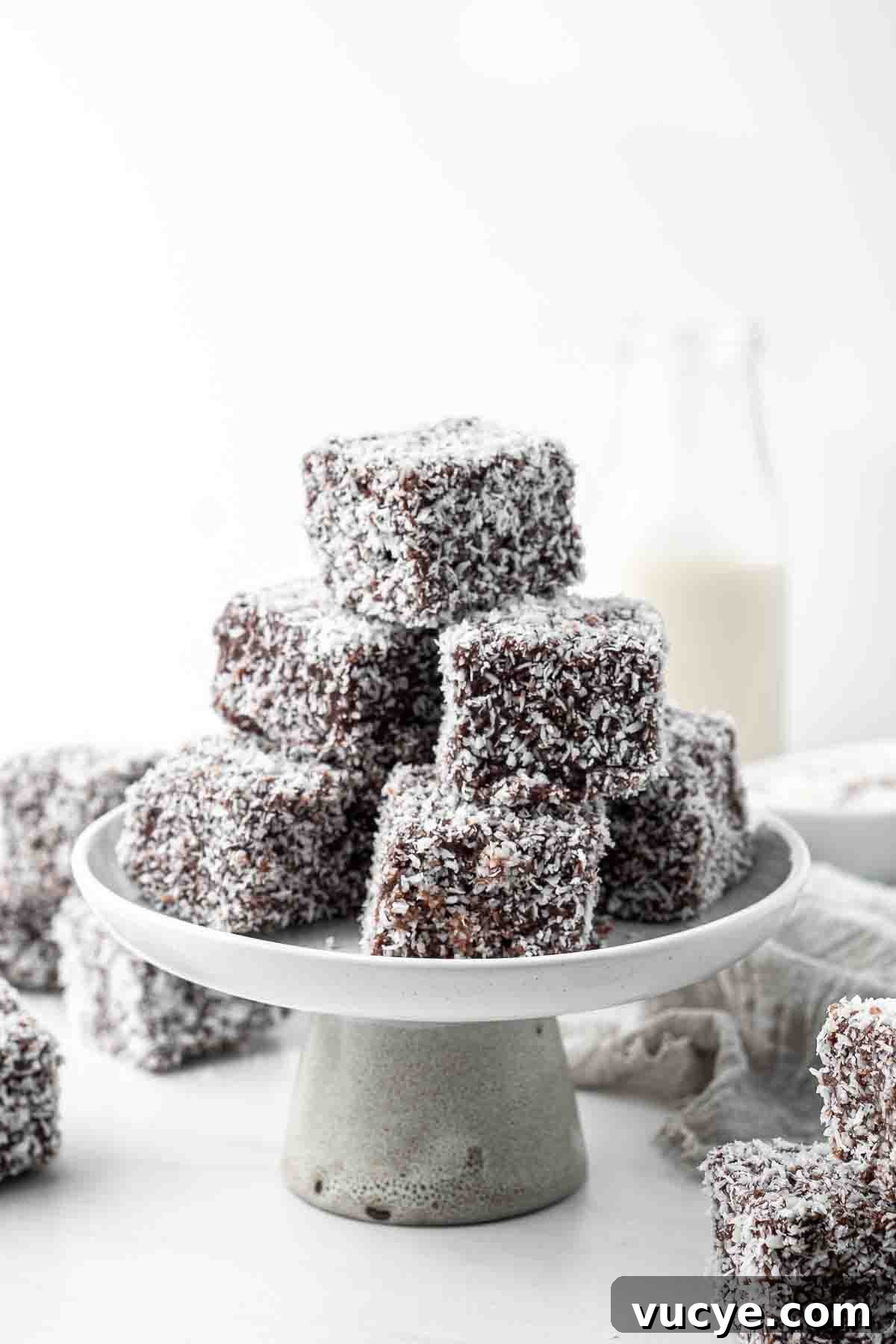
What exactly is a lamington?
In Australia a lamington is made of three main components:
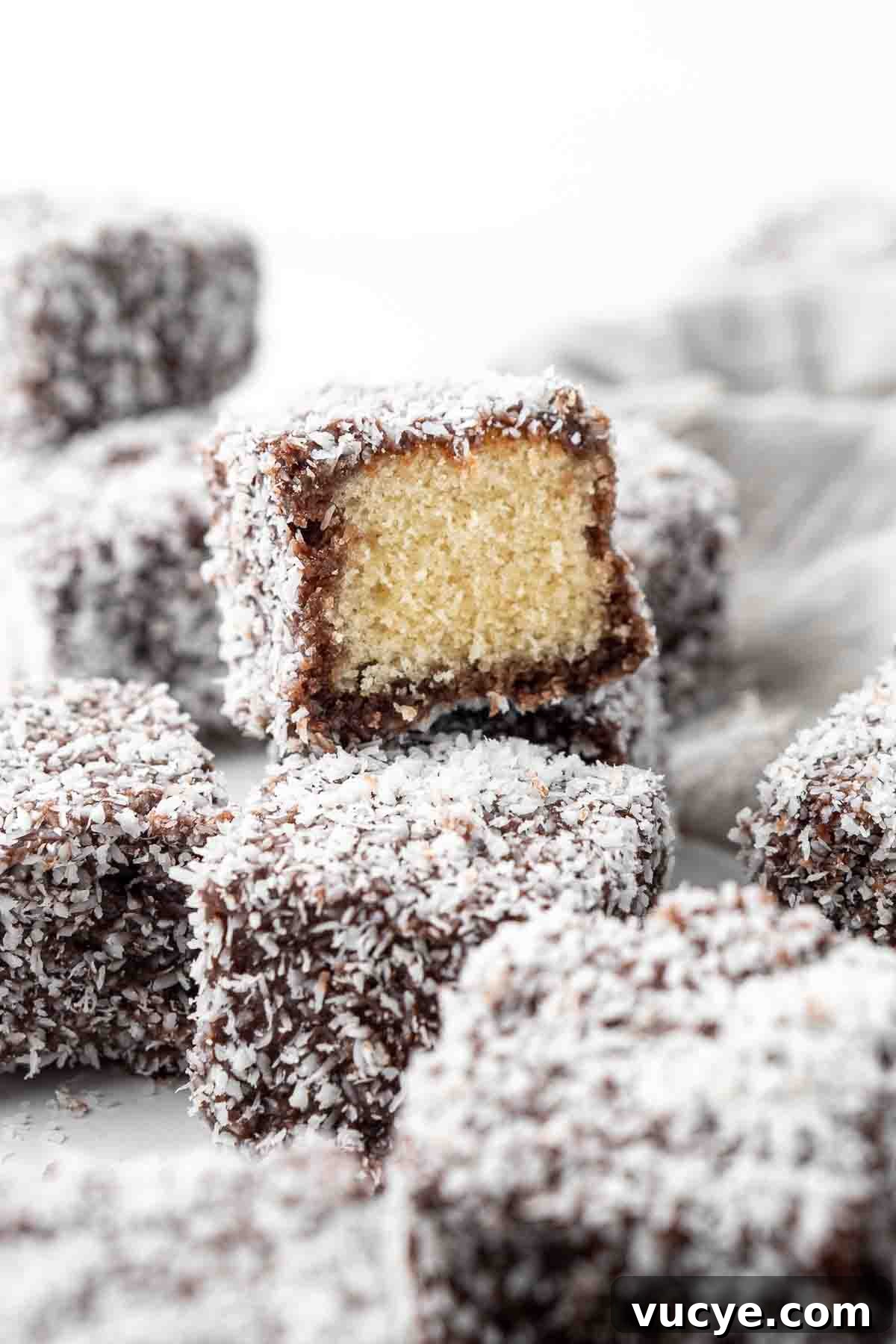
The cake – a light, melt-in-the-mouth sponge or butter cake. This recipe uses whole eggs and behaves more like a butter cake while still remaining tender.
The chocolate icing – a thin, glossy chocolate coating that seals in moisture and adds sweetness without overpowering the cake.
The coconut – desiccated coconut is used to coat the outside, adding texture and that unmistakable flavour. Yes, they can be a little messy to eat, but that’s part of their charm.
Key Ingredients
Lamingtons have two primary elements: the butter cake and the chocolate icing.
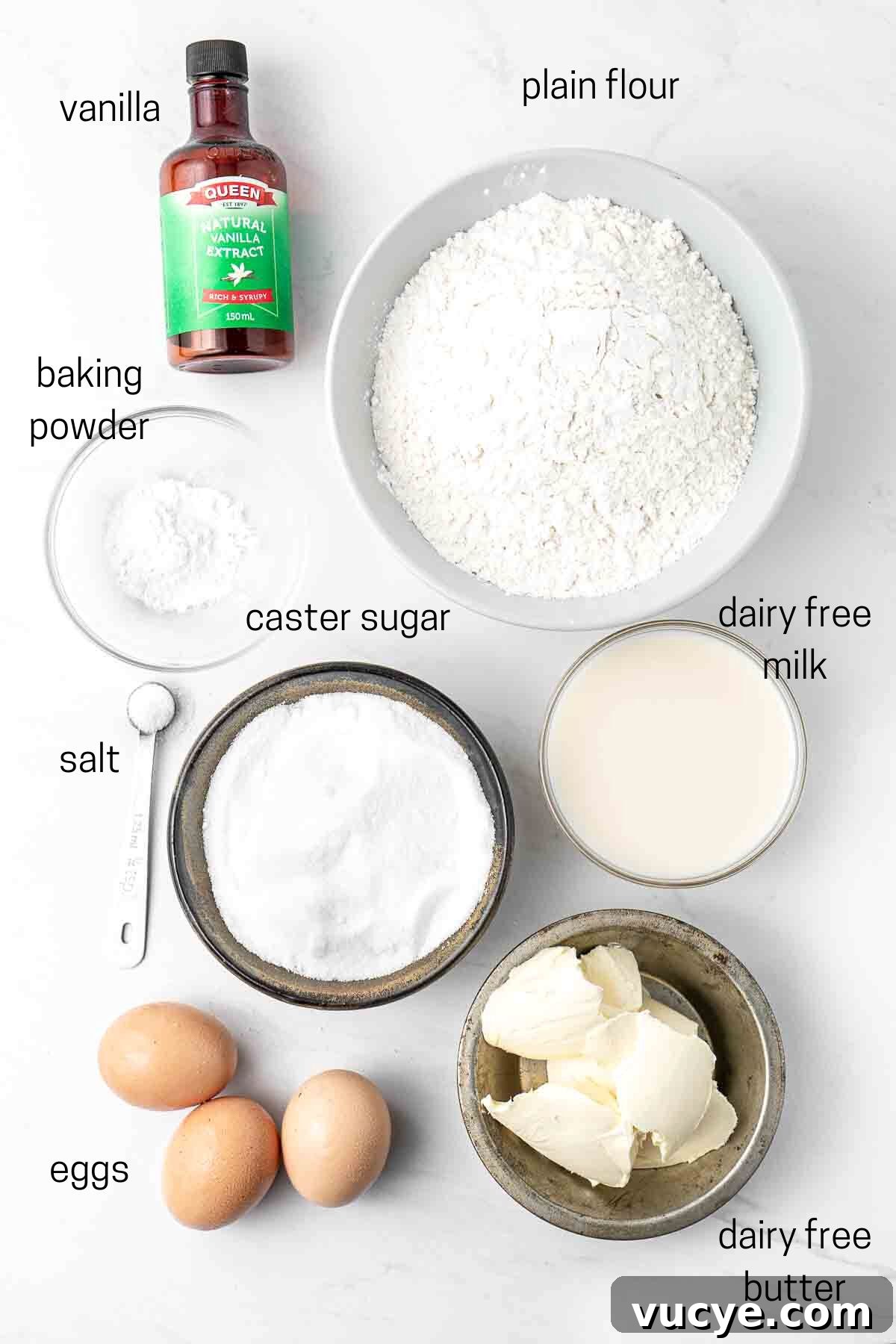
Ingredient quantities are listed in the recipe card below.
- Dairy-free butter – a quality dairy-free spread gives the best flavour in this butter cake; softened before creaming with sugar.
- Caster (superfine) sugar – helps keep the cake light.
- Vanilla extract – for warmth and depth of flavour.
- Eggs – provide structure and lift.
- Plain/all-purpose flour – forms the cake’s crumb.
- Baking powder – for rise and lightness.
- Dairy-free milk – oat, almond or soy milk all work well here.
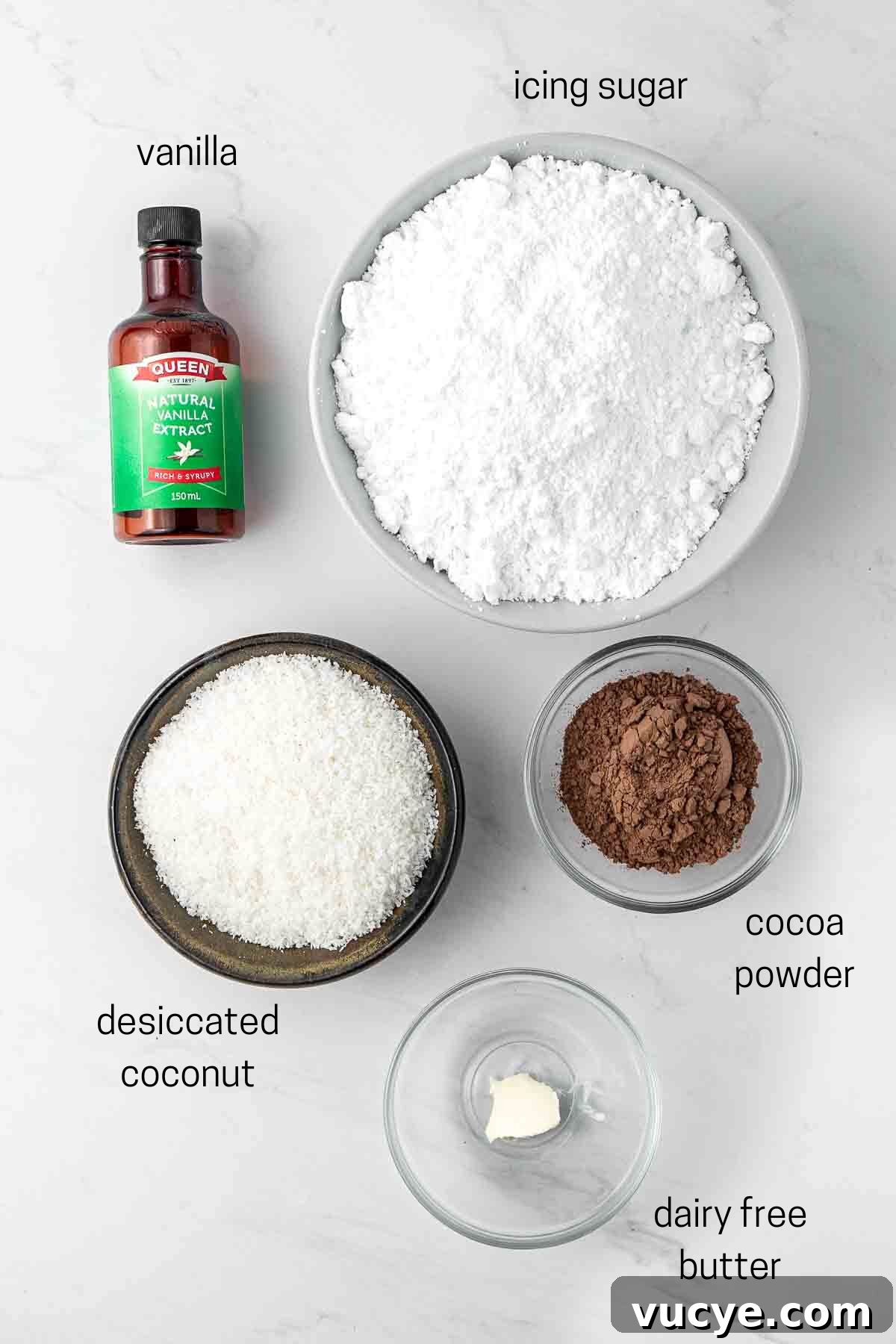
For the chocolate and coconut coating you’ll need:
- Icing sugar – a blended icing sugar (with a small amount of cornflour) helps prevent clumping.
- Cocoa powder – use a good-quality cocoa for depth of chocolate flavour.
- Dairy-free butter – a little adds sheen and helps the icing coat smoothly.
- Vanilla extract – enhances the chocolate notes.
- Desiccated coconut – dry coconut is essential for texture and flavour; don’t use moist shredded coconut.
Equipment and Tools
Basic baking equipment is all you need: a rectangular cake pan (approximately 20 x 30 cm / 9 x 13 inches) for an even bake, and an electric mixer for creaming butter and sugar to a pale, airy consistency. A hand mixer works well if you prefer more control.
Step-by-Step Instructions
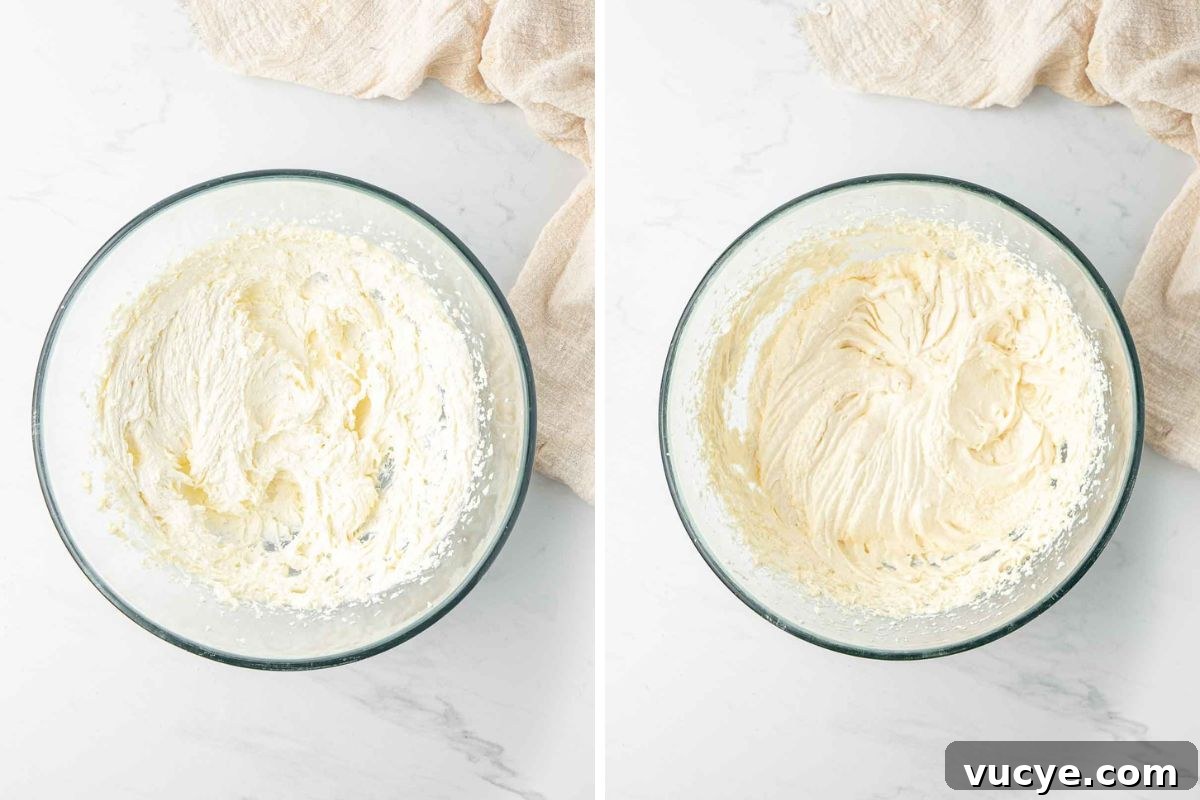
Begin by making the butter cake. Cream the dairy-free butter and caster sugar until pale and fluffy—this traps air and gives the cake its delicate texture. Beat in the vanilla, then add the eggs one at a time, mixing well after each addition.
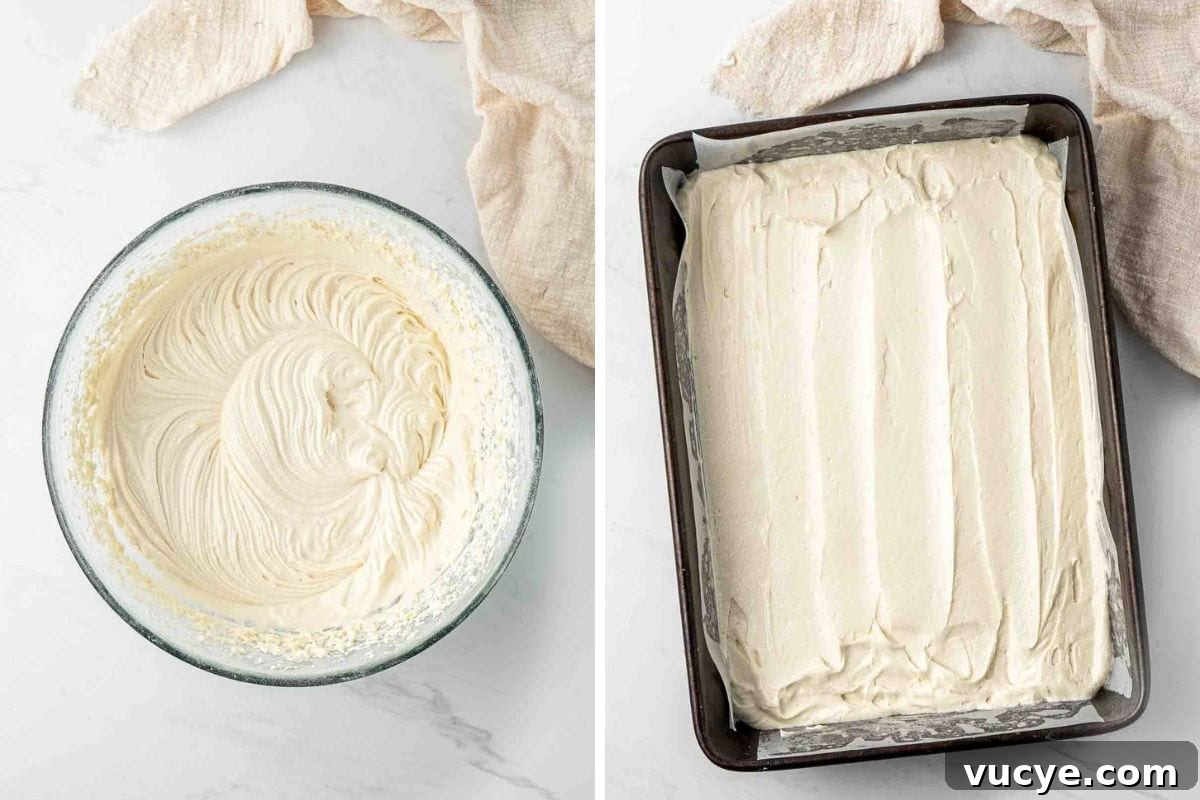
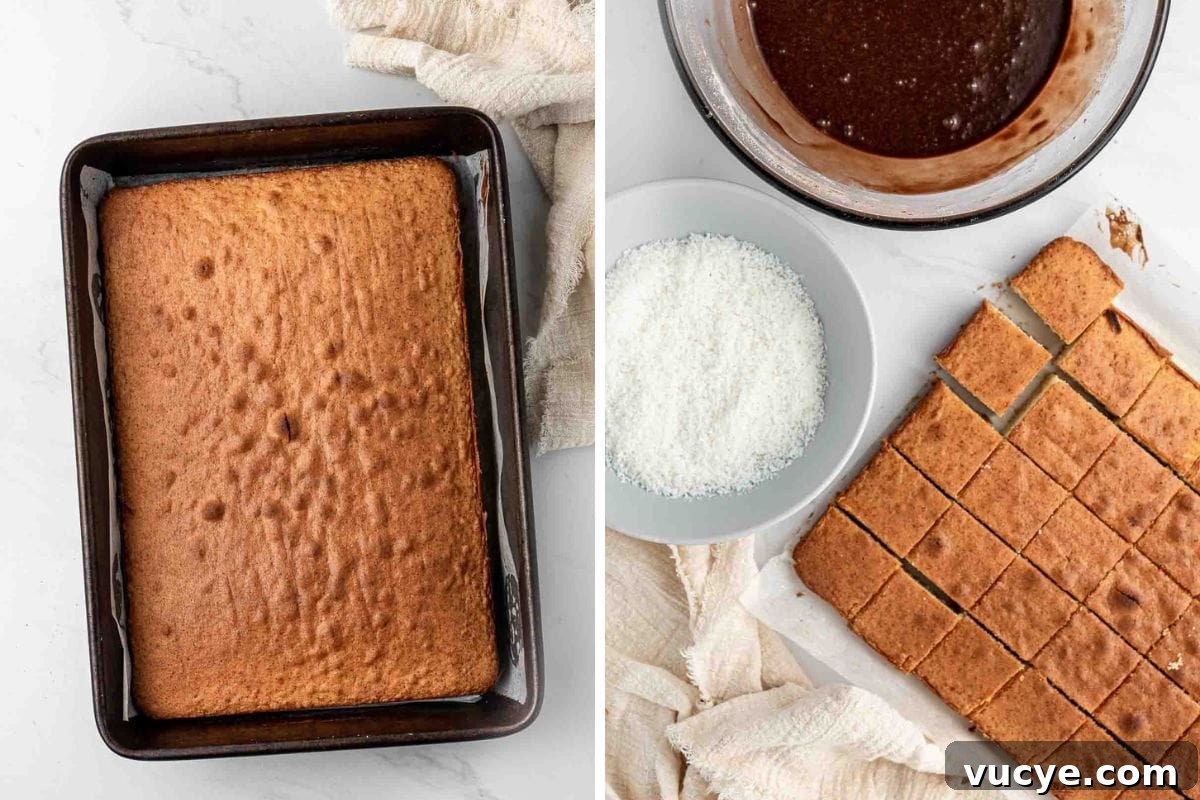
Fold in the sifted dry ingredients in stages, alternating with the dairy-free milk. To avoid overmixing, finish combining with a spatula by hand. Pour the batter into a lined tin and bake for about 30–35 minutes, or until the cake springs back when touched. Allow to cool completely before cutting into squares or rectangles.
Make the chocolate icing by combining icing sugar and cocoa powder, then stirring in boiling water, dairy-free butter and vanilla until the mixture is smooth and glossy. The icing should be thin enough to drip off a spoon—start with less water and add more if needed.
Using two forks, dip each cake square into the chocolate, letting excess drip off, then roll in desiccated coconut until evenly coated. Work with fresh coconut on the plate as chocolate drips can make it clump, and use separate utensils for coating and handling to keep things tidy. Set the finished lamingtons aside to set.
Tips for making lamingtons
- Get the icing consistency right. It should be thin enough to coat without being runny—adjust with boiling water as needed.
- Use forks to lift and turn pieces. Two forks help dip and lift cake squares while allowing excess icing to drip away.
- Work in small batches of coconut. Replace the coconut on the plate as it becomes contaminated with chocolate drips to ensure an even coating.
How to store lamingtons
Lamingtons keep well in an airtight container in the refrigerator for up to a week—especially useful in warm climates where the icing can soften at room temperature. They also freeze well for up to three months; thaw overnight in the fridge or at room temperature.
Lamingtons take a little time and can get a bit messy, but they are straightforward to make from pantry staples. This recipe is written dairy-free, but you can substitute regular butter and milk if you prefer.
It’s easy to see why these bite-sized butter cakes coated in chocolate and coconut are a year-round Australian favourite.
If you make this recipe, please leave a comment and rating below — I’d love to hear how it turned out.
More classic Australian recipes:
ANZAC Biscuits
Homemade Tim Tams (Vegan)
Melting Moments
Chocolate Pavlova
Classic Lamingtons
Ingredients
For the butter cake:
- ⅔ cup dairy-free butter (about 160 g)
- ¾ cup caster (superfine) sugar
- 1 teaspoon vanilla extract
- 3 eggs, room temperature
- 2 cups plain/all-purpose flour
- 2 teaspoons baking powder
- ¼ teaspoon salt
- ½ cup dairy-free milk
For the chocolate icing:
- 3 cups icing sugar
- 3 tablespoons cocoa powder
- 4–6 tablespoons boiling water (adjust for consistency)
- ½ teaspoon dairy-free butter
- ¼ teaspoon vanilla extract
- ½–1 cup desiccated coconut, for coating
Instructions
- Preheat the oven to 180°C and grease and line a 30 x 20 cm (9 x 13 inch) cake tin with baking paper.
- Cream the dairy-free butter and caster sugar with an electric mixer until light, pale and fluffy. Add vanilla and continue to beat. Add eggs one at a time, mixing well after each addition.
- Sift together flour, baking powder and salt. Add to the wet ingredients in batches, alternating with the dairy-free milk. Mix until just combined—finish folding by hand to avoid overmixing.
- Pour the batter into the prepared pan and bake 30–35 minutes or until cooked through and springy to the touch. Cool in the pan for 10–15 minutes, then transfer to a wire rack to cool completely.
- Once cool, cut the cake into squares or rectangles.
- For the icing: sift icing sugar and cocoa into a large bowl. Add boiling water, dairy-free butter and vanilla, stirring until smooth and glossy. Adjust water to reach a thin but coating consistency.
- Place desiccated coconut on a plate. Using two forks, dip each cake piece into the chocolate icing, allow excess to drip off, then roll in coconut to coat. Work in small batches of coconut and set finished lamingtons aside to set.
Notes
Nutrition
Carbohydrates: 36 g |
Protein: 3 g |
Fat: 8 g
Nutritional information is a guide only and may vary depending on ingredients used.